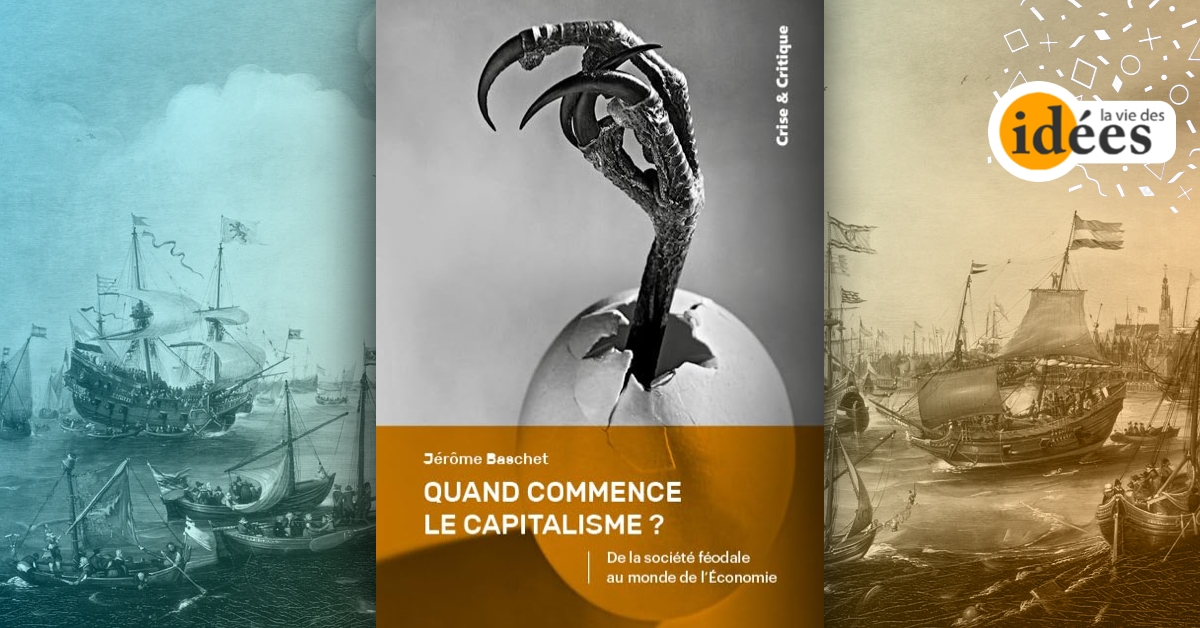
À propos de : Jérôme Baschet, Quand commence le capitalisme ? De la société féodale au monde de l'économie, Crise et critique
Le nouveau capitalisme (1/3)
Traduction de "New capitalism in America. Richest capitalists and richest workers are increasingly the same people" de Branko Milanovic

Le capitalisme de la finitude : pessimisme et bellicisme
Traduction française de « Capitalism of finitude: pessimism and bellicosity. Review of Arnaud Orain’s "Le Monde Confisqué" » de Branko Milanovic

Mercantilisme et capitalisme de la finitude : aux origines de l’Empire Trump | Le Grand Continent
Les seigneurs de la Silicon Valley s'installent dans l'État américain : un nouveau pouvoir disrupte le libéralisme et la démocratie. Vivons-nous un moment inédit ? Il y a quatre cents ans, une start-up de la City – la Compagnie des Indes – se lançait déjà dans une entreprise de conquête mondiale similaire. Pour expliquer Trump et Musk, Arnaud Orain renoue avec les fils de cette histoire, en forgeant un concept : le capitalisme de la finitude.
Le nouveau capitalisme (2/3) : inégalités compositionnelles versus inégalités de revenu
Traduction de "New capitalism II: Compositional vs income inequality. Are all class-based societies unequal?" de Branko Milanovic

Pourquoi les entreprises préfèrent épargner plutôt qu'investir
Signe de la financiarisation du capitalisme, les entreprises épargnent plus qu’elles n’investissent et accumulent des actifs financiers. Ce qui empêche l’Etat …

Musk billionnaire : quand le capitalisme bascule dans l'irrationnel - Par Thibault Prévost | Arrêt sur images
Le 12 juin, SpaceX est entrée en Bourse et Elon Musk est devenu le premier billionnaire de l'histoire. Rien de tout cela n'aurait du se produire, si la finance respectait encore le moindre principe de factualité. Mais en 2026, le capitalisme se radicalise dans l'irrationnel.

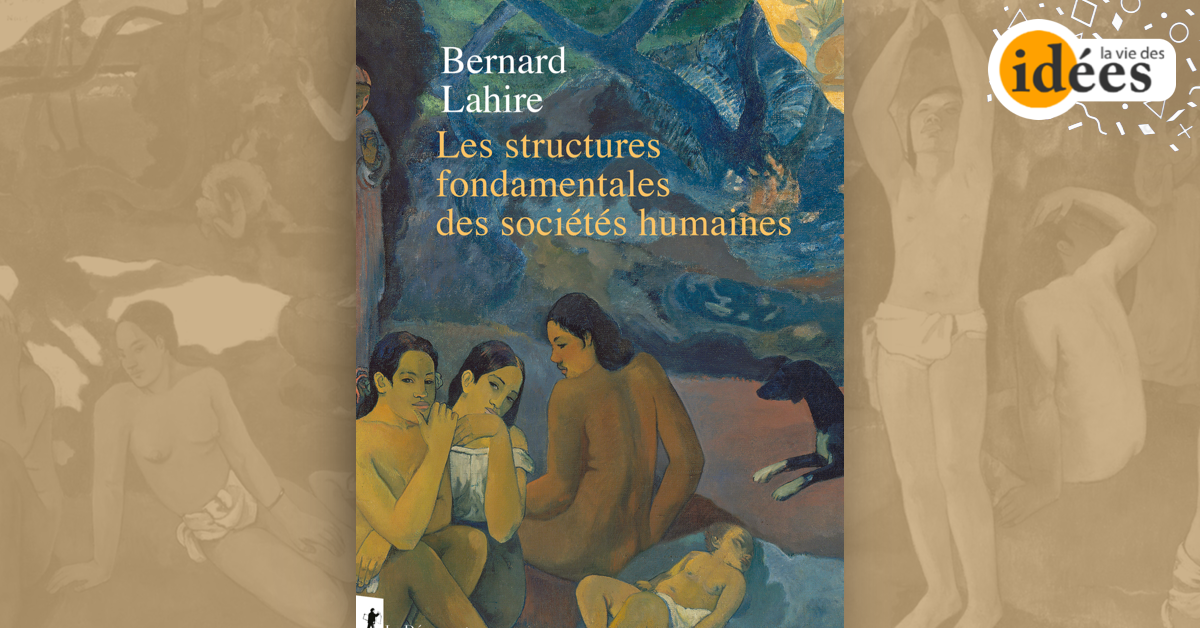
À la recherche des lois de la vie sociale
À propos de : Bernard Lahire, Les structures fondamentales des sociétés humaines, La Découverte
David Harvey : quel marxisme pour le 21e siècle ? - Contretemps
Karl Marx développa sa critique du capitalisme en étudiant les « sombres filatures sataniques »[1] d’Angleterre. Mais comme le montre ici David Harvey, Marx comprenait le capitalisme comme système global, générateur de polarisation et d’inégalités à l’échelle de la planète. L'eurocentrisme qui lui est souvent reproché de nos jours ne fait que suivre ce mouvement d’expansion mondiale du capital à partir de son foyer originel européen. S’il vivait aujourd’hui, il encouragerait les socialistes à s’intéresser autant à la Silicon Valley qu’à Shenzhen.
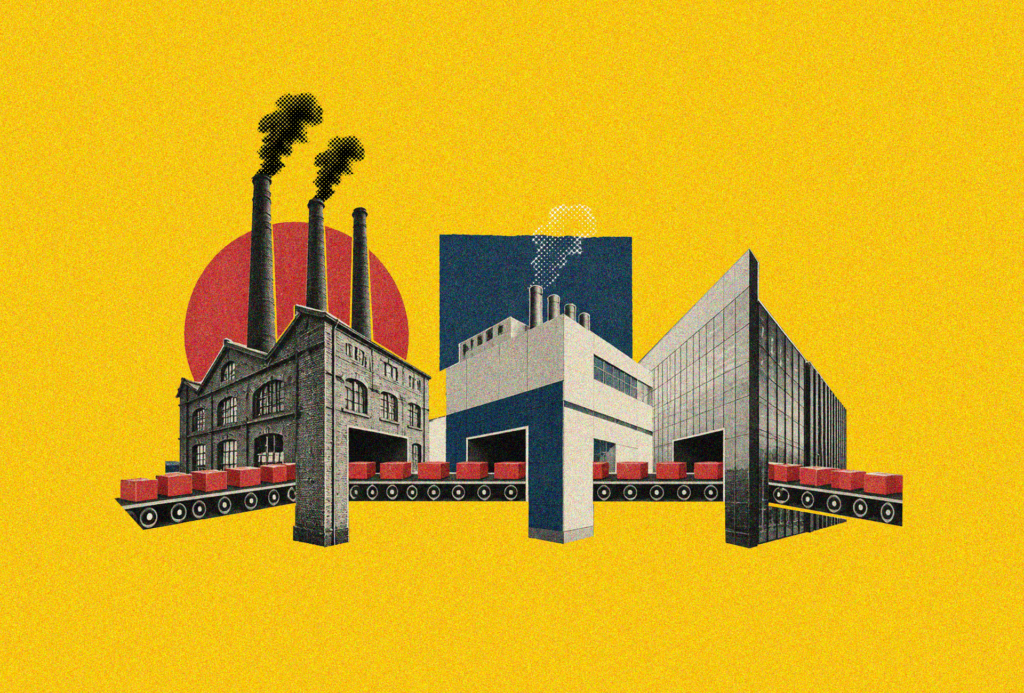
Capitalisme mondial : le taux de profit a-t-il baissé au cours des dernières décennies ? - Contretemps
La loi de la baisse tendancielle du taux de profit a constitué l’un des points fortement discutés des réflexions de Marx sur la dynamique du capitalisme. Dans la mesure où le capitalisme s’est étendu à l’ensemble des régions du globe, l’échelle mondiale est la plus pertinente pour la tester empiriquement. L’économiste Michael Roberts passe en revue les dernières estimations du taux de profit mondial et conclut que celui-ci tend effectivement à baisser depuis le milieu du 20e siècle.

Le néolibéralisme, le libéralisme classique et l’économie néoclassique
Traduction du billet de blog "Neoliberalism, classical liberalism and neoclassical economics" de Matías Vernengo
.png)
Qu’est-ce que la richesse ?
Traduction française de "What is wealth?" de Branko Milanovic

annotations: La Richesse des nations, une icône mal comprise des marchés libres
Traduction française du billet "The Wealth of Nations at 250! Misunderstood icon of free markets" de Matías Vernengo
Imperialism, the Highest Stage of Capitalism
[1] Written in Zurich in January-June 1916. Lenin began to take note of new developments in capitalism long before the outbreak of the First World War. In several of his writings from 1895 to 1913—”Draft and Explanation of a Programme for the Social-Democratic Party” (1895-96); “The War in China” (1900); “The Lessons of the Crisis” (1901), “Review of Home Affairs” (1901); “Concentration of Production in Russia” (1912); “The Growth of Capitalist Wealth” (1913) “Backward Europe and Advanced Asia” (1913); “The Historical Destiny of the Doctrine of Karl Marx” (1913); “Concerning Certain Speeches by Workers’ Deputies” (1912), and others—Lenin pointed out and analysed some characteristic aspects of the imperialist epoch— the concentration of production and the growth of monopoly; the export of capital; the struggle for new markets and spheres of influence; the internationalisation of economic relations; the parasitism and decay of capitalism; the growth of contradictions between labour and capital and the sharpening of the class struggle; and the creation of the material conditions for the transition to socialism. He devoted special attention to exposing predatory colonial policy, the fight for a division and redivision of the world, and the preparation of imperialist wars of aggrandisement. In his article, “Marxism and Revisionism”, written in 1908, he came out against the attempts to revise Marxism and undermine it from inside under the pretext of amending and correcting the theory in particular, Marx’s theory of crises. Lenin wrote: ‘The forms, the sequence, the picture of particular crises changed, but crises remained an inevitable component of the capitalist system. While uniting production, the cartels and trusts at the same time and in a way that was obvious to all, aggravated the anarchy of production, the insecurity of existence of the proletariat and the oppression of capital, thereby intensifying class antagonisms to an unprecedented degree. That capitalism is heading for a breakdown—in the sense both of individual political and economic crises and of the complete collapse of the entire capitalist system— has been made particularly clear, and on a particularly large scale, precisely by the new giant trusts” (see present edition, Vol. 15, pp. 35-36). Lenin kept abreast of all the latest writings on capitalism, as will be seen from his review of Hobson’s The Evolution of Modern Capitalism. In August 1904, Lenin began a translation of Hobson’s Imperialism, the manuscript of which has not yet been found. It was on the outbreak of the First World War that Lenin undertook a comprehensive study of the monopoly stage of capitalist development This was required by the working-class revolutionary struggle in Russia and other capitalist countries. In order to provide correct leadership for the revolutionary movement and combat the ideology of imperialist reaction and the reformist policy of conciliation with imperialists, it was necessary to see one’s way in the key economic question without a study of which there was no understanding of the assessment of modern war or modern politics, namely: the economic essence of imperialism”. Lenin must have started his close study of the writings on imperialism in mid-1915, when he was in Berne, for his first indexes of literature, plans, extracts, notes and summaries date to that period. The preparatory materials for Imperialism, the Highest Stage of Capitalism (Notebooks on Imperialism) make up about 800 printed pages. They contain extracts from 148 books (including 106 in German, 23 in French, 17 in English, and 2 translations into Russian), and 232 articles (of them 206 in German, 13 in French, and 3 in English) from 49 periodicals (34 German, 7 French and 8 English). In early January 1916, Lenin accepted an order for a book on imperialism from the legal Parus Publishers, founded in Petrograd in December 1915. Lenin wrote to Maxim Gorky on December 29, 1915 (January 11, 1916): “I am getting down to the writing of a pamphlet on imperialism” (see present edition, Vol. 35). In the early part of February 1916, he left Berne for Zurich, where he continued to collect and work on materials on imperialism. He worked at the Zurich Cantonal Library and ordered books from other towns. On June 19 (July 2), 1916 Lenin wrote to M. N. Pokrovsky, who was then living in France and editing for Parus a series of pamphlets about West-European countries during the First World War: “Today, I sent you a manuscript by registered mail” (see present edition, Vol. 35). The manuscript, which was mailed with the letter, did not reach Pokrovsky, and another copy had to be sent. Besides, the publishers suggested that the finished manuscript should be shortened from eighty to fifty pages, but Lenin objected because “it is absolutely impossible to cut it down once again and squeeze it into fifty pages” (ibid.). When the book reached the publishers, Menshevik elements among the management deleted from the book parts sharply criticising Kautsky and Martov, and made corrections in the text which not only distorted Lenin’s style but also his ideas. Thus, Lenin’s terms pererastaniye (capitalism growing into imperialism) was altered to prevrashcheniye (transformation); reaktstonny kharakter (reactionary nature of the theory of ultra-imperialism) to otstaly kharakter (backward character), etc. In mid-1917, the book was published under the title Imperialism, the Latest Stage of Capitalism(A Popular Outline) with a preface by Lenin, dated April 26, 1917.
Marx et l’histoire de la nature
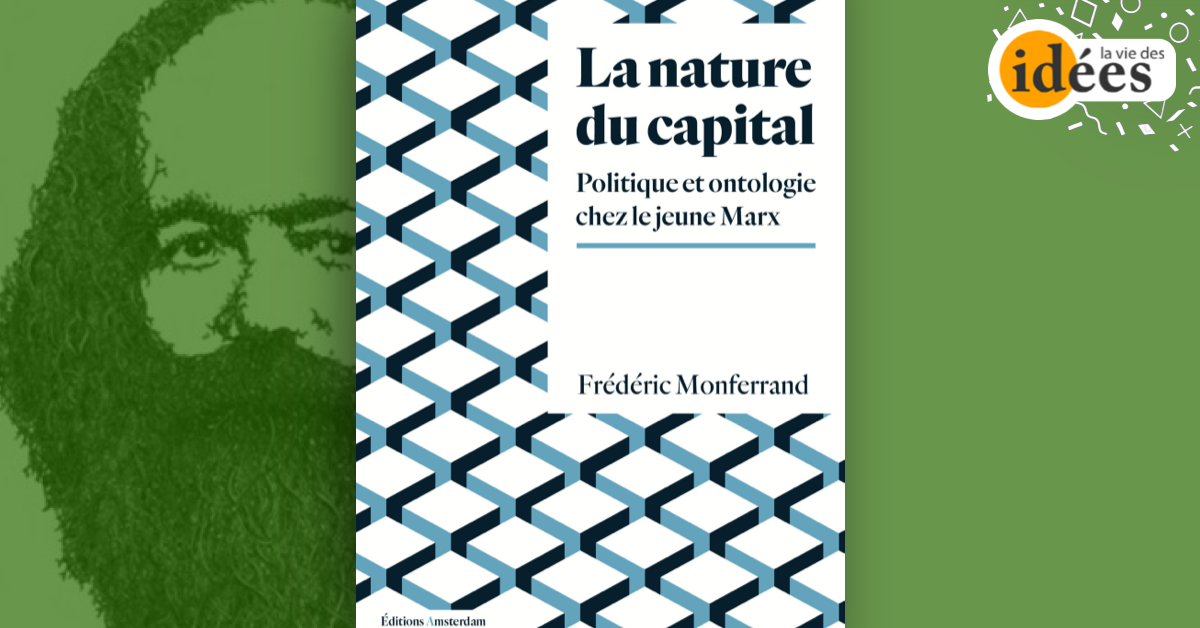
À propos de : Frédéric Monferrand, La nature du capital. Politique et ontologie chez le jeune Marx, Éditions Amsterdam
Le cycle d’affaires et l’incertitude autour de la politique économique en France
Blog de sciences économiques et sociales de Martin Anota. Traductions, revues de presse.

L’économie mondiale entre dans une nouvelle ère
Dans un contexte de tensions commerciales et de vives incertitudes entourant les politiques publiques, l’avenir dépendra de la façon dont les pays feront face aux défis et saisiront les opportunités