


Data analysis is at least as much art as it is science. This book is focused on the details of data analysis that sometimes fall through the cracks in traditional statistics classes and textbooks. It is based in part on the authors blog posts, lecture materials, and tutorials such as:
An Introduction to Statistical Learning
As the scale and scope of data collection continue to increase across virtually all fields, statistical learning has become a critical toolkit for anyone who wishes to understand data. An Introduction to Statistical Learning provides a broad and less technical treatment of key topics in statistical learning. This book is appropriate for anyone who wishes to use contemporary tools for data analysis.
Innovation in Data Science Education
Data science is a new field of research focuses on extracting knowledge and value from data. The radical growth in recent years in the availability of data and of the computational resources required to process them, has led to a corresponding increase ...

10 things statistics taught us about big data analysis - KDnuggets
There are 10 ideas in applied statistics are relevant for big data analysis, focusing on prediction accuracy, interactive analysis and more.
Dynamic Data Science
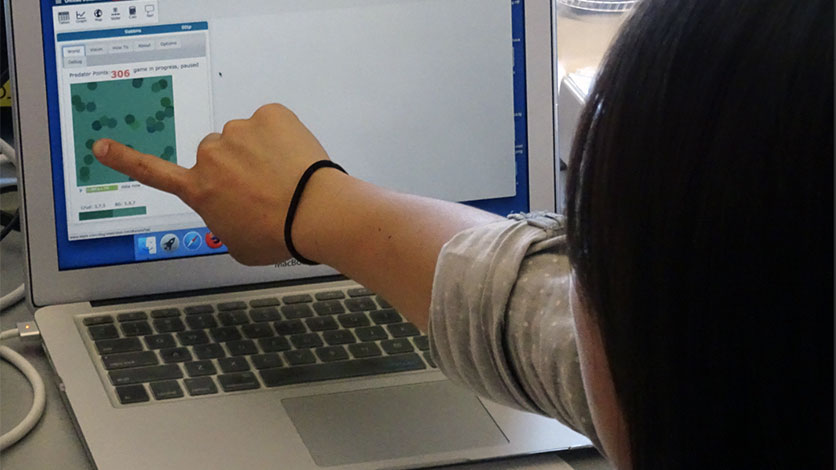
<p>Use our Common Online Data Analysis Platform (CODAP) to explore dynamic data science activities and gain fluency in data moves to examine large datasets.</p>
Data Integration
This book is an introduction to the problem of data integration and a rigorous account of one of the leading approaches to solving this problem.

Highlights of the National Academies Report on "Undergraduate Data Science: Opportunities and Options” · Issue 1.1, Summer 2019
An interview with Laura Haas and Alfred Hero by Robert Lue

Foundations of Data Science for Students in Grades K-12
On September 13 and 14, 2022, the Board on Science Education at the National Academies of Sciences, Engineering, and Medicine held a workshop entitled Foundations of Data Science for Students in Grades K–12. Speakers and participants explored the rapidly growing field of K-12 data science education, by surveying the current landscape, surfacing what is known, and identifying what is needed to support student learning, develop curriculum and tools, and prepare educators. To support these conversations, four papers were commissioned and discussed during the workshop. This publication summarizes the presentations and discussion of the workshop.

Tutorial on Sheaves in Data Analytics : Lecture 1
Integrated Data Science for Secondary Schools: Design and Assessment of a Curriculum
This summary was generated using automated tools and was not authored or reviewed by the article's author(s). It is provided to support discovery, help readers assess relevance, and assist readers from adjacent research areas in understanding the work. It is intended to complement the author-supplied abstract, which remains the primary summary of the paper. The full article remains the authoritative version of record. Click here to learn more.

Data Feminism
Today, data science is a form of power. It has been used to expose injustice, improve health outcomes, and topple governments. But it has also been used to d...
Learn Data Science by nborwankar
One or more of these may have supplementary material. Each of these have worksheets that contain mostly the code sections so you can iteratively explore the code.
Teaching Data Science by Visualizing Data Table Transformations: Pandas Tutor for Python, Tidy Data Tutor for R, and SQL Tutor
As part of the Digital Library's transition to Open Access, new features for researchers are available in the Premium Edition. Click here to learn more.
A first introduction to data science education in secondary schools: Teaching and learning about data exploration with <span style="font-variant:small-caps;">CODAP</span> using survey data
Abstract In this paper, we will describe an introduction to Data Science for secondary school students. We will report on the design and implementation of an introductory unit on “Data and data detectives with CODAP” in which secondary school students used the online tool CODAP to explore real and meaningful survey data on leisure time activities and media use (so‐called JIM‐PB data) in a statistical project setting as a starting point for data science. The JIM‐PB data set served as a valuable data set that offered meaningful and exciting opportunities for data exploration for secondary school students, and CODAP proved to be a valuable tool for the first explorations of this data.

Understanding the Data in K-12 Data Science · Issue 6.2, Spring 2024
Our increasingly data-driven world is amplifying the need for everyone to develop foundational data literacy skills. In response, a growing number of K-12 data science curricula are being designed to introduce all students to data. These curricula define what data science is at the high school level and directly shape how students are introduced to and understand the discipline. Ensuring these curricula are effective, engaging, and, most critically, equitable is of paramount importance. This article presents a qualitative analysis of four curricula, focusing on the data used to introduce learners to the field of data science. The analysis uses a series of analytical lenses to evaluate the 296 distinct data sets used across the curricula and identifies trends and best practices in data set selection. The analysis includes using data collected from high school students about their interests and experiences with data to understand if and how contemporary data science curricula are tapping into students’ lived experiences to situate data science learning experiences. The findings show that the curricula use relatively recent and small data sets covering a range of topics and that learner involvement in data set selection is limited. Further, the analysis reveals gaps between the data sets used and students' self-reported interests. This work highlights the importance of data set selection, especially as it relates to supporting learners from historically excluded populations in technology fields. Finally, this article provides practical implications to assess existing curricula and advances our understanding of how to situate the field of data science in the interests, ideas, and values of today’s students.

Data Feminism
A new way of thinking about data science and data ethics that is informed by the ideas of intersectional feminism.Today, data science is a form of power. I
Teaching Programming for First-Year Data Science
This summary was generated using automated tools and was not authored or reviewed by the article's author(s). It is provided to support discovery, help readers assess relevance, and assist readers from adjacent research areas in understanding the work. It is intended to complement the author-supplied abstract, which remains the primary summary of the paper. The full article remains the authoritative version of record. Click here to learn more.
