

This thread is an exemplary case of how “we” (that is, liberal-minded minions uncritically parroting the talking points of the bourgeoisie) inhibit any social and class consciousness from sprouting in the proletarian mind. The original post, titled “Nothing worth having in life comes easily”, goes as such: >Yes it does. Yes it fucking does. For SOME people. >Some people were born into rich families. Money is worth having, and money came easily to them. >[…] >Some people are born white. Not being discriminated against must be nice. >I could go on. You get the fucking point. >Why do people on Reddit keep repeating this blatantly false platitude? There are countless of examples of people in this world who didn’t have to work for shit, yet many things came easily to them. As you might expect, the comments went on the offense to discredit OP’s sentiments, in different manners. The first category of comments involves invoking “life” as some natural order of things which is beyond human control, ergo it must be accepted. >I get what you mean life is unfair sometimes. >Life sucks and then we die. >Life is 100% unfair. Full stop. Get used to it. This defeatist attitude just dissuades any doubts in one’s mind regarding the viability of the current system. The second category includes comments that deny any exteriority to OP’s sentiments and focus on their own personal ailments: >Some people get so fixated on being victims of society that they seem to give away their own power to change their lives. >This post is somewhat delusional. Highly suggest to not compare your insides to other people’s outsides or you’ll always come away with a distorted perception. There are so many false assumptions in here I don’t know where to start but if you wanna pity yourself and put others on pedestals - knock yourself out. >Being mad and jealous, letting negative emotions permeate through every facet of your mind will make it better. Keep going. They’re basically saying: “the world is fine, the problem is you; and you should feel bad for feeling otherwise.” The third category involves comments that dilute the importance of wealth and socioeconomic status: >Every privilege you mentioned comes with its own set of problems. >It might not seem like it, but everybody has the same amount of issues as everyone else. >Dating, money, and privilege aren’t the meaning of life. An obvious case of blatantly gaslighting people struggling to survive when they realize the unfairness of capitalism. And an honourable mentions goes to those talking down white supremacy and systemic racism! >Agreed except for the white comment. Every race gets discriminated against, just in different ways. >Oh good more hatred of White people this will surely solve this loser’s personal problems. >Oh, if you are born white don’t worry, there will be plenty of people who will discriminate against you. One of the major political parties sanctions it. It’s socially acceptable. There’s plenty of people like you. You get the point. >Well white people get discriminated against and this is all very victim mentality based. There are many other arguments, but you get the point. They all share the same motive: the annihilation of any hint of social consciousness. It is tragic because, more often than not, it is the oppressed who are gaslighting themselves and not the bourgeois and capitalists. The latter outsource even the labor of propagating their foul logic and arguments to the proletariat.
Social Reproduction Theory: Remapping Class, Recentering Oppression
This groundbreaking collection explores the profound power of Social Reproduction Theory to deepen our understanding of everyday life under capitalism. While many Marxists tend to focus on the productive economy, this book focuses on issues such as child care, health care, education, family life and the roles of gender, race and sexuality, all of which are central to understanding the relationship between economic exploitation and social oppression. In this book, leading writers such as Lise Vogel, Nancy Fraser, David McNally and Susan Ferguson reveal the ways in which daily and generational reproductive labour, found in households, schools, hospitals and prisons, also sustains the drive for accumulation. Presenting a more sophisticated alternative to intersectionality, these essays provide ideas which have important strategic implications for anti-capitalists, anti-racists and feminists attempting to find a path through the seemingly ever more complex world we live in.
Bluesky civil war shows free speech is harder than it looks
Last week, a joke familiar from X circulated on rival platform Bluesky: “(bluesky user bursts into Waffle House) OH SO YOU HATE PANCAKES??” It was obviously a jab at the moral intensity that now seems to define the site, and indeed much of the rest of the social media landscape. On most platforms such a [...]Read More...

Neoliberal Fascism as the Endpoint of Casino Capitalism
This article explores neoliberal fascism as a distinctive political formation within the current historical moment. In doing so, it first analyzes neoliberalism as a project that has since the 1970s destroyed all the commanding institutions of democracy while consolidating power in the hands of a financial elite. In addition, it analyzes neoliberalism as a movement, that produces and legitimates massive economic inequality and suffering, privatizes public goods, dismantles essential government agencies, and individualizes all social problems. Under such circumstances, neoliberalism creates the conditions for right wing extremists to mobilize the anger of white disenfranchised working class populations by both appealing to the economic injustices they experience while simultaneously blaming and directing their frustrations towards non-white minority groups such as immigrants, blacks, and Muslims. It is precisely this merging of the social, political, and economic hardships produced by neoliberal capitalism and its appropriation of the discourse of white supremacy to divert attention from its worst excesses and failures that a neoliberal fascism is produced. Â More specifically, I argue that in the face of 40 years of neoliberalism with its production of massive inequality, a frontal attack on the welfare state, and the erosion of civic institutions and culture, there has been a resurgence of fascist discourses and a populist fascist political movement. Neoliberal fascism represents the conjoining of the most extreme elements of casino capitalism with the discourses of racial cleansing, and white nationalism. The article concludes by examining how atomization, fear, and anxiety have become the breeding grounds of fascism and what it means to revive education as a central tenet of politics so as to address the task of not simply resisting oppressive economic structures, but also what it means to engage in the massive challenge of changing individual and collective consciousness as a precondition for collective struggle and the building of new social movements. Author Biography Henry Giroux, McMaster University Chair for Scholarship in the Public Interest The Paulo Freire Distinguished Scholar in Critical Pedagogy
Why The Rich Think The Poor Are Lazy
"Violence Has No Place In Politics" OH REALLY?
The Inner Life of Liberalism - Aaron Ross Powell’s Blog
The practices that make your life better are the same ones that sustain a free society. It's time liberalism took that seriously.
The Souls of White Jokes | Stanford University Press
A rigorous study of the social meaning and consequences of racist humor, and a damning argument for when the joke is not just a joke.

npj on Twitter / X
Schumpeter in a nut shell:— Capitalism forces “rationalization” and the rationalist worldview, which just ends in an almost nihilistic skepticism that corrodes everything traditional that it touches: in particular “family life” and the aristocracy.— The traditional… pic.twitter.com/hThnUJ6jNE— npj (@TiltingatM3) May 28, 2026

Capitalism, Democracy, and Du Bois’s <em>Two</em> Proletariats
[epq-quote align="align-right"]"What can be more radical or liberating than freedom and justice for all?"[/epq-quote] As an ideal, liberal democracy has great appeal. What can be more radical or liberating than...
banteg (@banteg)
>be me >discover effective altruism >apparently normal charity is inefficient >why donate to random sad thing when spreadsheet can tell you optimal sad thing >fair enough >buy mosquito nets >save lives >numbers look good >feel powerful >couple years later >someone asks an innocent question >why only count people alive today >huh >future people matter too >obviously >my grandchildren shouldn't matter less just because they haven't spawned yet >reasonable.jpg >keep following logic >what about their grandchildren >also yes >what about people in 500 years >sure >5000 years >why not >500 million years >starting to get weird but morality is morality >open calculator >humanity could survive for an astronomically long time >could colonize galaxy >could have trillions upon trillions of descendants >maybe digital people too >maybe simulated civilizations >maybe dyson spheres full of happy uploaded minds >calculator starts smoking >realize currently living humans are rounding error >8 billion people suddenly looking extremely beta >future contains potentially 10^something people >can't even fit beneficiaries in google sheets >new moral priority unlocked >protect the long-term future >stop thinking in units of "people helped" >start thinking in "fraction of cosmic endowment preserved" >malaria? >terrible >but only kills existing humans >AI extinction could delete the entire light cone >nuclear war could permanently derail civilization >bad institutions could lock in terrible values for ten million years >someone invents wrong constitution in 2140 >quadrillions suffer >better fund governance workshop now >friend says maybe we should improve hospitals >explain opportunity cost >friend says hospitals are full of actual sick people >explain scope sensitivity >friend stops inviting me to dinner >need to decide what to fund >easy >expected value >suppose project has one in a million chance of preventing extinction >sounds tiny >but extinction destroys 10^50 future lives >multiply >mother of god >$10 million project has expected value of several galaxies >charity evaluation complete >someone asks where the one-in-a-million number came from >expert judgement >which expert >us >how calibrated >extremely thoughtfully >reduce estimate to one in ten million to be conservative >still beats curing cancer by 38 orders of magnitude >epistemic robustness achieved >someone says maybe project doesn't work >assign 20% chance >still astronomical >maybe project makes problem worse >assign 5% chance >still astronomical >why 5 >because 30 felt pessimistic >publish 46-page report >contains seventeen sensitivity analyses >every sensitivity analysis begins after assuming intervention has positive sign >critic says you're multiplying enormous hypothetical stakes by extremely uncertain probabilities >yes >that's literally why it's important >critic says the uncertainty might be structural rather than numerical >make probability smaller >critic says no, I mean maybe your model is wrong >make probability smaller again >critic begins rubbing temples >discover AI safety >perfect longtermist cause >AI might kill everyone >or create utopia >or seize galaxy >or tile universe with paperclips >or create billions of conscious software minds >finally a problem with numbers big enough for me >start AI safety nonprofit >mission: prevent dangerous AI >hire smartest people available >smartest people immediately start building better AI to understand dangerous AI >interesting >we must understand capabilities to understand safety >we must scale models to study alignment >we must race ahead so less responsible actors don't get there first >we must deploy systems to learn how deployment can go wrong >we must build the thing quickly because building the thing quickly is dangerous >outsider asks why the people most worried about AI apocalypse all work at AI companies >complicated field >company releases stronger model >very concerned >company begins training even stronger model >extremely concerned >company raises $14 billion >concern reaches unprecedented levels >need to influence government >future is at stake >normal democratic process too slow >politicians don't understand exponential curves >public doesn't understand x-risk >experts must guide them >who counts as expert >people who understand x-risk >who understands x-risk >our friends >someone objects that this seems politically convenient >explain we're representing future generations >future generations unavailable for comment >develop concept of value lock-in >terrifying possibility that one ideology controls civilization forever >therefore extremely important that civilization adopts correct values before lock-in >whose values >let's circle back >begin with impartial morality >end with small group of people deciding what quadrillions of hypothetical beings would want >beautiful arc >meanwhile actual humans keep doing annoying things >voting wrong >having parochial attachments >loving family more than strangers >caring about local community >getting upset when told their suffering is cosmically negligible >evolutionary biases everywhere >explain that moral intuition cannot be trusted >except intuition that future digital people count >and intuition that extinction is uniquely bad >and intuition that our probability estimates are sane >and intuition that our institutional choices improve the future >those intuitions survived peer review >someone donates $5k to local homeless shelter >inefficient >could have funded 0.0000000000003% of an AI governance researcher >think of all the simulated people you just killed >okay maybe don't phrase it that way publicly >PR team says "future generations deserve a voice" >much better >journalist asks what longtermism means >say "future people matter" >everyone agrees >great >journalist asks what follows from that >well technically we should redirect enormous resources toward low-probability interventions affecting astronomical futures >journalist raises eyebrow >return to "future people matter" >motte has entered the chat >critic: of course future people matter >me: glad we agree >critic: I don't agree that your institute knows how to help them >me: why do you hate our grandchildren >eventually notice uncomfortable implication >if future value dominates everything >then helping people today mostly matters through effects on future >education matters because future institutions >health matters because future productivity >democracy matters because future trajectory >human beings slowly become instrumental variables in their own moral philosophy >see starving child >feel compassion >check spreadsheet >child's direct welfare contribution negligible >but perhaps childhood nutrition improves national institutional quality >compassion restored >tell myself this is impartial altruism >one day assistant asks obvious question >"how do you know your intervention actually improves the far future?" >silence >open spreadsheet >increase column width >add confidence interval >assistant asks again >"no, I mean how do you know the sign is positive?" >stare into cosmic light cone >10^50 people staring back >none of them exist >none of them can tell me >none of them can falsify my assumptions >realize I have invented the perfect constituency >infinitely important >completely silent >and always represented by me
A new middle-class fraction with a distinct subjectivity: Tech workers and the transformation of the entrepreneurial self
With the rise of digital capitalism, a novel occupational segment has emerged: so-called ‘tech workers’. Members of this grouping render and encode the digital technologies that permeate contemporary social life. While there are many studies about highly precarious digital labourers, research on these digital professionals remains scarce. Based on 40 original interviews, the article explores the subjectivity of tech workers. Specifically, it asks whether understandings of middle-class employees as entrepreneurial selves with a holistic market orientation hold true for this grouping, or whether new cultures of subjectivation are emerging. The key finding from these interviews is that tech workers show contours of a post-neoliberal subjectivity. While the figure of the entrepreneurial self remains an alluring force, this study detected four transformative cultures of subjectivation: (1) a return of the critique of economic inequality; (2) a concern for diversity; (3) an ethic of mindfulness; and (4) a lifestyle that signals ordinariness. These distinct forms of subjectivity point to the formation of a new middle-class fraction. However, drawing on the sociology of critique, this article also considers how this transformation of subjectivity can be appropriated as yet another new spirit of capitalism.

Myopic memory: Capitalism's new continuity in the age of AI
This article is a commentary on the relationship between artificial intelligence (AI), capitalism, and memory. The political policies of neoliberalism have reduced the capacity of individuals and groups to reflect on and change the social world, meanwhile applications of AI and algorithmic technologies, rooted in the profit-seeking objectives of global capitalism, deepen this deficit. In these conditions, memory in individuals and across society is at risk of becoming myopic. In this article, I develop the concept of myopic memory with two core claims. Firstly, I argue that AI is a technological development that cannot be divorced from the capitalist conditions from which it comes from and is implemented in service of. To this end, I reveal capitalism and colonialism's historical and contemporary use of surveillance as a way to control the populations it oppresses, imagining their pasts to determine their futures, disempowering them in the process. My second core claim emphasises that this process of disempowerment is undergoing an acute realisation four decades into the period of neoliberalism. Neoliberal policies have restructured society on the basis of being an individual consumer, leaving little time, space, and institutional capacity for citizens to reflect on their impact or challenge their dominance. As a result, with the growing role of AI and algorithmic technologies in shaping our engagement with society along similar lines of individualism, it is my conclusion that the scope of memory is being reduced and constrained within the prism of capitalism, reducing its potential, and rendering it myopic.

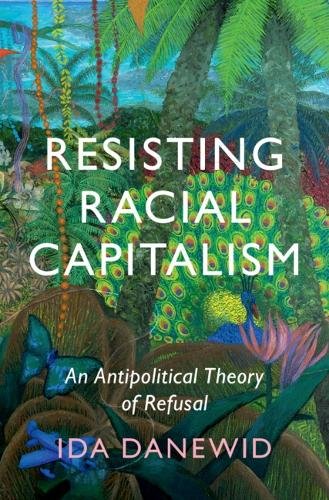
Resisting Racial Capitalism: An Antipolitical Theory of Refusal
An Antipolitical Theory of Refusal
the viability of many right-wing intellectuals and intellectual spaces is enormously dependent on the largesse of reactionary billionaires and foreign governments, who help them circumvent a marketplace of ideas where they would otherwise post extraordinarily poor sales

Don Moynihan
Its fair to ask if Orban's successful cultivation of the Western right wing intellectuals reflected that their networks were already dependent on patronage. Rod Dreher was funded by a weird billionaire, and when he stopped paying his salary, Orban did. Dreher already looking for a new gig.
This, and even more - to get super-rich almost requires *suppressing* the cultivation of a self or interiority. “Our system produces, elevates, and rewards psychopaths.” x.com/uTobian/status/20412132683884…

Levi Stahl
The empty boredom of the super-rich who never had to cultivate a self or interiority is the root cause of so many of our problems.
if there's one conclusion that the study of both labor history and imperialism converge on, it is that the richest people in the world are happy to burn money on control, power, impunity. and the "everything is about profit" version of anti-capitalism does not survive serious contact with either

Leonard Pierce
Adding to this thread: it’s a common mistake (I’ve made it myself, many times) to think of the motivations of the capitalist elites as essentially mercantilist: that is, that they are largely still motivated *entirely* by profit and loss, selling product, etc. This has not been true for a while.


