

A personal reflection on how spaced repetition and hand crafted flashcards helps me to keep understanding alive
Spaced repetition
Spaced repetition is an evidence-based learning technique that is usually performed with flashcards. Newly introduced and more difficult flashcards are shown more frequently, while older and less difficult flashcards are shown less frequently in order to exploit the psychological spacing effect. The use of spaced repetition has been proven to increase the rate of learning.

Mochi - Spaced repetition flashcards
Take notes and make flashcards using markdown, then study them using spaced repetition.
Flashcards as Notes - Wesley's notes
Effortful reading habits and resisting the urge to defer attention
Leitner system
The Leitner system is a widely used method of efficiently using flashcards that was proposed by the German science journalist Sebastian Leitner in 1972. It is a simple implementation of the principle of spaced repetition, where cards are reviewed at increasing intervals.
loveletter.pics
loveletter.pics is an art project dedicated to sharing love through handwritten words. be inspired by the romances of strangers, or leave behind a piece of your own heart. lose yourself in affectionate words, wander through the loops of handwritten letters, and feel the intimacy carried within every piece.
OpenDeck · Learn languages you own
Learn languages with spaced-repetition flashcards you own.
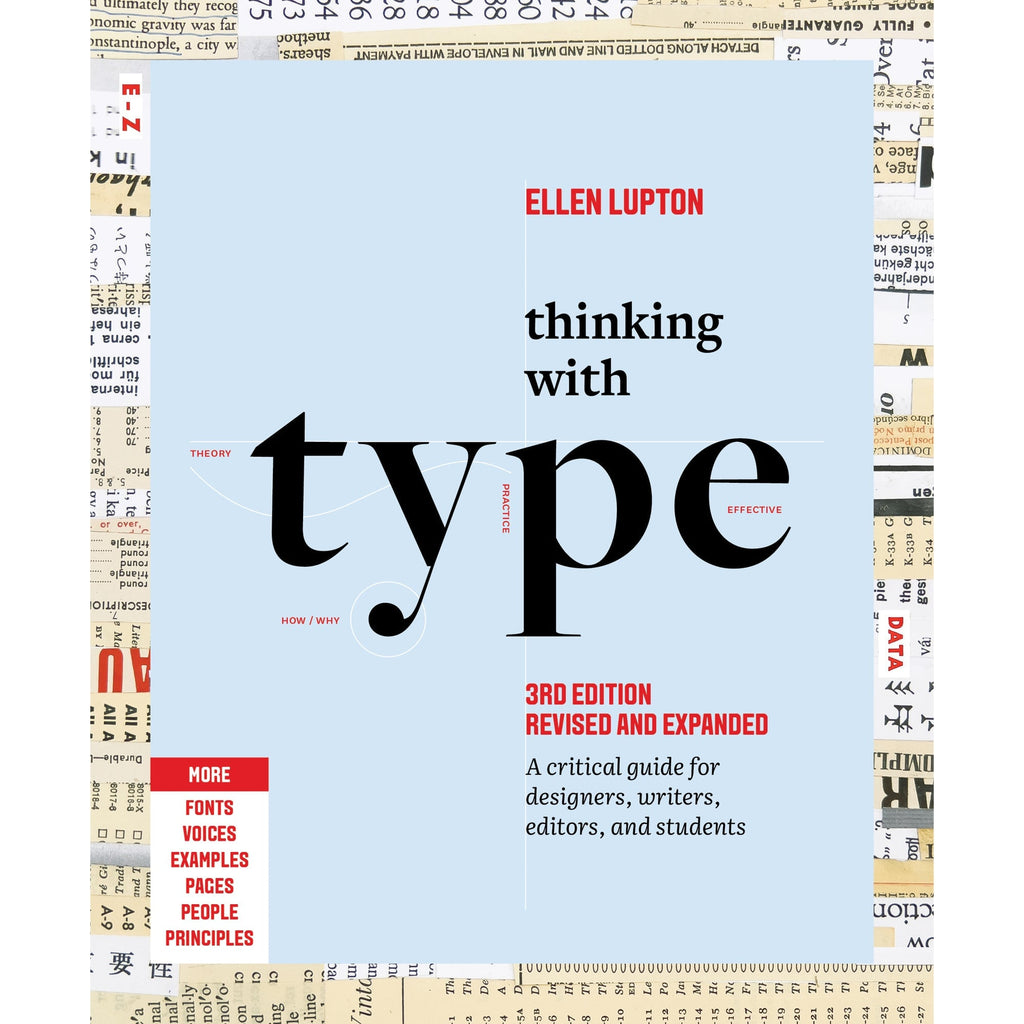
Thinking with Type
The essential and bestselling guide to typography from beloved design educator Ellen Lupton—revised and expanded to include new and additional voices, examples, and principles, and a wider array of typefaces. "Thinking with Type is to typography what Stephen Hawking's A Brief History of Time is to physics."—I Love TypographyThe bestselling Thinking with Type in a revised and expanded third edition: This is the definitive guide to using typography in visual communication. Covering the essentials of typography, this book explores everything from typefaces and type families to kerning and tracking to grids and layout principles.Ellen Lupton provides clear and focused guidance on how letters, words, and paragraphs should be aligned, spaced, ordered, and shaped. Historical and contemporary examples of graphic design show how to learn the rules and how to break them. Critical essays, eye-opening diagrams, helpful exercises, and dozens of examples and illustrations show readers how to be inventive within systems that inform and communicate.Featuring 32 pages of new content, the third edition is revised and refined from cover to cover: More fonts: old fonts, new fonts, weird fonts, libre fonts, Google fonts, Adobe fonts, fonts from independent foundries, and fonts and lettering by women and BIPOC designersIntroductions to diverse writing systems, contributed by expert typographers from around the worldDemonstrations of basic design principles, such as visual balance, Gestalt grouping, and responsive layoutCurrent approaches to typeface design, including variable fonts and optical sizes; tips for readability, legibility, and accessibility; and stunning reproductions from the Letterform Archive Thinking with Type is the typography book for everyone: designers, writers, editors, students, anyone who works with words on page or screen, and enthusiasts of type and lettering. Readers will also love Ellen Lupton's book Extra Bold: A Feminist, Inclusive, Anti-racist, Nonbinary Field Guide for Graphic Designers. Ellen Lupton is a designer, writer, and educator. She has written numerous books about graphic design, including Thinking with Type, Graphic Design Thinking, and Extra Bold: A Feminist, Inclusive, Anti-racist, Nonbinary Field Guide for Graphic Designers. She teaches in the Graphic Design MFA program at Maryland Institute College of Art in Baltimore (MICA), where she proudly serves as the Betty Cooke and William O. Steinmetz Design Chair. She is Curator Emerita at Cooper Hewitt, Smithsonian Design Museum in New York City, where her exhibitions included Herbert Bayer: Bauhaus Master and The Senses: Design Beyond Vision. Lupton loves reading, writing, teaching, and learning new things about design.

Playbooks — Renaissance Philanthropy – A brighter future for all through science, technology, and innovation
Christopher Alexander’s A Pattern Language defines 253 methods for constructing beautiful and practical designs at every scale, from cities to rooms.

Butterick’s Practical Typography

Photography Prints by David Hawkins-Weeks
Photography prints and cards by David Hawkins-Weeks

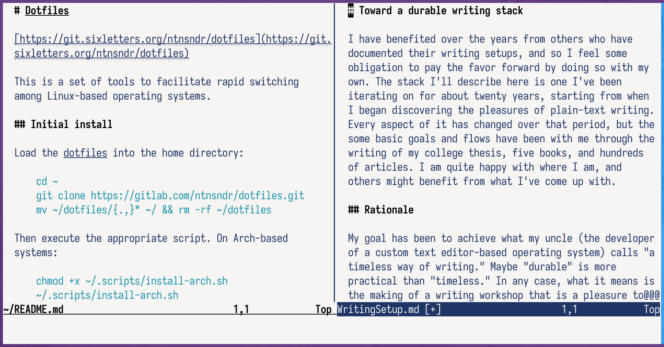
Toward a durable writing stack – Writings and rehearsals by Nathan Schneider
I have benefited over the years from others who have documented their writing setups, and so I feel some obligation to pay the favor forward by doing so with my own. The stack I’ll describe here is one I’ve been iterating on for about twenty years, starting from when I began discovering the pleasures of plain-text writing. Every aspect of it has changed over that period, but the some basic goals and flows have been with me through the writing of my college thesis, five books, and hundreds of articles. I am quite happy with where I am, and others might benefit from what I’ve come up with.

I like this idea for postcards. (it is postcard + digital e2ee) penumbraprint.com/shop/ #random

Penumbra Print Shop | Shop
www.penumbraprint.comLuhmann's actual Zettelkasten cards survive. They are not walls of text. One to three sentences, generous whitespace, reference numbers everywhere. I redesigned my Bluesky posting system to match. $cT7aZ

Breaking the Wall of Text — The Luhmann Method and the Compression Power of Japanese
plurality.leaflet.pub
