


Writing this handbook has been a process of not over-thinking it. In deciding to do it post-by-post, day-by-day, I practiced sharing as I went, posting to a ...
Guidance on Authoring Lexicons
At last weekend's Atmosphere Conference, there were a lot of questions about how author Lexicons. I thought it would be a good idea to share some guidance.

On Writing #3
Periodically I like to gather various observations about writing, and share my perspective.

Docs as Code: The Best Guide for Technical Writers
Recently, my work has involved writing a lot of documentation and. Doing this has introduced me to...

The Golden Rule for Becoming a Better Writer - T.R Napper
I’m obsessed with the craft of writing. I write every day, I read about the craft often, and in my...

Content guidelines overview
The section covers the naming and content of Internet-Drafts (I-Ds) including the required and recommended sections. There are lots of rules governing the content, developed over many years in order, which aim to ensure the readability and consistency of I-Ds. Please follow this section closely. The pages in this section are:
Writing Handbook: How to source writing ideas
Learn how to write an introduction paragraph. This guide explains the writing process for introductions, as well as the process for deciding what to write about.

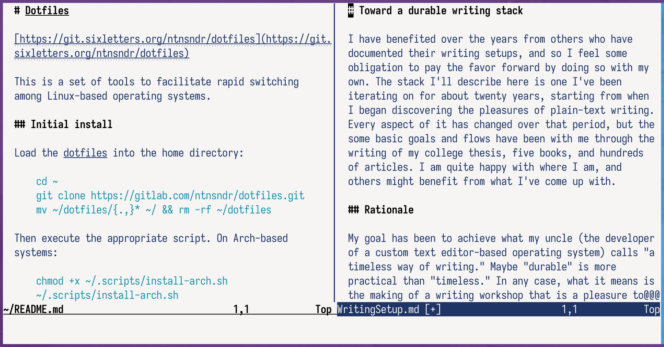
Toward a durable writing stack – Writings and rehearsals by Nathan Schneider
I have benefited over the years from others who have documented their writing setups, and so I feel some obligation to pay the favor forward by doing so with my own. The stack I’ll describe here is one I’ve been iterating on for about twenty years, starting from when I began discovering the pleasures of plain-text writing. Every aspect of it has changed over that period, but the some basic goals and flows have been with me through the writing of my college thesis, five books, and hundreds of articles. I am quite happy with where I am, and others might benefit from what I’ve come up with.
Creative Reading: Scaffolding Reading for Transformation
However, recent work on augmenting reading largely focuses on making reading more efficient, especially in knowledge-intensive contexts where people must rapidly make sense of research papers and other complex documents (Lo et al., 2024). These systems often aim to help readers skim, summarize, and synthesize large volumes of information in order to reduce cognitive effort and accelerate document- and corpus-level sensemaking at scale (Gu et al., 2025; Lo et al., 2024; Fok et al., 2023). At one extreme, the form of reading implicitly envisioned by these systems may resemble what we call “reading to discard”: extracting the essential, actionable informational core of a document as quickly and efficiently as possible, so that the rest can be swiftly tossed aside—much like we often process inbound mail. This motivates us to ask what scaffolding approaches might resist “reading to discard,” what alternative forms of reading we might scaffold, and what alternative views and values of reading might guide the conversation.
In Which A Book Lexicon is Born
Hi everyone, We recently held a sync to discuss creating a shared book lexicon for the Atmosphere Protocol. I’ve shared the full recording (thanks Ronen!) and notes from the meeting here: Fathom with some early notes here: https://app.notion.com/p/Book-Lexicon-Session-1-211b2b43aabb8007b098d063972ca58c (also do we have a ATProto version of Notion yet?) The book logging social scene is highly fragmented. Dozens of Goodreads alternatives are competing but not interoperating, leading to a lack of...

Why good non-techie user documentation is vital for a wider embrace of the ATmosphere - Debbie's Blatherings - by Debbie Ridpath Ohi
Plus tips on writing good user documentation
Page 4: POW+TREE Writing Strategy
As Ms. Lin reflects on the trouble her students are having with writing, she realizes that many of her students need help incorporating the four elements of the writing process (i.e., planning, organizing, writing, and editing and revising) into their essays. She concludes that they need a guide or strategy to follow as they write.[.....]
i was annoyed that this isn't explained how i want in the docs so i wrote my own mini-guide to publishing lexicons:

atproto made simple: publishing lexicons
underreacted.leaflet.pubNew project! I recently needed feedback on a doc I was writing and didn't have a good place to post it. So I built requested.fyi. Post docs, get comments, all on the Atmosphere. disnetdev.com/blog/rfcs-on-the-atmosphere

RFCs on the Atmosphere
www.disnetdev.comMy "Introduction to #ATProto" blog post that I've been working on for some time is ready 🙂 It goes through things like records, lexicons, DIDs, then PDS/AppView etc. and how it all works together. Let me know if anything is wrong! More parts later, with the Fedi comparisons & misconceptions etc.

Introduction to AT Protocol
mackuba.eu

