Back when I was managing at Uber, I latched onto a thinking tool that I drilled into the teams I worked with: reach the right outcomes by prioritizing the company first, your team second, and yourself third. This “company, team, self” framework proved a helpful decision-making tool, and at the time I felt it almost always led to the correct decision. It also helped me articulate why I disagreed with some of my peers’ decisions, which violated this hierarchy by placing individual or team preferences over the company’s priorities.
Against optimization
One of the most inescapable edicts when leading a team is the order to optimize the system towards the organization’s goals.


Habits of High-Functioning Teams
I often struggle to explain what it means to be part of a high-functioning software team. Sure, there are mountains of literature, and an entire genre of LinkedIn thought leadership that professes all kinds of guidelines and heuristics about what makes teams work, but in my experience, it’s hard to internalize these ideas and follow someone else’s model if you’ve never seen what good looks like.
Leadership requires taking some risk.
At a recent offsite with Carta’s Navigators, we landed on an interesting topic: leadership roles sometimes mean that making progress on a professional initiative requires taking some personal risk. This lesson was hammered into me a decade ago during my time at Uber, where I kicked off the Uber SRE group and architectured Uber’s self-service service provisioning strategy that defined Uber’s approach to software development (which spawned a thousand thought pieces, not all complimentary). I did both without top-down approval, and made damn sure they worked out. It wasn’t that I was an anarchist, or that I hated all authority, rather that I could have never gotten explicit approval for either approach. It was the sort of culture where occasionally you were told not to do something, but you were only rarely given explicit permission to do anything. My choice was to either point fingers about why I was stuck, or take on some personal risk to make forward progress.
How Priorities Make Things Happen
Editor: Project manager and writer Scott Berkun knows how to get things done when you've got a team of people, a to-do list, and a deadline. Today h

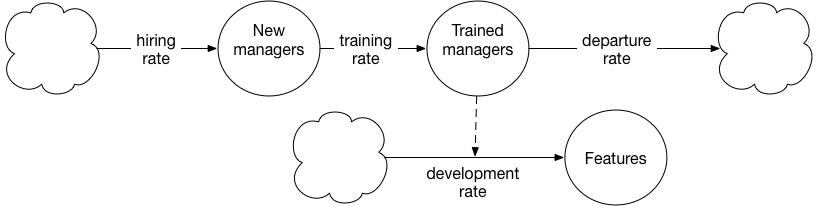
Introduction to systems thinking.
Many effective leaders I’ve worked with have the uncanny knack for working on leverage problems. In some problem domains, the product management skillset is extraordinarily effective for identifying useful problems, but systems thinking is the most universally useful toolkit I’ve found.
A game of co-opetition: exploring the benefits of asset owner collaboration - Thinking Ahead Institute
It may seem like a hidden truth but the reality is that asset owners are in competition with each other. They are in competition for the best alpha ideas, the best manager products and the best research – all with the aim of improving risk-return trade-offs to increase the likelihood of meeting their liabilities. As a result, many asset owners find it difficult to collaborate, even in initiatives that may prove mutually beneficial. At the Thinking Ahead Institute’s recent Sydney roundtable event, asset owner attendees highlighted the top three barriers to successful peer collaboration: (1) difficulties being transparent; (2) lack of time and resources available; and (3) difficulties in aligning interests. At the same time, attendees agreed on the value to funds of collaborating productively on industry structure and regulation, and on a universal owner / alignment of interest agenda.

Reaching Peak Meeting Efficiency
Meetings are undeniably the most important tool for build a high-performance team with shared values

Adopt and scale Team Topologies: platform-as-a-product, templates, more. — Team Topologies - Organizing for fast flow of value
Accelerate value with Team Topologies: measure cognitive load, define team boundaries, apply inverse Conway, readiness assessments, and more for fast delivery.

Manage your team better with the simple 'rule of five' - Inside Atlassian
Master this easy strategy to manage employees more effectively, as well as help to convey what's really important from a company perspective.

Impact, agency, and taste
understand + work backwards from the root goal • don’t rely too much on permission or encouragement • make success inevitable • find your angle • think real hard • reflect on your thinking
The Product Strategy Stack | Reforge Blog
Reforge drives team performance, with the most actionable learning from vetted operators that your team will actually use and apply.

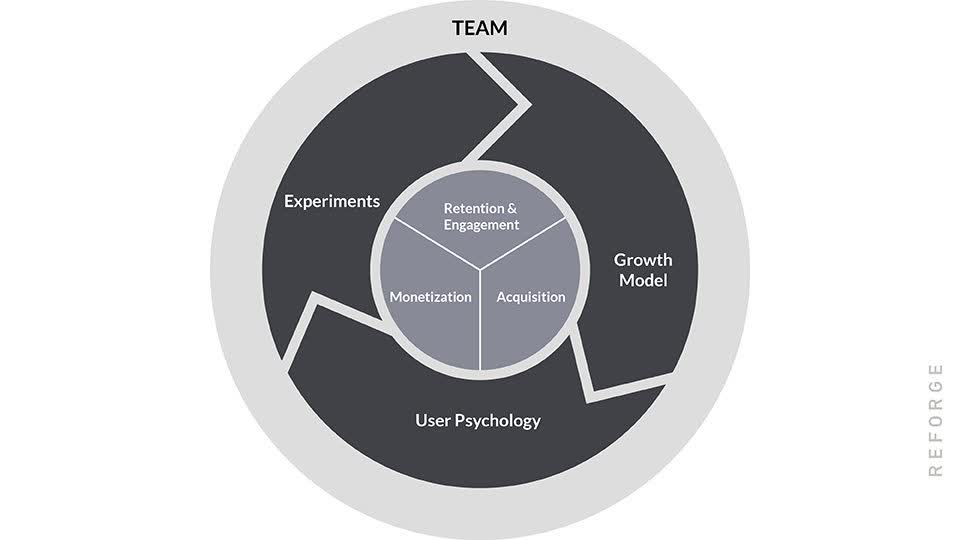
Building Growth: Product, Process, and Team | Reforge Blog
Reforge drives team performance, with the most actionable learning from vetted operators that your team will actually use and apply.
relearn Leadership - the over-optimisation problem in organisations
Buy wisely
Whenever I buy things I try to prioritize cost per use. Sometimes I consider other priorities such as cost per smile, cost per thrill, cost per externality, ...
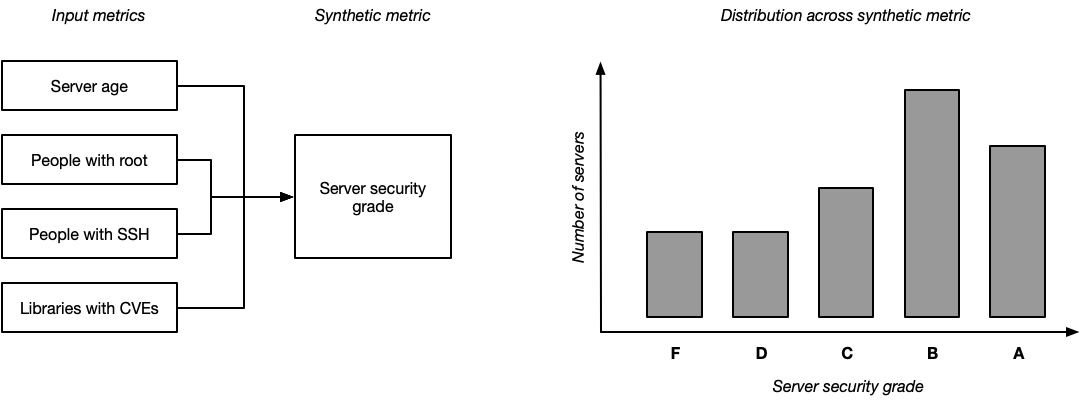
Metrics for the unmeasurable.
As organizations grow more complex, the folks running them interface with reality through increasingly incorporeal abstractions. On the smallest teams, leadership might be deep in the code on a daily basis. A bit larger, and you’re talking about tasks in sprints. Larger still, and you’re talking about collections of tasks, and adopting fancy terminology like ’epics.’ At a hundred plus engineers, you’re likely talking primarily in themes of work with focus on several key initiatives. Next, you might be talking about the investment frameworks for making prioritization decisions.