

A friend who angel invests shared that some of his pre-seed investments are considering shutting down before even trying to raise their next round. This isn’t super surprising; many early-stage startups are struggling to hit the growth expectations to raise, which are extremely high at the moment, but what’s been interesting is why these companies are losing confidence: they’re just not sure there’s a need for software anymore, given how rapidly a good harness with a frontier model can build. This anxiety about the future isn’t limited to young startups; you can find it in startups of almost any size right now, boiling down to the fear that a lab might recreate your business tomorrow as a side project.
What Kills Startups? Blackbox Releases Report/App To Help Founders Avoid The Deadpool | TechCrunch
It's not easy being green -- or an entrepreneur. The inherent risk in becoming an entrepreneur or founding a startup is high. Sleepless nights, sweat equity, bribing new users to come to your product -- it's all part of the nerve-racking, code-spinning, and teeth grinding process. That's why most of these swashbucklers are pirates by nature. But the truth of the matter is that few startups ever make it far enough to find the buried treasure or piggyback on Facebook all the way to glory; in fact, the cold, hard reality is that more than 90 percent of all startups fail. That's why four young international entrepreneurs (Bjoern Herrmann and Aleksandra Markova) created the so-called Startup Genome Report, because they wanted to a deep dive into what makes a startup successful -- and what causes so many to drink from the cup of FAIL.

Advice and Insights for Entrepreneurs | OnStartups
Insights and ideas for software startups
12 Things I Learned from Chris Dixon about Startups | Andreessen Horowitz
#1 “If everyone loves your idea, I might be worried that it’s not forward thinking enough.” Anyone thinking about starting a business should be searching for mispriced opportunities. While markets are mostly efficient in eliminating opportunities for extraordinary profit, there are always areas of an economy in which there are significant uncertainty. These areas are...

Excuse me, is there a problem?
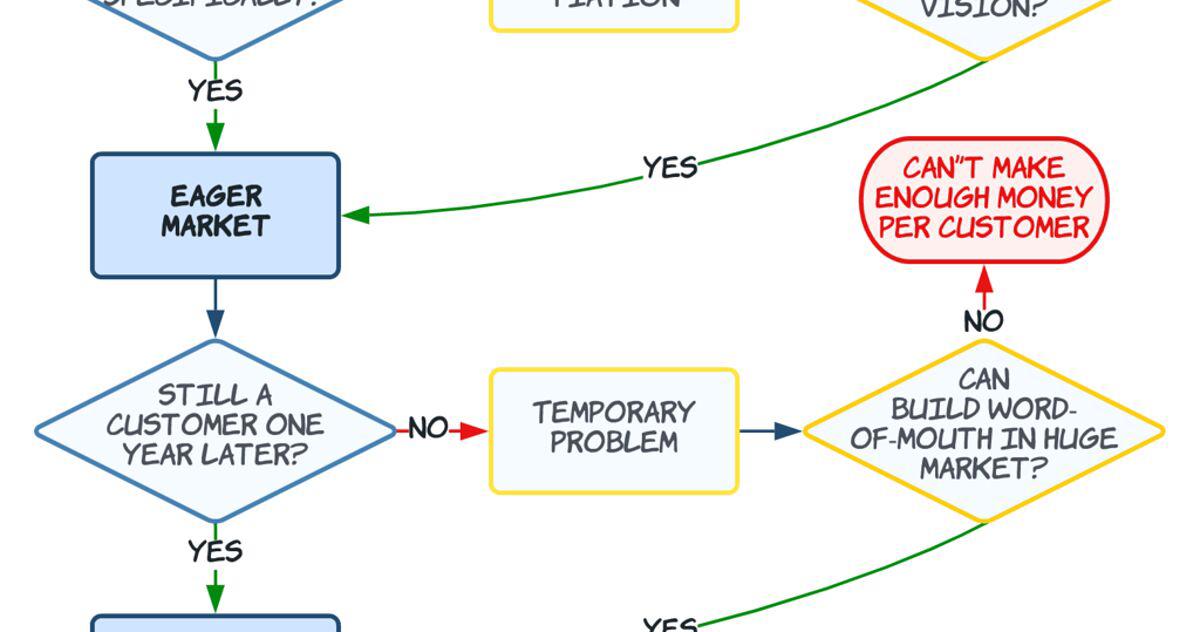
Many startups fail despite identifying a real problem and building a product that solves that problem. This explains why, so you can avoid their fate.
Excuse me, is there a problem?
Many startups fail despite identifying a real problem and building a product that solves that problem. This explains why, so you can avoid their fate.
Why Buying a Stalled Startup is Better than Starting From Scratch (Now)
After a long stretch in the venture-backed startup world, I eased out a few years ago to work on turnarounds — finding stalled companies…

News — Improbable
Stay up to date with the latest from Improbable — company milestones, venture launches, thought leadership, and industry insights. Explore how we’re backing and building the next generation of ventures.
These billion-dollar AI startups have no products, no revenue and eager investors
A new wave of startups some have dubbed “neolabs” are focusing on long-term research and developing new AI models over immediate profits.

These Billion-Dollar AI Startups Have No Products, No Revenue and Eager Investors
A new wave of startups some have dubbed “neolabs” are focusing on long-term research and developing new AI models over immediate profits.

Labs And Incubators Fuel Enterprise Innovation | TechCrunch
Change doesn't come easily to large organizations. Over time they have established a firm set of core business processes to give them the structure to

The Surprising Bias Of Venture Capital Decision-Making | TechCrunch
Stories of entrepreneurs launching innovative ideas, raising millions in venture capital and turning startups such as Uber, Airbnb and Snapchat into multi-billion dollar companies has catapulted venture capital investments, setting record numbers since the dot-com era. On the surface, it appears that investors have everything under control. But as we peel back the layers, empirical research shows extremely challenging and costly cognitive biases that must be battled to make sound decisions.

It’s actually open source software that's eating the world
At Lightspeed we’ve been investing aggressively in open source software (OSS) businesses for the past 10 years. Recently, we’ve seen a significant increase in entrepreneurs pitching open source startups, and we’ve also seen greater competition for these deals. We pulled together some numbers in an attempt to measure the acceleration in interest in and funding for OSS businesses in the last few years. The results were staggering even to us.
The Market Curve
The market you choose to serve is one of the most important factors for an early-stage startup. And for most technologists, it’s a blind …

The Beginning of the End of Big Tech
From politicians to VC firms, everyone is falling out of love with the massive, money-oriented, global technology titans. In their place, we have the chance to build something open and trustworthy.

The Rise of the Silicon Valley Small Business
What you need to know about the next big startup archetype
How Biotech Startup Funding Will Change in the Next 10 Years | Y Combinator
Back when YC was getting started about 10 years ago, Paul Graham wrote some [http://www.paulgraham.com/webstartups.html] essays [http://www.paulgraham.com/future.html] that predicted the way startup fundraising would change in the next decade – accurately, it turns out. Paul Graham predicted that there would be way more startups, that they’d be cheaper to start, that new kinds of investors would fund them, that founders would be more technical, and that founders would keep control of their compa