

In the earliest bits of my career, I spent a lot of time worrying that my lack of pedigree was holding me back. How much easier things would have be for me, I imagined, if only I’d attended a feeder school like Stanford or started out at a prestigious company like Google. Memories of that angst bubbled up when I was chatting with someone at a recent conference, and they asked how I knew so many of the people nearby. My first reaction was that I don’t know very many folks, but it’s also the case that I know meaningfully more folks today than I did just a few years ago, and that change isn’t entirely accidental.
Five Things I’ve Learned in Ten Years of being a Social Scientist in Tech
I’ve been doing work in tech for ten years. Ten years ago I didn't say much about leaving academia, even though it was a big choice that held a lot inside it. I’ve also recently committed to a new research agenda, which has been making me think a lot about all the reasons I do applied research. It is, incidentally, my birthday. All this made me feel like there was a piece, a thought, a current underneath my surfboard this week, but it was difficult to figure out what. Assigning lists and numbers
Developing creative identity
I was a theoretical physicist from 1992 to 2007. It was a romantic activity, exploring the fundamental nature of the cosmos! I became a university professor, wrote papers and books, and got to explore some of the most beautiful ideas ever discovered. In parallel, I also developed a fascination with the social systems humanity uses to make knowledge. Systems like the university or peer review are immensely deep inventions: our discovery system is itself one of the great inventions of humanity! But I believed a radically better discovery system must be possible. I became obsessed with this idea, eventually giving up tenure to work on it1. My first big project was to write a book helping develop and spread the fundamental ideas underlying the modern open science movement.
Unintuitive Things I’ve Learned about Management (Part 1)
I first started managing people seven years ago, three years after I graduated and got my first design job. At the time, I was woefully…

The Toolbox Strategy: How To Become Uniquely Valuable
After having just dropped out of university, at 19-years-old; I received a line of advice that changed how I made every decision in my career…
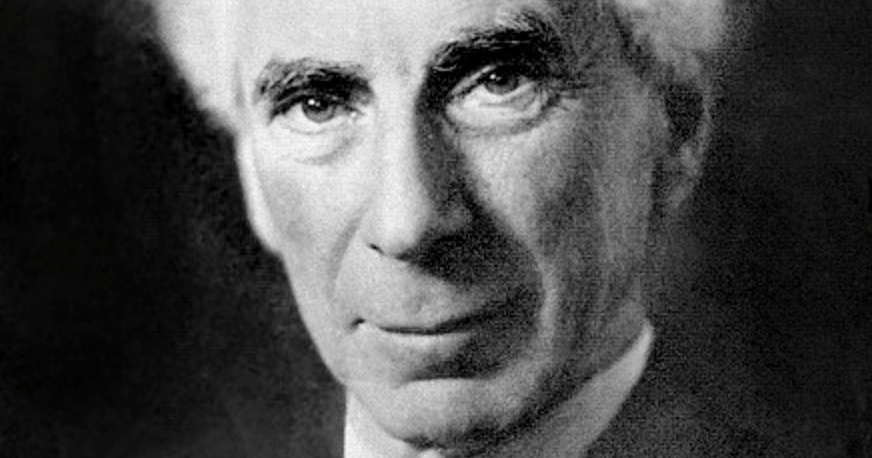
How to Grow Old: Bertrand Russell on What Makes a Fulfilling Life
“Make your interests gradually wider and more impersonal, until bit by bit the walls of the ego recede, and your life becomes increasingly merged in the universal life.”
Shh! Keep Your Big Goals to Yourself.
Sharing too much information apparently diminishes the likelihood you will follow through with your life-changing intentions, research shows. Here's what to do instead.

Rosano
hello I'm a technologist, writer, and musician, mostly producing personal projects. This is my home on the web. Find more in my blog, vlog, and log. Now in Toronto, Canada 🇨🇦 . connection Strolling conversations with people I meet along the way thick skin, open heart If it was guaranteed to feel good, I wouldn't be open to whatever happens. visual family cosmos one surname is not "where you're from". introducing Occasion Shifting from "I should take less space" to "I'd like to connect regularly with people who want more".
How Facebook Figures Out Everyone You've Ever Met
In real life, in the natural course of conversation, it is not uncommon to talk about a person you may know. You meet someone and say, “I’m from

The Science of Making Friends
Starting in early adulthood, our number of friends starts to decrease steadily; there are ways to reverse the tide, writes Elizabeth Bernstein.

Misperceptions About Others
Perceptions about others play an important role in shaping people's attitudes and behaviors, as well as social norms more broadly. This review presents a meta-analysis of the recent empirical literature that examines perceptions about others in the field, covering over a million observations for a total of 434 elicited perceptions. We document a number of stylized facts. Misperceptions about others are widespread, asymmetric, much larger when about out-group members, and positively associated with one's own attitudes. Experimental treatments to recalibrate misperceptions generally work as intended; they sometimes lead to meaningful changes in behaviors, though this often occurs only immediately after the treatments. We discuss different conceptual frameworks that could explain the origin, persistence, and rigidity of misperceptions about others. We point to several directions for future research.

'At 47, I discovered I am autistic – suddenly so many things made sense'
Other people’s lives always seemed more effortless, but it took my daughter’s autism diagnosis to realise why
Disrupt Yourself
“Are you sure you aren’t making a mistake?” I had just announced to one of my dearest friends that I planned to walk away from Wall Street and my seven-figure salary. “Yes, I’m sure.” But was I? Years earlier, I had moved to New York City with a degree in music and a husband who […]
Why Your Social Capital is Probably Worthless
In 1973, sociologist Mark Granovetter published one of the most influential papers in social network theory. "The Strength of Weak Ties" demonstrated something counterintuitive: when it comes to finding jobs and opportunities, your casual acquaintances are often more valuable than your close friends. This makes perfect sense when you think

Becoming a stranger in my own field
There is a difference between making scientific work more accessible and changing what institutions recognize as valuable scientific work.

I got into tech six years ago because I figured I could have an outsized impact on making a less harmful, more empowering world for workers and marginalised people. Only this year, I started connecting IRL with people who think this way. Here I tried to write about the ways that's transformed me.

DWeb, Culture and Resistance
meri.garden
