

Atlassian will begin collecting customer metadata and in-app content from **Jira**, **Confluence**, and other cloud products by default on **August 17, 2026**, to train its AI offerings including `Rovo` and `Rovo Dev`. The change affects roughly **300,000** customers; metadata collection is mandatory for Free, Standard, and Premium tiers and cannot be opted out on those plans. Enterprise customers can opt out of metadata and in-app collection by default. Collected data will be retained up to **seven years**, with in-app data removed within 30 days after deletion or opt-out and models retrained within 90 days. Customers using customer-managed keys, Atlassian Government Cloud, Isolated Cloud, or with HIPAA requirements are excluded from collection.
Permissive-Washing in the Open AI Supply Chain: A Large-Scale Audit of License Integrity
Permissive licenses like MIT, Apache-2.0, and BSD-3-Clause dominate open-source AI, signaling that artifacts like models, datasets, and code can be freely used, modified, and redistributed. However, these licenses carry mandatory requirements: include the full license text, provide a copyright notice, and preserve upstream attribution, that remain unverified at scale. Failure to meet these conditions can place reuse outside the scope of the license, effectively leaving AI artifacts under default copyright for those uses and exposing downstream users to litigation. We call this phenomenon ``permissive washing'': labeling AI artifacts as free to use, while omitting the legal documentation required to make that label actionable. To assess how widespread permissive washing is in the AI supply chain, we empirically audit 124,278 dataset $\rightarrow$ model $\rightarrow$ application supply chains, spanning 3,338 datasets, 6,664 models, and 28,516 applications across Hugging Face and GitHub. We find that an astonishing 96.5\% of datasets and 95.8\% of models lack the required license text, only 2.3\% of datasets and 3.2\% of models satisfy both license text and copyright requirements, and even when upstream artifacts provide complete licensing evidence, attribution rarely propagates downstream: only 27.59\% of models preserve compliant dataset notices and only 5.75\% of applications preserve compliant model notices (with just 6.38\% preserving any linked upstream notice). Practitioners cannot assume permissive labels confer the rights they claim: license files and notices, not metadata, are the source of legal truth. To support future research, we release our full audit dataset and reproducible pipeline.

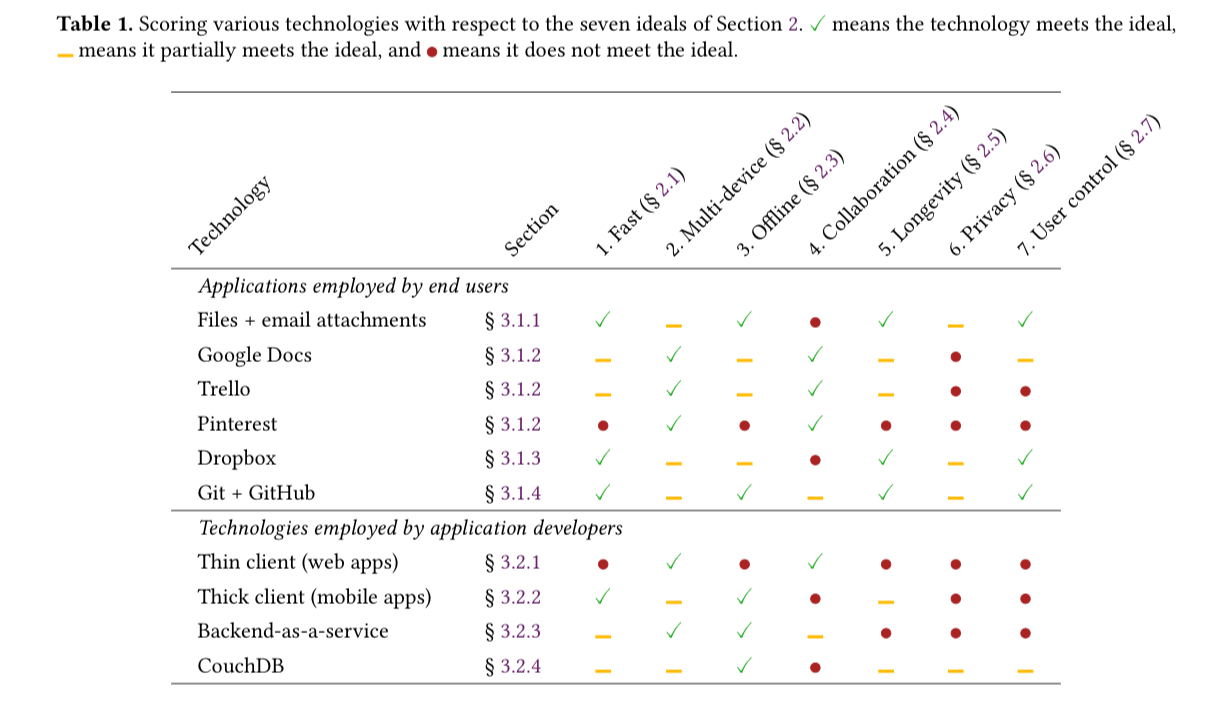
Local-first software: you own your data, in spite of the cloud
Local-first software: you own your data, in spite of the cloud Kleppmann et al., Onward! ’19 Watch out! If you start reading this paper you could be lost for hours following all the interesti…
OpenAI to acquire Ona
OpenAI plans to acquire Ona to expand Codex with secure, persistent cloud environments, enabling long-running AI agents across enterprise workflows.
Offering Zero Data Retention for frontier models
OpenAI reaffirms Zero Data Retention for eligible API customers and previews Private Safety Processing for advanced AI safety without compromising data privacy.
Can Synthetic Training Data Survive Its Own Regulation?
Synthetic training data has recently emerged as the quick fix to two different problems: the lack of high-quality training data, and the need to avoid using personal data in training to stay within the boundaries of privacy legislation. Gartner predicts that by 2026 75% of all enterprises will use generative AI to create synthetic training data, a huge increase from less than 5% in 2023.1 Moreover, Gartner predicts that by 2035, solutions that use synthetic data for training will grab three quarters of all end-user spending on enterprise AI software.2 Training data that only a few years ago was the subject of several research papers is now carrying the weight of huge enterprise systems.

Meta’s Mass Data Collection Is Not A-Muse-ing
At the beginning of September, Meta launched Muse, a “personal AI agent” marketed to collect as much data as possible assist users with whatever tasks they request or enable. Suggested uses in the initial release include filling out forms, negotiating on the user’s behalf, and responding to emails. Almost immediately, concerns over Muse have exploded, and many people have questioned whether this new release is really just another of Meta’s ploys to scoop up as much personal data as possible.

GDPR - SaaS reconsiders on-premises software
We review GDPR's impact on SaaS vendors and data collection practices and how it may reduce the cost disparity between hosted SaaS and on-premises Private SaaS.

Home - Inside Atlassian
Research, expert perspectives, and product announcements from Atlassian on how teams can work smarter with AI. Subscribe for monthly insights on the future of teamwork.
Home - Inside Atlassian
Research, expert perspectives, and product announcements from Atlassian on how teams can work smarter with AI. Subscribe for monthly insights on the future of teamwork.
After automation: Software will work for you, not on you
Alex Komoroske, CEO and cofounder, Common Tools — AI promises “infinite software”—endless tools tailored to every need—but funneled through today's app stores, that abundance just means more silos, more trapped data, and more to orchestr...
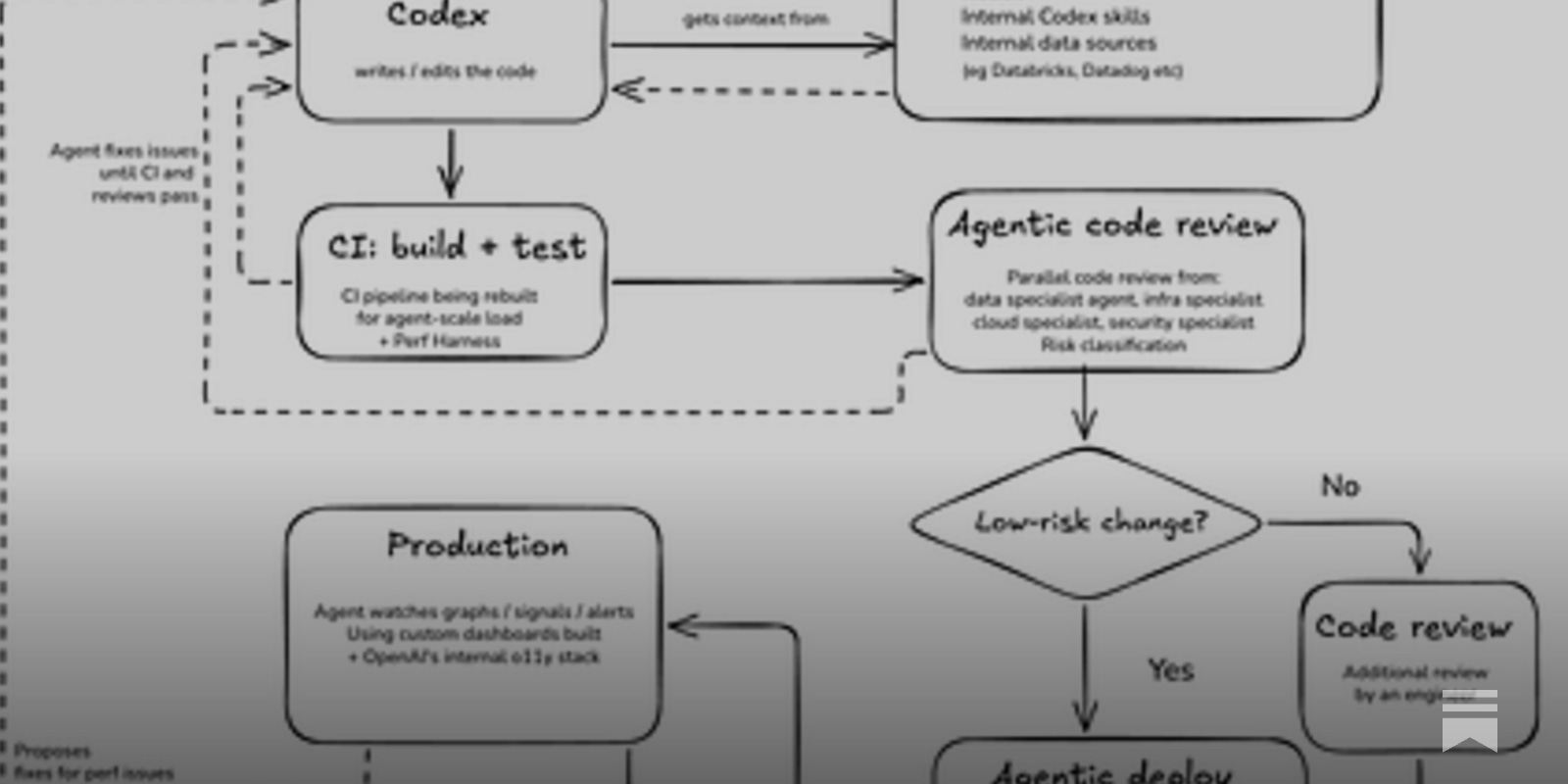
Inside OpenAI’s agentic software factory
A deepdive into how Codex has “taken over” OpenAI, how the frontier lab builds its agentic software factory, and the engineering challenges of one billion users. Details from inside OpenAI
New data agents across the Agentic Data Cloud | Google Cloud Blog
Learn about new data agents and tools for business analysts, data scientists, and database admins to integrate with the Agentic Data Cloud.
Understanding Jev, the new model everyone is talking about
OpenAI, CloudFlare, and Amazon have all copied this tiny startup.
OpenAI’s Sam Altman on Building the ‘Core AI Subscription’ for Your Life