


Since 2011 I’ve been spending a great junk of my time taming web browsers to behave correctly and predictably when editing rich text. If you’ve ever tried to include a custom rich text editor in your web application, you know it’s a rather difficult problem to solve. I’d even predict that you’ll mos…
Blog | FixBrowser
This blog post describes the rich text component used in FixBrowser web browser to display HTML pages and for interaction with the user.
Rich JavaScript Applications – the Seven Frameworks (Throne of JS, 2012)
Steve Sanderson's Blog

BlockNote - Javascript Block-Based React rich text editor
A beautiful text editor that just works. Easily add an editor to your app that users will love. Customize it with your own functionality like custom blocks or AI tooling.

Maggie Appleton on Twitter / X
I've always wanted my own WYSIWYG editor for my website, and now I have one! Works locally, saves changes to MDX.But the better part is building semantic writing tools on top. Colour-coded sentence classification, flagging cliches, repetition, and claims that need citations pic.twitter.com/lvOMTZ4DUB— Maggie Appleton (@Mappletons) September 28, 2026

Editing HTML in the browser ·
Live editing of CSS in the browser works great. You get to see your changes immediately, and there’s nothing like live feedback to keep you rolling, right? The Style Editor in Firefox makes it really easy to edit your CSS and save when you’ve got everything looking just right.
The HotJava Browser: A White Paper
Browsers allow people to treat the data spread across the Internet as a cohesive whole. Web browsers integrate the function of fetching the data with figuring out what it is and displaying it. One of the most important file types browsers understand is the hypertext markup language (HTML). HTML allows text data objects to embed simple formatting information and references to other objects.
Position Paper for the W3C Workshop on Web Applications and Compound Documents
This document represents the consensus opinion of the Mozilla Foundation and Opera Software in the context of standards for Web Applications and Compound Documents.
Home - Scroll Press
Scroll Press: A modern HTML-native preprint server for academic research. Upload and share research manuscripts in web-native formats.
Mozilla Hacks gets a new Editor – Mozilla Hacks - the Web developer blog
Almost three and a half years ago I wrote my first article for Mozilla Hacks and have been the Editor since September 2012. As the face and caretaker of this ...

Our commitment to a more capable web
Since the beginning of Chrome we have worked to provide a solid foundation for modern web applications. Those capabilities have enabled new...

HTML papers on arXiv -- why it is important, and how we made it happen
In October 2023, arXiv made HTML formatted papers available to readers. This was the exciting outcome of over a year of accessibility research and development with the scientific community. Currently, only 2.4% of research outputs meet accessibility guidelines. Informed by scientists who rely on assistive technology, our analysis demonstrates that offering HTML is the most impactful step arXiv can take. Scientists need HTML now, and emphasize to not let perfect be the enemy of good enough. In this paper we share with you how arXiv is achieving HTML conversions from LaTeX now, and our plans for future improvements.

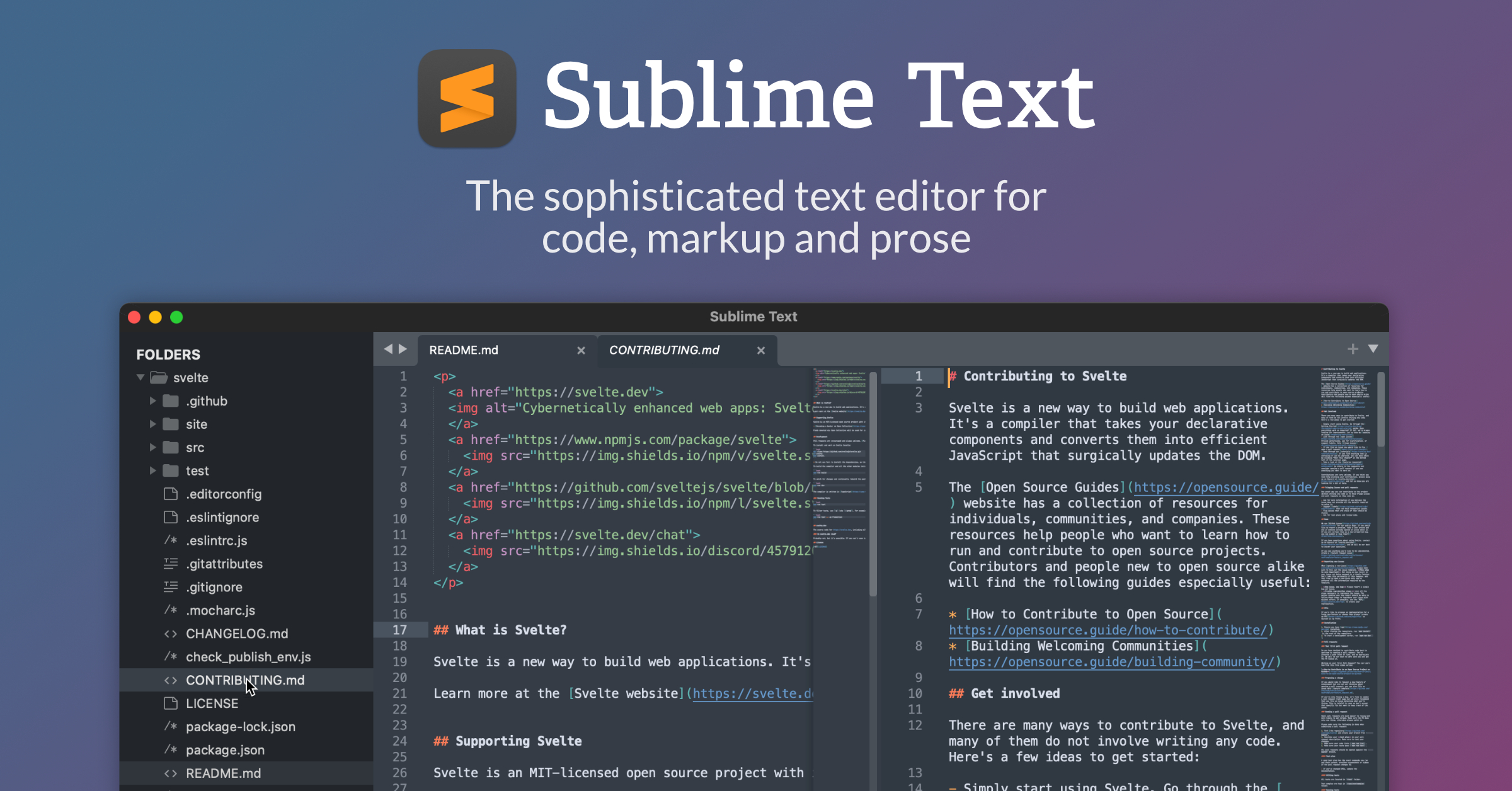
Sublime Text - the sophisticated text editor for code, markup and prose
Available on Mac, Windows and Linux
Running Interactive Scripts | Web Browser Engineering
The first web applications were like the previous chapter’s guest book, with the server generating new web pages for every user action. But in the early 2000s, JavaScript-enhanced web applications, which can update pages dynamically and respond immediately to user actions, took their place. Let’s add support for this key web technology to our browser.
Supporting Embedded Content | Web Browser Engineering
While our browser can render complex styles, visual effects, and animations, all of those apply basically just to text. Yet web pages contain a variety of non-text embedded content, from images to other web pages. Support for embedded content has powerful implications for browser architecture, performance, security, and open information access, and has played a key role throughout the web’s history.