

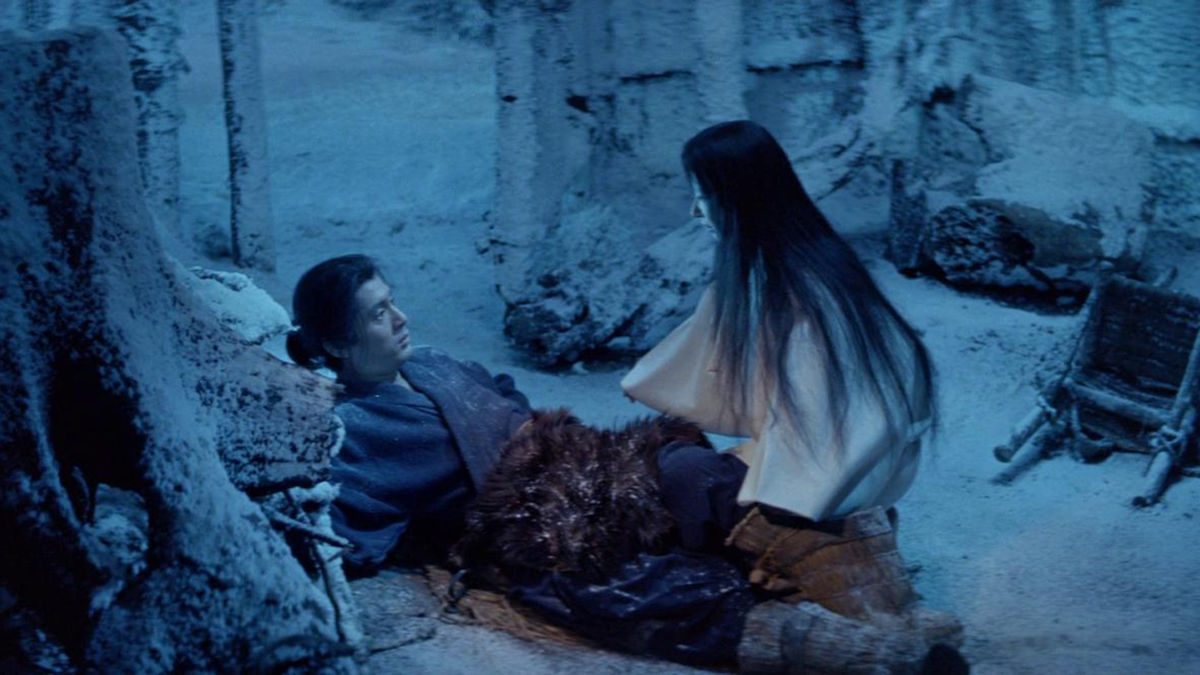
Taking its title from an archaic Japanese word meaning "ghost story," this anthology adapts four folk tales. A penniless samurai marries for money with tragic results. A man stranded in a blizzard is…
Osamu Dazai
Shūji Tsushima , known by his pen name Osamu Dazai , was a Japanese novelist and author. A number of his most popular works, such as The Setting Sun and No Longer Human, are considered modern classics.

Yojimbo (1961)
A nameless ronin, or samurai with no master, enters a small village in feudal Japan where two rival businessmen are struggling for control of the local gambling trade. Taking the name Sanjuro…
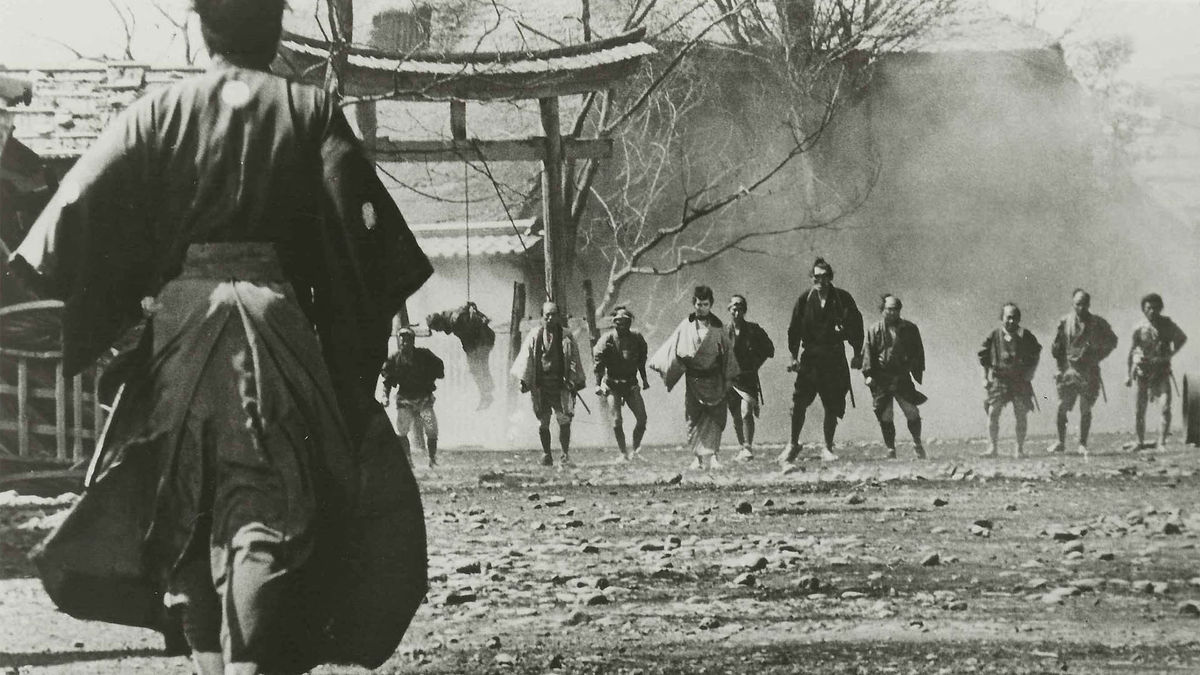
The Sword of Doom (1966)
Ryunosuke, a gifted swordsman plying his trade during the turbulent final days of Shogunate rule, has no moral code and kills without remorse. It’s a way of life that leads to madness.
Fight, Magic, Items: The History of Final Fantasy, Drag…
Take a journey through the history of Japanese role-pla…


Ghetto Koans by James Cagney | East Bay Booksellers
The Japanese word ‘ koan’ is a seemingly unanswerable riddle used by practitioners of Zen Buddhism to trigger spiritual enlightenment and understanding.

Unglue.it - A Community Supporting Free eBooks
Tales of Darkness and Light: Soso Tham’s The Old Days of the Khasis

Folklore.org: The Original Macintosh

Food, foragers, and folklore: the role of narrative in human subsistence
Narrative is a species-typical, reliably developing, complex cognitive process whose design is unlikely to have emerged by chance. Moreover, the folklore record indicates that narrative content is consistent across widely divergent cultures. I have argued elsewhere that a storyteller may use narrative to manipulate an audience's representations of the social and/or physical environment to serve his or her own fitness ends. However, my subsequent research suggests that such manipulation results from a broader selection pressure which narrative effectively alleviates: information acquisition. By substituting verbal representations for potentially costly first-hand experience, narrative enables an individual to safely and efficiently acquire information pertinent to the pursuit of fitness in local habitats. If this hypothesis is true, narrative should be rich with information useful to the pursuit of fitness. One class of information integral to the accomplishment of this task is foraging knowledge. In this paper, then, I present evidence that foraging peoples use narrative to transmit subsistence information: specifically, I demonstrate how various narrative devices (e.g., setting, description, mimicry, anthropomorphism) are used to communicate foraging knowledge.

ビューティ 記事一覧
前日のダイジェスト、読むべき業界ニュースを記者が選定し、解説を添えて毎朝お届けします(月曜〜金曜の平日配信、祝日・年末年始を除く)。 記事のアクセスランキングや週刊誌「WWDJAPAN Weekly」最新号も確認できます。

Shaggy dog story
In its original sense, a shaggy-dog story or yarn is an extremely long-winded anecdote characterized by extensive narration of typically irrelevant incidents and terminated by an anticlimax. In other words, it is a long story that is intended to be amusing and that has an intentionally silly or meaningless ending.[1]
Harakiri (1962)
Down-on-his-luck veteran Tsugumo Hanshirō enters the courtyard of the prosperous House of Iyi. Unemployed, and with no family, he hopes to find a place to commit seppuku—and a worthy second to…
Chuchee Mythology - Index
Sacred religious text from the Internet Sacred Text Archive