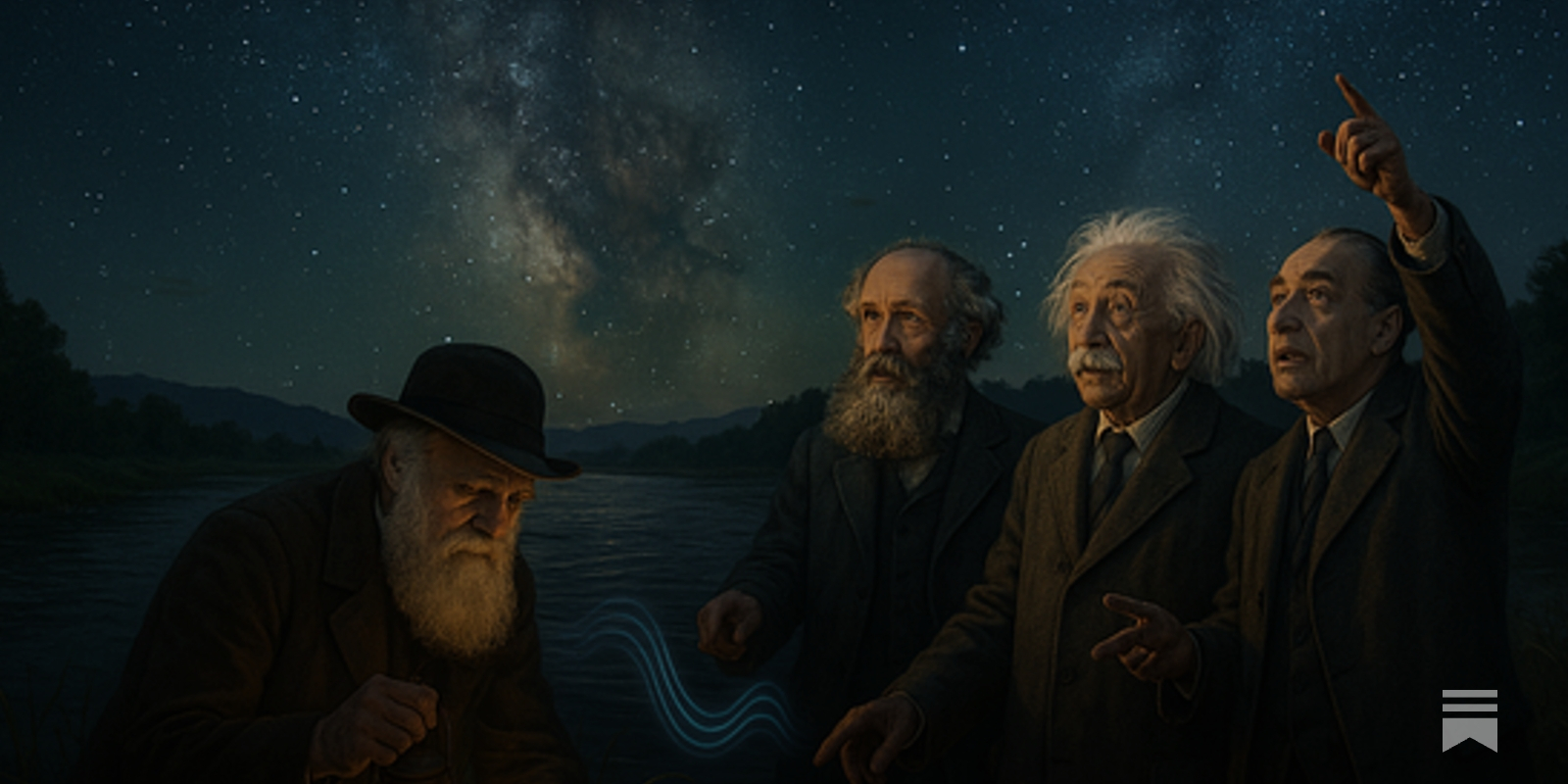
Darwin the abolitionist
The theory of evolution is regarded as a triumph of disinterested scientific reason. Yet, on the 150th anniversary of "On the Origin of Species," new research reveals that Darwin was driven to the idea of common descent by a great moral cause
The Scientist Who Scrambled Darwin’s Tree of Life (Published 2018)
How the microbiologist Carl Woese fundamentally changed the way we think about evolution and the origins of life.

Evolution and the Meaning of Life
In an aside to his contribution to our recent discussion of same-sex marriage (my contribution is here), Big Think’s Peter Lawler wrote that Darwinists agree with many religiously observant people […]

New evo-devo textbook 'Eco-Evo-Devo: The Environmental Regulation of Development, Evolution, and Health' - the Node
Scott F. Gilbert announces a new evo-devo textbook, Eco-Evo-Devo: The Environmental Regulation of Development, Evolution, and Health
Sapiens [Tenth Anniversary Edition]: A Brief History of Humankind
New York Times Readers’ Pick: Top 100 Books of the 21st CenturyThe tenth anniversary edition of the internationally bestselling phenomenon that cemented Yuval Noah Harari as one of the most prominent historians of our time—featuring a new afterword from the author.One hundred thousand years ago, at least six human species inhabited the earth. Today there is just one. Us. Homo sapiens. How did our species succeed in the battle for dominance? Why did our foraging ancestors come together to create cities and kingdoms? How did we come to believe in gods, nations, and human rights; to trust money, books, and laws; and to be enslaved by bureaucracy, timetables, and consumerism? And what will our world be like in the millennia to come?In Sapiens, Professor Yuval Noah Harari spans the whole of human history, from the very first humans to walk the earth to the radical—and sometimes devastating—breakthroughs of the Cognitive, Agricultural, and Scientific Revolutions. Drawing on insights from biology, anthropology, paleontology, and economics, and incorporating full-color illustrations throughout the text, he explores how the currents of history have shaped our human societies, the animals and plants around us, and even our personalities. Can we ever free our behavior from the legacy of our ancestors? And what, if anything, can we do to influence the course of the centuries to come?Bold, wide-ranging, and provocative, Sapiens integrates history and science to challenge everything we thought we knew about being human: our thoughts, our actions, our heritage...and our future.
Fantastically Wrong: What Darwin Really Screwed Up About Evolution
It’s hard to overstate just how brilliant and huge an idea Charles Darwin’s theory of evolution by natural selection was and continues to be. It absolutely rocked Victorian England, to the extent that stuffy old Victorian England could be rocked past people just barely raising their voices in polite protest. But some folks, particularly highly \[…\]
Guest Post - Do we need (r)evolution in peer review? - The Scholarly Kitchen
Whether peer review needs revolution or evolution may be the wrong question. The more pressing one is whether the academic community is prepared to let scientific ideas be published, contested, and refined in public, rather than behind closed doors.

The Naturalist’s Library
A complete digital edition of William Jardine’s 40-volume series on natural history
Ecocivilization: making a world that works for all
""One of the greatest thinkers of our age" (The Guardian) presents a new way of living-one modeled on nature's design instead of capitalism's-for fans of Guns, Germs, and Steel and Doughnut Economics It has often been said that it is easier to imagine the end of the world than it is to imagine the end of capitalism-and yet that is what the historical moment urgently calls for. Climate change has reached an emergency state, inequality continues to grow, and, for many, the future has never seemed more bleak. Incremental policy improvements are no longer enough-we need a deep transformation of our current civilization to continue to survive. In Ecocivilization, leading thinker Jeremy Lent reimagines the basis of our civilization, and argues for a new global system of living, one based on life-affirming principles modeled after nature's own design. What enfolds is a robust framework incorporating Lent's own expertise, and the lived experiences of those on the ground already putting ecological civilization's core tenants into practice-justice, mutuality, diversity, and symbiosis. From the global economy to universal housing and income, from infrastructure to agriculture, every major aspect of our society could be redesigned to work together as a coherent whole, setting the conditions for all people to flourish. Ecocivilization shows how this future on a regenerated Earth is not only desirable, but entirely feasible"--

Survival of the Prettiest (Published 2017)
Darwin’s theory of aesthetics may be the sexiest, most dangerous idea in evolution.

Guest post: If you’re going to critique science, be scientific about it
Loren K. Mell Editor’s note: This post responds to a Feb. 13 article in The Atlantic, “The Scientific Literature Can’t Save Us Now,” written by Retraction Watch cofounders Adam Marcus and Ivan Oran…

"Collective Power: Patterns for a Self-Organized Future by Ted J. Rau" [english edition] (ebook) - Sociocracy For All
by Ted Rau Preorder Ebook

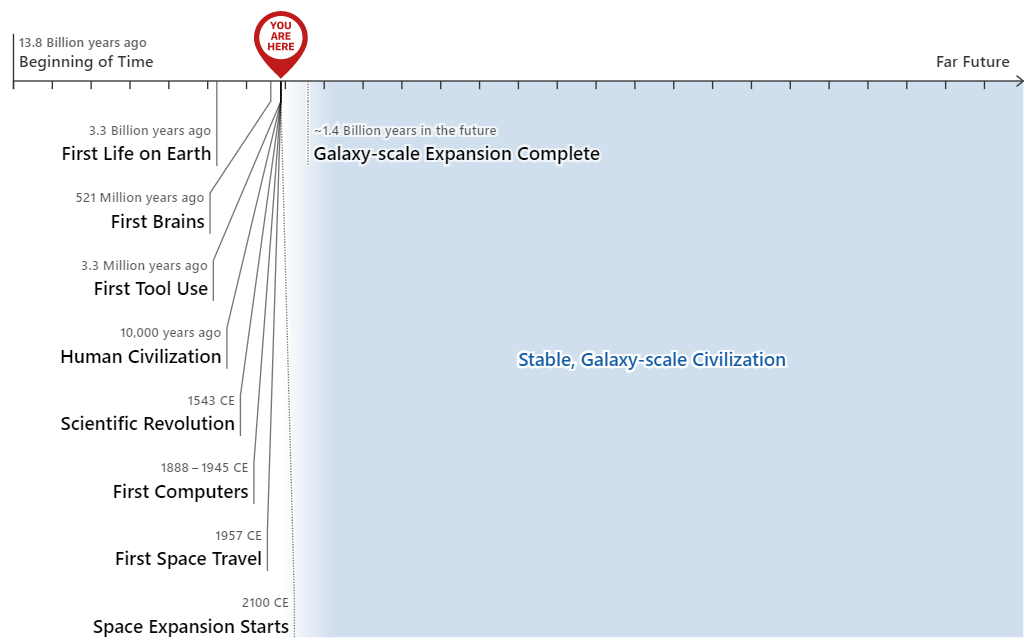
All Possible Views About Humanity's Future Are Wild
If humans will eventually spread out across the galaxy, then we are among the earliest living beings, with remarkable opportunities to shape the future
Decolonising Science Reading List
In the last couple of weeks, a lot of people have been asking me about what I’ve been reading as reference points for my commentary on the…
The Philosophical Implications of the Second Scientific Revolution
Notes from my history of philosophy course lecture on Darwin, Maxwell, Einstein, and Bohr