

An introduction to neoreaction and the "dark enlightenment", elitist and "hyperracist" ideologies that are popular with some sections of high-tech capital. Originally published by Viewpoint Magazine.
The Darkness at the End of the Tunnel: Artificial Intelligence and Neoreaction
As the consumer-oriented liberalism of Bill Gates and Steve Jobs gave way to the technological authoritarianism of Elon Musk and Peter Thiel, this strange foundation paved the way for “neoreaction,” or, in a distorted echo of Eliezer Yudkowsky’s rationalist vision, the “Dark Enlightenment.”

The Same Old Fantasies Behind AI and New Technology
A review of Adam Becker, “More Everything Forever: AI Overlords, Space Empires, and Silicon Valley’s Crusade to Control the Fate of Humanity” (Basic Books, 2025).
The Master takes on new meaning in the age of the Intellectual Dark Web
A story of troubled men takes a new shape under the political veil of 2019

Silicon Valley Insider EXPOSES Cult-Like AI Companies | Aaron Bastani Meets Karen Hao
TESCREAL
TESCREAL is a neologism proposed by computer scientist Timnit Gebru and philosopher Émile P. Torres. An acronym, it stands for Transhumanism, Extropianism, Singularitarianism, (modern) Cosmism, Rationalists (the internet community, not to be confused with other uses of the term), Effective Altruism, and Longtermism.[1][2] Gebru and Torres argue that these ideologies should be treated as an "interconnected and overlapping" group with shared origins.[1] They claim these constitute a movement that allows its proponents to use the threat of human extinction to justify expensive or detrimental projects and consider it pervasive in social and academic circles in Silicon Valley centered on artificial intelligence.[3] As such, the acronym is sometimes used to criticize a perceived belief system associated with Big Tech.[3][4][5]
The Age of Wonders and Terrors
Twenty years ago, when the idea of AI taking over the world in our lifetimes still struck most of us as the unconstrained fantasy of those who knew too much science fiction and too little science, …

A Thesis on the History of the 21st Century: Technocracy, AI, and the End of the World
Reviewing a trio of books by a sextet of ruling-class ideologues, Mathias Fuelling finds an ambient anxiety hanging over a perceived crisis in American capitalism, with visions of bolstering a Silicon Valley-led technocracy fueled by AI investment reflecting American fears over the dawn of a "Chinese Century."
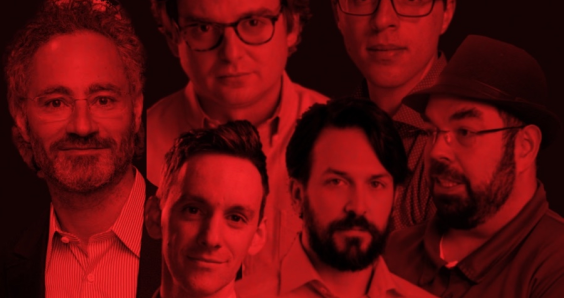
Opinion | Meet the Renegades of the Intellectual Dark Web (Published 2018)
An alliance of heretics is making an end run around the mainstream conversation. Should we be listening?

The Rise of Silicon Valley’s Techno-Religion (Published 2025)
The Rationalists, a community focused on the risks of artificial intelligence, regularly gather with tech figures and other like-minded people in a complex that covers much of a city block.

convaiinnovations/laya · Hugging Face
We’re on a journey to advance and democratize artificial intelligence through open source and open science.

"The Silicon Ideology" Fundamentally fails to understand neoreaction (and basic chronology)
47 votes, 37 comments. Posted on a throwaway due to the Author's insistence on using Doxxing against their political opponents May Rule 1a defend me…
The Sinister Valley: The dangerous deception behind the AI revolution
Behind the hype surrounding artificial intelligence lies a corporate agenda of exploitation, environmental destruction and evasion of accountability.

jedisct1/Qwen3.6-35B-rust.mlx · Hugging Face
We’re on a journey to advance and democratize artificial intelligence through open source and open science.

Wisereads Vol. 21 — The latest Howard Marks, Ethan Mollick on AI, and The Communist Manifesto

Field Theory: AI as Social Science Question, Object & Tool
Uses of advanced artificial intelligence are changing how societies organize labor, govern, produce knowledge, and make meaning. In light of these developments, this essay argues that AI models, tools, and systems pose three interrelated imperatives for social science: they demand renewed attention to social theories of how technology, human experience, and social order are entangled; they require study as objects of inquiry in their own right; and they offer capabilities that may transform—or upend—the practice of social investigation itself. From Weber’s analysis of rationalization to Du Bois’s study of technology and inequality to contemporary scholarship on algorithmic governance, the essay examines what social science distinctively offers: the capacity to historicize the apparently unprecedented, to trace connections across scales, and to center those most affected by technological change. It identifies how algorithmic systems are remaking the distribution of opportunity and risk as a central task of social inquiry and asks what futures social science might help bring into being.
Home ┃ Black In AI
Broadening inclusivity to remedy technology’s exclusionary past and affirm a much more equitable future.