

In this episode with Daniel Ross, we do a deep dive into AI. Though I've been thinking about AI (https://marioveen.com/2004/06/14/intelligent-artificiality/) I didn't really address it on this podcast yet. And who better to start this theme with than a philosopher of technology. Daniel Ross obtained his doctorate from Monash University in 2002. He is the author of Violent Democracy (Cambridge University Press, 2004) and Psychopolitical Anaphylaxis: Steps Towards a Metacosmics (Open Humanities Press, 2021 -free to download). He is also the co-director with David Barison of the feature documentary The Ister (rent or buy on Vimeo), which premiered at the Rotterdam International Film Festival in 2004, and which won awards in Montreal and Marseille. Through that film, he met the French philosopher Bernard Stiegler, and has subsequently published twelve volumes of translation of Stiegler’s work, most recently The Age of Disruption: Technology and Madness in Computational Capitalism (Polity Press, 2019) and Nanjing Lectures 2016–2019 (Open Humanities Press, 2020 - free to download), along with the collective volume by Stiegler and the Internation Collective entitled Bifurcate: ‘There Is No Alternative’ (Open Humanities Press, 2022 - free to download). The most recent translation is Immense Regression (K. Verlag). This is the first volume of Stiegler's work What is called caring? and we will discuss it in a future episode. This is my substack: https://marioveen.substack.com/ and my website https://marioveen.com/. You can now order my Dutch language book about Plato's allegory of the cave: https://noordboek.nl/boek/hoe-plato-je-uit-je-grot-sleurt/ (also available as e-book). I hope you enjoy the episode!Mario http://lifefromplatoscave.com/
Claude
Claude is Anthropic's AI, built for problem solvers. Tackle complex challenges, analyze data, write code, and think through your hardest work.
Claude
Claude is Anthropic's AI, built for problem solvers. Tackle complex challenges, analyze data, write code, and think through your hardest work.
AI and the techno-utopian path not taken
Open access // by Evgeny Morozov (Le Monde diplomatique - English edition, August 2024)

Claude Mythos Preview: Anthropic's Cybersecurity AI
Guide to Claude Mythos Preview, Anthropic's most capable AI model. Capabilities, benchmarks, Project Glasswing, cybersecurity impact, and business implications.

Automate the C-Suite - The Ideas Letter
Weatherby argues that Benanav’s and Morozov’s essays on AI and the left miss a deeper reality: Today’s AI is not a neutral tool operating within capitalism but the materialization of…

The Impact of Artificial Intelligence on Human Thought
This research paper examines, from a multidimensional perspective (cognitive, social, ethical, and philosophical), how AI is transforming human thought. It highlights a cognitive offloading effect: the externalization of mental functions to AI can reduce intellectual engagement and weaken critical thinking. On the social level, algorithmic personalization creates filter bubbles that limit the diversity of opinions and can lead to the homogenization of thought and polarization. This research also describes the mechanisms of algorithmic manipulation (exploitation of cognitive biases, automated disinformation, etc.) that amplify AI's power of influence. Finally, the question of potential artificial consciousness is discussed, along with its ethical implications. The report as a whole underscores the risks that AI poses to human intellectual autonomy and creativity, while proposing avenues (education, transparency, governance) to align AI development with the interests of humanity.

2026 Cosmos HAI Lab Lecture with Jack Clark, Co-founder of Anthropic
Why AI Agents are either the best or worst thing we’ve ever built
Why AI Agents are either the best or worst thing we’ve ever built
Claude Code 27: Research and Publishing Are Now Two Different Things
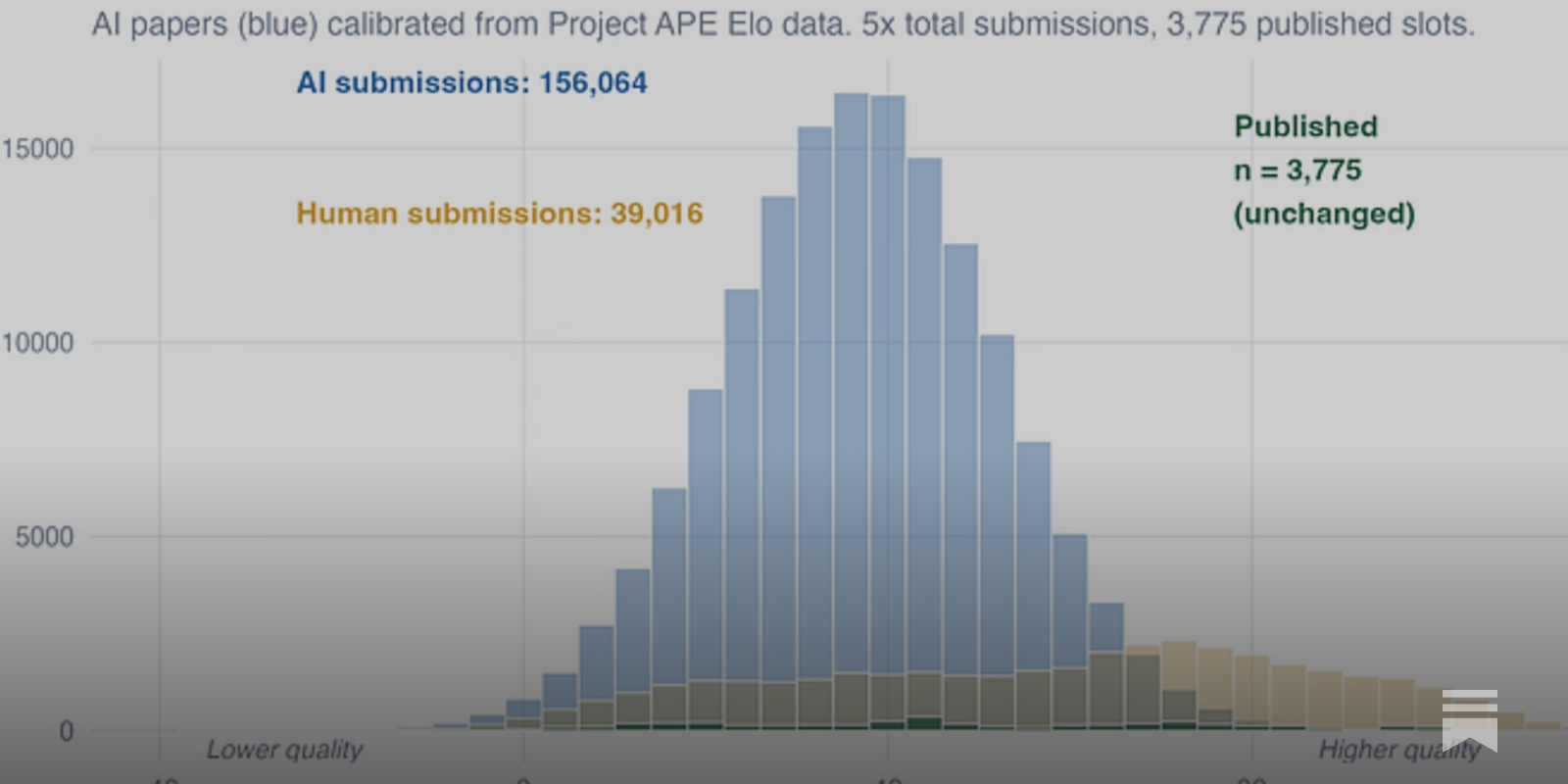
Some Claude Code fan fiction about the economics of publishing with AI agents set in the very near future
Your Favorite Science YouTubers Are Wrong About AI, (e.g. SciShow, Kurzgesagt, and Kyle Hill )
