


Permacomputing is a nascent concept and a community of practice centred around design principles that embrace limits and constraints as a positive thing in computational culture, and on creativity with scarce computational resources. As a result, permacomputing aims to provide a countervoice to digital practices that promote maximisation, hyper-consumption and waste. It seeks to encourage practices as an applied critique of contemporary computer technology that privileges maximalist aesthetics where more pixels, more frame rate, more computation and more power equals more potential at any cost and without any consequences. We believe that such a critical practice can be relevant to artists, designers and cultural practitioners working with computer and network technology who are interested in engaging with environmental issues. This is particularly relevant given the tendency in art, design and cultural production to rely on tools and techniques designed to maximise productivity and mass consumption. In this paper, we argue for the potential of permacomputing as a rich framework for exploring creative design constraints building on a long history of applying constraints in art, design and cultural practices. Because of the need to reconfigure the modes of production and organisation within computational practices, this calls for a different understanding of aesthetics, one that goes beyond the formal evaluation of how things look, but addresses how aesthetics can also be systems of relations, sensing and making sense that are already present in the process of making. We will also discuss the challenges faced by permacomputing practitioners, such as the complicated link with retro-computing, post-digital culture and nostalgia, as well as the problem of constraints in relation to the aesthetisation of poverty, and more generally what it means to work with self-imposed limits in a more privileged socioeconomic context.
Permacomputing as a practice for digital Graphic Design
This project explores the application of Permacomputing principles in graphic design. Permacomputing represents a concept and community dedicated to promoting a more sustainable use of computer and network technology. The design principles of permacomputing, their origins and significance serve as a practical theoretical framework.
Permacomputing
Permacomputing is a term originating from the demoscene, known for squeezing the most out of very restricted computing resources, such as the 4k intro with a maximum executable file size of 4096 bytes. Artist programmer Ville-Matias Heikkilä, aka Viznut, coined the term in a text he published on his website in 2020 1. What stands out in this writing is the holistic approach to computing and sustainability by taking inspiration from permaculture. In both computing and agriculture, problems are usually solved by increasing control over a process, which often goes hand in hand with an increase in resource use. Permaculture uses methods that lets nature do the work, minimizing the reliance on artificial energy. Heikkilä sees similarities between how both permaculture practitioners and hackers find clever solutions to problems. He writes that the existence of computers can only be justified by their ability to augment the potential of humans to have a strengthening effect on ecosystems.
Redefining our needs: Permacomputing and Vernacular computing
How to ensure an increasing focus on sustainability in computing?

Creative Computing Group by @tgoerke.bsky.social — Grain
Let's start a group at CODIP to explore creative computing. Let's not start by defining creativity nor computing. It would be a trap. Let's collect artifacts instead. Images, text, thoughts,...
Permacomputing
Permacomputing is a computing design philosophy which aims to improve resilience by using regenerative design in computer and network technology. It is inspired by permaculture.[1] Permacomputing approaches to computing often involve paying more attention to the life-cycle of hardware (including re-use and designing for older hardware),[1] using low-level languages such as FORTH that have greater operability with older hardware, and fostering a more mindful relationship with technology.[2]
Revisiting creative behaviour as an epistemic process: lessons from 12 computational artists and designers | Proceedings of the 35th Australian Computer-Human Interaction Conference
As part of the Digital Library's transition to Open Access, new features for researchers are available in the Premium Edition. Click here to learn more.

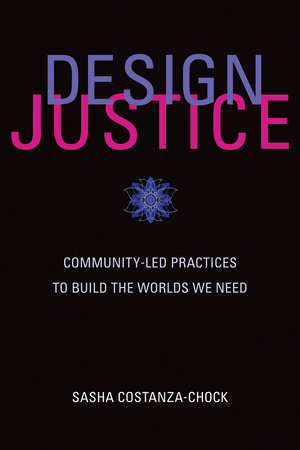
Design Justice: Community-Led Practices to Build the Worlds We Need
An exploration of how design might be led by marginalized communities, dismantle structural inequality, and advance collective liberation and ecological survival. What is the relationship between design, power, and social justice? “Design justice” is an approach to design that is led by marginalized communities and that aims expilcitly to challenge, rather than reproduce, structural inequalities. It has emerged from a growing community of designers in various fields who work closely with social movements and community-based organizations around the world. This book explores the theory and practice of design justice, demonstrates how universalist design principles and practices erase certain groups of people—specifically, those who are intersectionally disadvantaged or multiply burdened under the matrix of domination (white supremacist heteropatriarchy, ableism, capitalism, and settler colonialism)—and invites readers to “build a better world, a world where many worlds fit; linked worlds of collective liberation and ecological sustainability.” Along the way, the book documents a multitude of real-world community-led design practices, each grounded in a particular social movement. Design Justice goes beyond recent calls for design for good, user-centered design, and employment diversity in the technology and design professions; it connects design to larger struggles for collective liberation and ecological survival. The open access edition of this book was made possible by generous funding from Knowledge Unlatched and the MIT Press Frank Urbanowski Memorial Fund.
Creative Computing Institute
Working at the intersection of creativity and computational technologies.

The Oceanic provenance of Permacomputing and Computational poetics
Heritage Frontiers in Computational Art: The Oceanic provenance of Permacomputing and Computational poetics (2024) Nancy Mauro-Flude Keywords heritage algorithms, Oceana, codework, future heritage, technē, digital decolonisation, sandboxing, in-formal cultural economies, philosophy of technology, critical media theory. Citation: Mauro-Flude, N. (2024). Heritage Frontiers in Computational Art: The Oceanic Provenance of Permacomputing and Computational Poetics. Originally presented at ISEA, the updated version is available at Autoluminescence Institute. Initially presented June 26, 2024 at [ISEA2024](https://expertevents.
Why Nothing Looks Cool Anymore
Alexander Obenauer
Exploring new and renewed ideas for how personal computing and the interfaces we think with can better serve people’s lives – expanding opportunity, agency, curiosity, and creativity.
Interface Realisms: The Interface as Aesthetic Form
Until now, digital arts have largely been understood to belong in traditional genres or forms of art: we are said to have electronic literature, net.art, or electronic, techno music. Sometimes interesting discussions have arisen concerning the very ontology of digital art, and questions such as whether net.art should be seen within the tradition of the visual arts or as a form of literature connecting it to the different traditions and questions regulating these arts.[1] While it is not my intent to disconnect digital art from traditional art, or to argue for the irrelevance of the traditional forms of art, I will in the following establish the interface as an aesthetic and critical framework for digital art.
Artist Corporations: A groundbreaking structure for creative people
Creative people deserve the same economic advantages as everyone else. So we’re going to build it together.

The Art of Code - Dylan Beattie
Permacomputing | viznut
This is a collection of random thoughts regarding the application of permacultural ideas to the computer world.
Permacomputing | viznut
This is a collection of random thoughts regarding the application of permacultural ideas to the computer world.