


The systematic thinking in our industry is that settings are the result of design failure. As designers, our goal is to create product experiences that don’t require any adjustment by the user. So offering customization options is often seen as a failure to make firm product decisions. I think there is a misunderstanding about what settings really are.
Good Luck Opting Out: Manipulative Design Patterns in Opt-Out Processes
EPIC’s report Good Luck Opting Out: Manipulative Design Patterns in Opt-Out Processes by Justin Sherman, EPIC Scholar in Residence, and Caroline Kraczon, EPIC Counsel, investigates whether the consumer opt-out processes provided by major online platforms use manipulative design patterns to make it more difficult for consumers to exercise their opt-out rights.
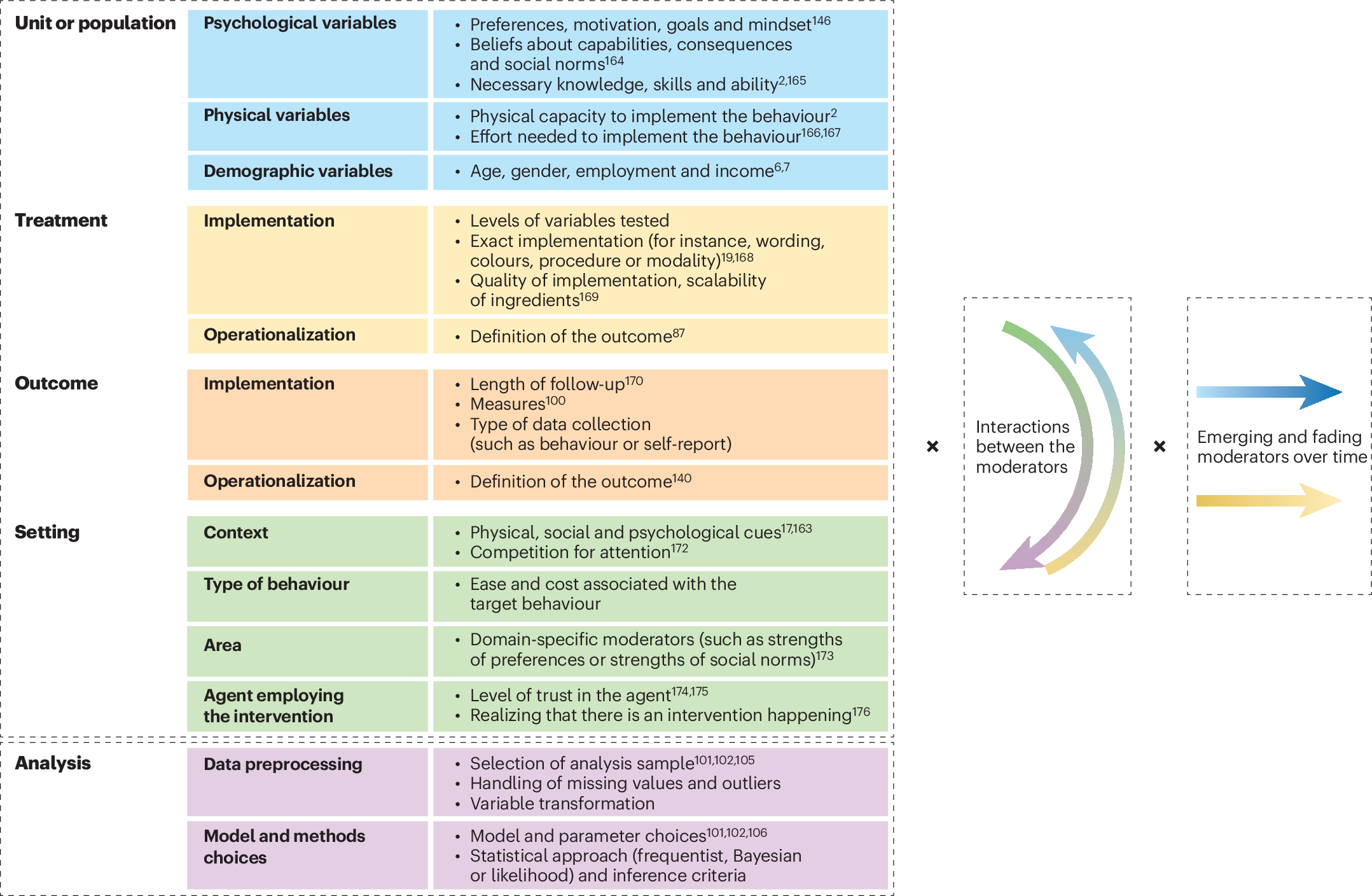
Generalizability of choice architecture interventions
Although a given choice architecture intervention (a ‘nudge’) can be highly effective in some conditions, it can be ineffective or counterproductive in others. Critically, researchers and practitioners cannot reliably predict which of these outcomes will happen on the basis of current knowledge. In this Review, we present evidence that the average effectiveness of choice architecture interventions on behaviour is smaller than often reported and that there is substantial heterogeneity in their effects. We outline the obstacles to understanding the generalizability of these effects, such as the complex interaction of moderators and their changes over time. We then clarify dimensions of generalizability and research practices (including systematic exploration of the moderators and practices designed to enhance generalizability) that could enable evidence on generalizability to be gathered more efficiently. These practices are essential for advancing nuanced theories of behaviour change and for more accurately predicting the effectiveness of choice architecture interventions across diverse populations, settings, treatments, outputs and analytical approaches.

I Want to Love Linux. It Doesn’t Love Me Back: Post 1 – Built for Control, But Not for People — fireborn
It’s responsive—sometimes. Some things just work plain better. Settings being stored in actual config files instead of opaque registries? That’s an accessibility win. When something breaks, you don’t have to reinstall the whole OS like you would on Windows. Most importantly: it’s mine. To do with as I please. To fix, break, rebuild, and own.
Eight Habits of Expert Software Designers: An Illustrated Guide
The best designers employ specific habits, learned practices, and observed principles when they work. Here are a few of them.
Design: A powerful but neglected marketing tool
Design is a potent marketing tool that can be used to gain competitive distinctiveness and provide consumer satisfaction. But with few exceptions, most companies neglect or mismanage design as a marketing tool. The authors describe what constitutes good design; how companies can employ design to enhance their products, environments, communications, and corporate identity; and how companies can improve the working relationship between designers and marketing people. The article includes two audit instruments which companies can use for measuring company design sensitivity and design management effectiveness. Design (Entwurf und Gestaltung von Produkten) ist ein wirksames Marketinginstrument im Rahmen der Konkurrenzstrategie und zur Erhöhung der Konsumentenzufriedenheit. Mit einigen Ausnahmen jedoch vernachlässigen die meisten Unternehmungen das Design als Marketinginstrument oder setzen es schlecht ein. Die Autoren beschreiben, wodurch sich ein gutes Design auszeichnet, wie Unternehmungen das Design zur Aufwertung und Verbesserung ihrer Produkte, zur Abgrenzung in ihrer Umwelt und in ihrer Kommunikationspolitik und im Bereiche der Corporate Identity einsetzen können. Ferner zeigen die Autoren, wie die Unternehmungen die Zusammenarbeit zwischen den Produktgestaltern (designers) und den Marketingspezialisten verbessern können. Der Beitrag zeigt zwei Kontrollinstrumente für die Unternehmung zur Abschätzung der Design-Empfindlichkeit von Unternehmungen und zur Messung der Effizienz des DesignManagements (Handhabung der Produktgestaltung).
EV Stupidity Checklist
Automobiles have been around for well over a century. During that time, we’ve gotten pretty good at designing and building their basic components and controls: seats, doors, pedals, steering wheels, mirrors, etc. But when today’s automakers decide to make an electric vehicle (EV), they seemingly forget much of what they once knew, creating new versions of features that are objectively, obviously worse than the time-tested designs they replace.

Why design systems are a single point of failure
Tools and techniques to prevent design system collapse

Data Brokers’ and AI Firms’ Opt-Out Forms Are Built to Fail, Report Finds
A new study finds AI companies, defense firms, and dating apps are among 38 data collectors allegedly using manipulative design to confuse users while collecting their data.

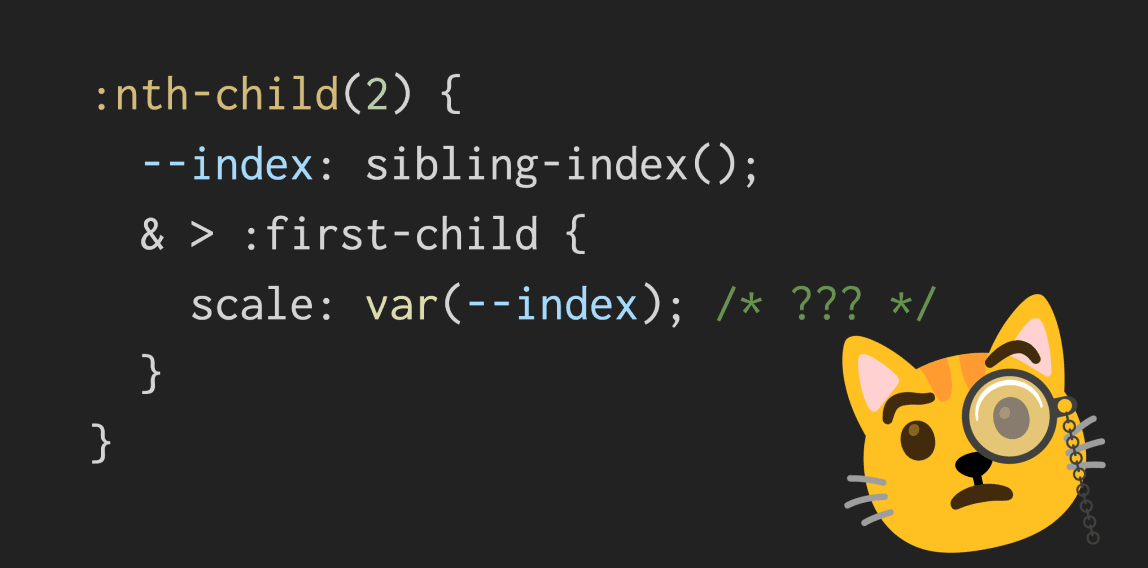
Controlling when CSS custom property values are computed
The default might not be what you expect, and it has a big impact on your styles.
People Reject Algorithms in Uncertain Decision Domains Because They Have Diminishing Sensitivity to Forecasting Error
Will people use self-driving cars, virtual doctors, and other algorithmic decision-makers if they outperform humans? The answer depends on the uncertainty inherent in the decision domain. We propose that people have diminishing sensitivity to forecasting error and that this preference results in people favoring riskier (and often worse-performing) decision-making methods, such as human judgment, in inherently uncertain domains. In nine studies ( N = 4,820), we found that (a) people have diminishing sensitivity to each marginal unit of error that a forecast produces, (b) people are less likely to use the best possible algorithm in decision domains that are more unpredictable, (c) people choose between decision-making methods on the basis of the perceived likelihood of those methods producing a near-perfect answer, and (d) people prefer methods that exhibit higher variance in performance (all else being equal). To the extent that investing, medical decision-making, and other domains are inherently uncertain, people may be unwilling to use even the best possible algorithm in those domains.

Read the Principles — Design Justice Network
Design mediates so much of our realities and has tremendous impact on our lives, yet very few of us participate in design processes. In particular, the people who are most adversely affected by design decisions — about visual culture, new technologies, the planning of our communities, or the structure of our political and economic systems — tend to have the least influence on those decisions and how they are made.

Physicality: the new age of UI
There’s a lot of rumors of a big impending UI redesign from Apple. Let’s imagine what’s (or what could be) next for the design of iPhones, Macs and iPads.

About Browser Choice Allliance
The issue Microsoft’s deceptive tacticsimpede consumer choiceFor years, Microsoft has manipulated desktop browser choice, using deceptive tactics to push Edge onto users. Instead of competing on quality, it relies on forced resets, misleading prompts, and hidden settings to trap people into using its browser. Every time Microsoft forces, pushes or…

planned longevity
Planned longevity is the opposite of planned obsolescence: the way of designing systems, especially hardware, so that it supports lifespan maximization.
What does it mean to design for uncertainty? Coiner of the phrase “responsive web design” @ethanmarcotte.com joined Off Protocol with some thoughts. atproto.com/off-protocol/2026-08-03-desig…

Designing for Uncertainty - AT Protocol
atproto.com