

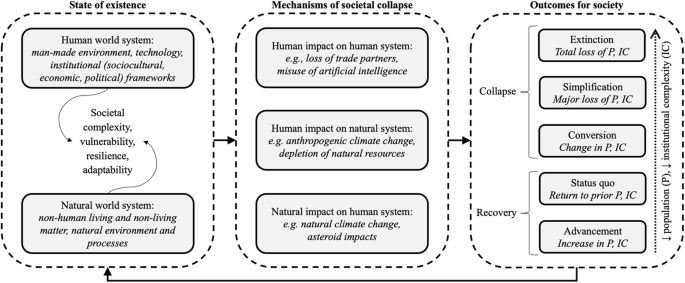
There is increasing concern that climate change poses an existential risk to humanity. Understanding these worst-case scenarios is essential for good risk management. However, our knowledge of the causal pathways through which climate change could cause societal collapse is underdeveloped. This paper aims to identify and structure an empirical evidence base of the climate change, food insecurity and societal collapse pathway. We first review the societal collapse and existential risk literature and define a set of determinants of societal collapse. We develop an original methodology, using these determinants as societal collapse proxies, to identify an empirical evidence base of climate change, food insecurity and societal collapse in contemporary society and then structure it using a novel-format causal loop diagram (CLD) defined at global scale and national granularity. The resulting evidence base varies in temporal and spatial distribution of study and in the type of data-driven methods used. The resulting CLD documents the spread of the evidence base, using line thickness and colour to depict density and type of data-driven method respectively. It enables exploration of how the effects of climate change may undermine agricultural systems and disrupt food supply, which can lead to economic shocks, socio-political instability as well as starvation, migration and conflict. Suggestions are made for future work that could build on this paper to further develop our qualitative understanding of, and quantitative complex systems modelling capabilities for analysing, the causal pathways between climate change and societal collapse.
More outbreaks of food-borne illnesses expected with climate change, experts say | CBC News
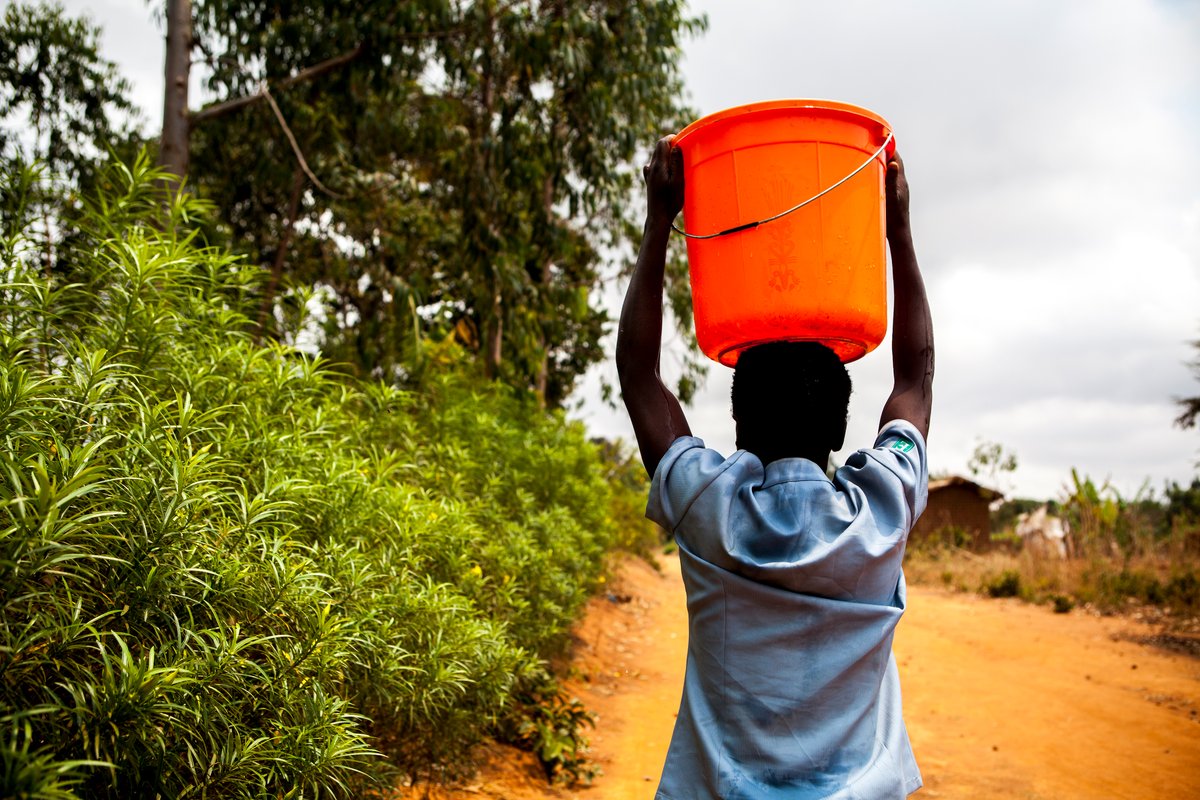
Climate change appears to be fuelling a rise in people getting sick from food-borne illnesses in Canada and around the world, says a Canadian food safety expert. While Canada has some of the best methods for monitoring food safety, there are few systems to track how food-borne illness is connected to climate change.

The Gargantuan Lie That is Collapsing The World’s Climate
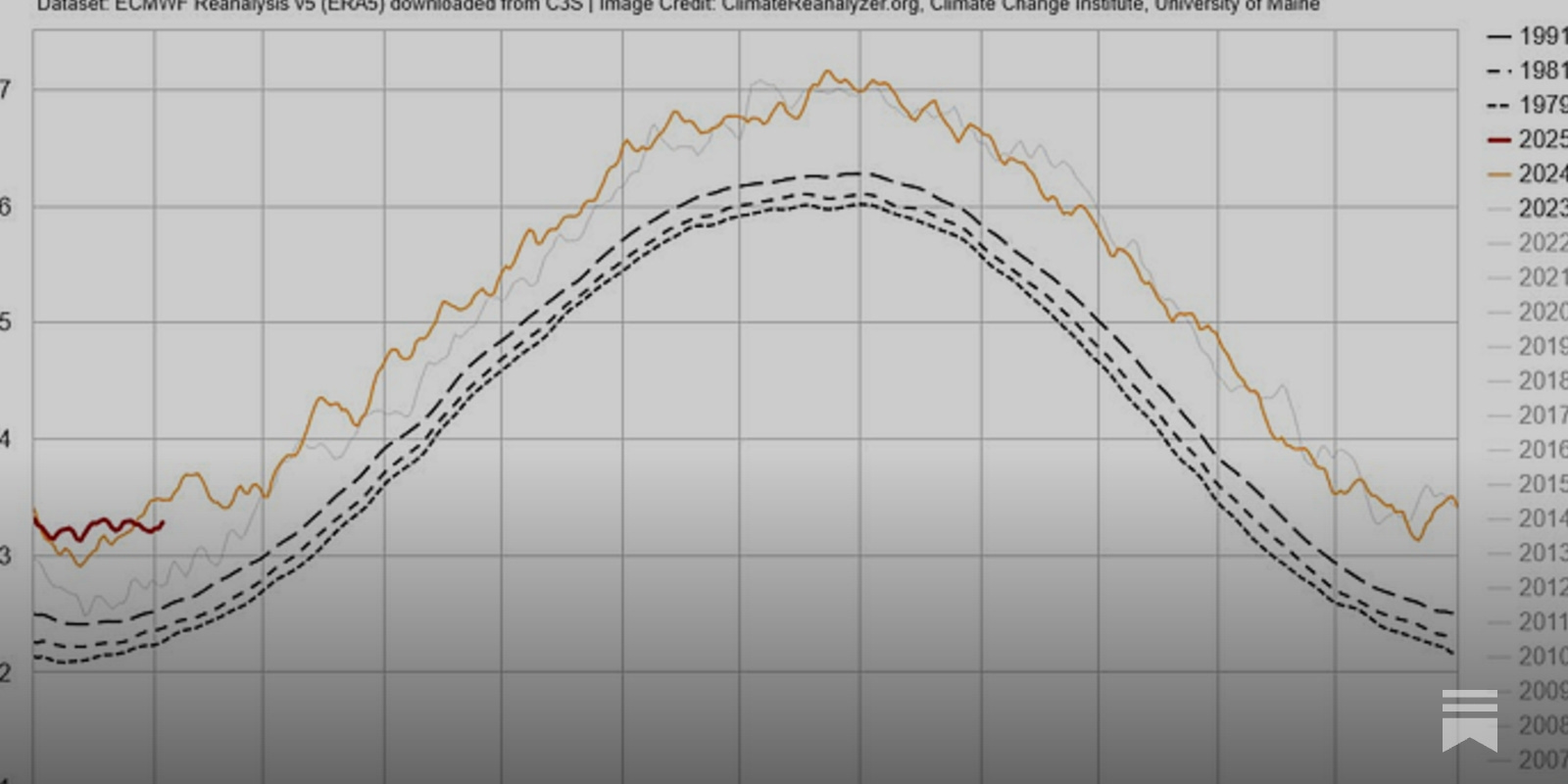
Thinking we have time left to address climate change, or that “Net Zero by 2050” will save us, is driving us toward full social collapse in ways that become more obvious with every new broken temperature record.

A Potential Termination Event
Cascading failure across the global food system is a real and horrific possibility, which most governments are doing nothing to avert.

Environmental epidemiology in a crossfire
Two tendencies have emerged in environmental epidemiology that hamper the translation of research findings into prevention of environmental hazards. One is the increased focus on highlighting weaknesses of epidemiology research that is clearly meant to explain away the research conclusions and weaken their possible implications for interventions to control environmental hazards. Another is the voluminous amount of information sharing that involves a substantial amount of misinformation, as part of the ongoing infodemic. In this light, the appearance of the catalogue of doubt-raising strategies, indeed the worst practices of scientific inference, is good news. Collected under the auspices of the International Network for Epidemiology in Policy, it serves to illustrate the range of possible (and impossible) forms of critique that may be raised on behalf of vested interests or other groups who for some reason disagree with the epidemiological conclusions. We believe that this systematic list will be useful in our field and help to identify critiques of policy options that are hidden and sometimes suppressed in weighing the epidemiological evidence.
The Hunger Gap
A gulf in public understanding prevents us from seeing how and why our food supply is at risk.
Manage derailment risks to avoid Hothouse Earth
The risk of a ‘Hothouse Earth’ trajectory has become increasingly prominent in debates about Earth system stability and climate overshoot. Existing analyses primarily focus on biophysical feedbacks that may amplify warming beyond direct anthropogenic forcing. We argue the concept has not previously incorporated how social destabilisation lowers the effective threshold at which biophysical tipping dynamics become self-sustaining, independently of further anthropogenic forcing and so undermines the capacity for planetary stewardship. We define ‘derailment risk’ as the possibility that escalating Earth system disruption weakens the social, political, and economic conditions required to sustain mitigation, adaptation, and ecological restoration. Such risks emerge when climate impacts contribute to a wide range of challenges, including debt crises, institutional erosion, political fragmentation, supply-chain instability, and declining public support for environmental action. These reinforcing feedbacks may reduce humanity’s capacity to respond even before biophysical tipping thresholds are crossed. We therefore extend the Hothouse Earth framework by incorporating social dynamics into the Earth system stability landscape. We propose a three-stage framework for assessing and managing derailment risks: conceptual mapping of socio-biophysical feedbacks; anticipatory resilience-building interventions; responsive governance strategies for periods of escalating instability. We conclude that planetary stewardship should prioritise maintaining and expanding collective agency under worsening Earth system stress.
The climate crisis: a war on the world
The climate crisis is a self-destructive war, with aggressors and victims

Heat-related urban mortality attributable to human-induced climate change in Europe in summer 2026
The summer of 2026 was characterised by a series of extreme heatwaves across Western Europe, with both monthly and annual temperature records broken repeatedly across many countries from May onwards. Several government agencies took the unprecedented step of issuing near-real-time estimates of the mortality associated with the most intense heat events, reflecting the severity of the threat to public health. In this study we combine probabilistic climate attribution with city- and age-specific temperature–mortality relationships to estimate heat-related mortality in 854 European cities during the summer months (June-August) and compare with counterfactual climate conditions representing a world without human-caused warming. We estimate 50,391 heat-related excess deaths across the 854 cities during the summer, with around two thirds of these attributable to anthropogenic climate change. These results highlight the threat from human-caused warming and the need for rapid emissions reductions alongside preparation and adaptation measures.

Heat-related urban mortality attributable to human-induced climate change in Europe in summer 2026
The summer of 2026 was characterised by a series of extreme heatwaves across Western Europe, with both monthly and annual temperature records broken repeatedly across many countries from May onwards. Several government agencies took the unprecedented step of issuing near-real-time estimates of the mortality associated with the most intense heat events, reflecting the severity of the threat to public health. In this study we combine probabilistic climate attribution with city- and age-specific temperature–mortality relationships to estimate heat-related mortality in 854 European cities during the summer months (June-August) and compare with counterfactual climate conditions representing a world without human-caused warming. We estimate 50,391 heat-related excess deaths across the 854 cities during the summer, with around two thirds of these attributable to anthropogenic climate change. These results highlight the threat from human-caused warming and the need for rapid emissions reductions alongside preparation and adaptation measures.
The hard truths of climate change — by the numbers
A set of troubling charts shows how little progress nations have made toward limiting greenhouse-gas emissions.

Improving and Expanding Estimates of the Global Burden of Disease Due to Environmental Health Risk Factors
Abstract Background: The Global Burden of Disease (GBD) study, coordinated by the Institute for Health Metrics and Evaluation (IHME), produces influential, data-driven estimates of the burden of disease and premature death due to major risk factors. Expanded quantification of disease due to environmental health (EH) risk factors, including climate change, will enhance accuracy of GBD estimates, which will contribute to developing cost-effective policies that promote prevention and achieving Sustainable Development Goals. Objectives: We review key aspects of the GBD for the EH community and introduce the Global Burden of Disease–Pollution and Health Initiative (GBD-PHI), which aims to work with IHME and the GBD study to improve estimates of disease burden attributable to EH risk factors and to develop an innovative approach to estimating climate-related disease burden—both current and projected. Methods: We discuss strategies for improving GBD quantification of specific EH risk factors, including air pollution, lead, and climate change. We highlight key methodological challenges, including new EH risk factors, notably evidence rating and global exposure assessment. Discussion: A number of issues present challenges to the scope and accuracy of current GBD estimates for EH risk factors. For air pollution, minimal data exist on the exposure–risk relationships associated with high levels of pollution; epidemiological studies in high pollution regions should be a research priority. For lead, the GBD’s current methods do not fully account for lead’s impact on neurodevelopment; innovative methods to account for subclinical effects are needed. Decisions on inclusion of additional EH risk–outcome pairs need to be guided by findings of systematic reviews, the size of exposed populations, feasibility of global exposure estimates, and predicted trends in exposures and diseases. Neurotoxicants, endocrine-disrupting chemicals, and climate-related factors should be high priorities for incorporation into upcoming iterations of the GBD study. Enhancing the scope and methods will improve the GBD’s estimates and better guide prevention policy. https://doi.org/10.1289/EHP5496
Climate Change: Global Crisis To Local Action By Kevin Anderson
Home - System Change Not Climate Change
How is it that a regional war halfway across the world can have massive impact on global food systems? The author points to industrial agriculture shaped by capitalism.

Show Your Stripes
Visualising how the climate has changed for every country across the globe