


Funding policies for data infrastructure promote open data sharing to drive positive social impact. However, concerns regarding the long-term management of data within and across distributed infrastructures can hinder data sharing. We draw upon the concept of polycentric governance to demonstrate how collaborative practices of data curation, in preparing and maintaining data for (future) sharing, provide a solid foundation for understanding data governance within data infrastructures. Based on a qualitative case study of a distributed ecological network, we investigate the conditions under which data are managed as a shared resource by local actors to ensure the long-term (re)usability of data. We contribute to CSCW by conceptualising data curation as a complex form of governance practice with multiple centres of decision-making, each of which operates with some degree of autonomy in data infrastructures. A polycentric governance lens on data infrastructures advances the CSCW conception of data curation as a collective governance practice that can cultivate a data democracy culture within and across organisations, empower individuals to be accountable for their data, and foster a mindset shift toward decentralised data governance.
A Polycentric Governance Lens on Data Infrastructures
Funding policies for data infrastructure promote open data sharing to drive positive social impact. However, concerns regarding the long-term management of data within and across distributed infrastructures can hinder data sharing. We draw upon the concept of polycentric governance to demonstrate how collaborative practices of data curation, in preparing and maintaining data for (future) sharing, provide a solid foundation for understanding data governance within data infrastructures. Based on a qualitative case study of a distributed ecological network, we investigate the conditions under which data are managed as a shared resource by local actors to ensure the long-term (re)usability of data. We contribute to CSCW by conceptualising data curation as a complex form of governance practice with multiple centres of decision-making, each of which operates with some degree of autonomy in data infrastructures. A polycentric governance lens on data infrastructures advances the CSCW conception of data curation as a collective governance practice that can cultivate a data democracy culture within and across organisations, empower individuals to be accountable for their data, and foster a mindset shift toward decentralised data governance.

Democratizing Data
Democratizing Data builds a community-driven data ecosystem by identifying how datasets are used and reducing barriers to accessing high-quality public data. The initiative enhances the discoverability, usability, and relevance of data for researchers, policymakers, and stakeholder communities. A suite of tools and strategic partnerships supports this work by connecting users to the data, insights, and networks needed to inform decisions and generate impact.
Designing a multi-sided data platform: findings from the International Data Spaces case
The paper presents the findings from a 3-year single-case study conducted in connection with the International Data Spaces (IDS) initiative. The IDS represents a multi-sided platform (MSP) for secure and trusted data exchange, which is governed by an institutionalized alliance of different stakeholder organizations. The paper delivers insights gained during the early stages of the platform’s lifecycle (i.e. the platform design process). More specifically, it provides answers to three research questions, namely how alliance-driven MSPs come into existence and evolve, how different stakeholder groups use certain governance mechanisms during the platform design process, and how this process is influenced by regulatory instruments. By contrasting the case of an alliance-driven MSP with the more common approach of the keystone-driven MSP, the results of the case study suggest that different evolutionary paths can be pursued during the early stages of an MSP’s lifecycle. Furthermore, the IDS initiative considers trust and data sovereignty more relevant regulatory instruments compared to pricing, for example. Finally, the study advances the body of scientific knowledge with regard to data being a boundary resource on MSPs.

Open North – Building trust in data, for the common good
Open North is a not-for-profit organization dedicated to advancing the common good. Working alongside governments and civic-minded organizations of all sizes, we provide data expertise to enhance decision-making, drive innovation, optimize public and civic services, and address society's most pressing challenges. Our work focuses on building the capacity of organizations to make better decisions about managing their data so that it is useful, actionable, secure, and trustworthy throughout its entire lifecycle.

Modular Politics: Toward a Governance Layer for Online Communities
Governance in online communities is an increasingly high-stakes challenge, and yet many basic features of offline governance legacies--juries, political parties, term limits, and formal debates, to name a few--are not in the feature-sets of the software most community platforms use. Drawing on the paradigm of Institutional Analysis and Development, this paper proposes a strategy for addressing this lapse by specifying basic features of a generalizable paradigm for online governance called Modular Politics. Whereas classical governance typologies tend to present a choice among wholesale ideologies, such as democracy or oligarchy, Modular Politics would enable platform operators and their users to build bottom-up governance processes from computational components that are modular and composable, highly versatile in their expressiveness, portable from one context to another, and interoperable across platforms. This kind of approach could implement pre-digital governance systems as well as accelerate innovation in uniquely digital techniques. As diverse communities share and connect their components and data, governance could occur through a ubiquitous network layer. To that end, this paper proposes the development of an open standard for networked governance.

Better Deal for Data - Practical Data Governance for the Social Sector
Better Deal for Data - practical data governance for the social sector.
Governing Together: Toward Infrastructure for Community-Run Social Media
Decentralizing the governance of social computing systems to communities promises to empower them to make independent decisions, with nuance and in accordance with their values. Yet, communities do not govern in isolation. Many problems communities face are common, or move across their boundaries. We therefore propose designing for "inter-community governance:" mechanisms that support relationships and interactions between communities to coordinate on governance issues. Drawing from workshops with 24 individuals on decentralized, community-run social media, we present six challenges in designing for inter-community governance surfaced through ideas proposed in workshops. Together, these ideas come together as an ecosystem of resources, infrastructures, and tools that highlight three key principles for designing for inter-community governance: modularity, forkability, and polycentricity. We end with a discussion of how the ideas proposed in workshops might be implemented in future work aiming to support community governance in social computing systems broadly.
A Practical Framework for Applying Ostrom’s Principles to Data Commons Governance
How do stakeholders govern themselves? What drives their endeavour? How do they make decisions? How do they make sure conflict does not tear them apart? The answers to these questions will look different for every data commons. Learn more in this week's data governance blog.

Common Knowledge: Citizen-led data governance for better cities
Key lessons from the DECODE pilots and tips on how other cities and governments can apply the technologies and methods.

Governing by dismantling: tech oligarchy and the stifling of public data infrastructure
Published in Science as Culture (Ahead of Print, 2026)

The Politics of Open Infrastructures: Power, Governance, and Justice in Digital Knowledge Practices
This volume examines how openness is designed, governed, contested and lived in contemporary digital knowledge infrastructures. From open source software and internet standards, to citizen science platforms, public sector data systems and alternative computing practices, the book shows that infrastructures are never neutral technical backbones.

Citizen science in environmental and ecological sciences
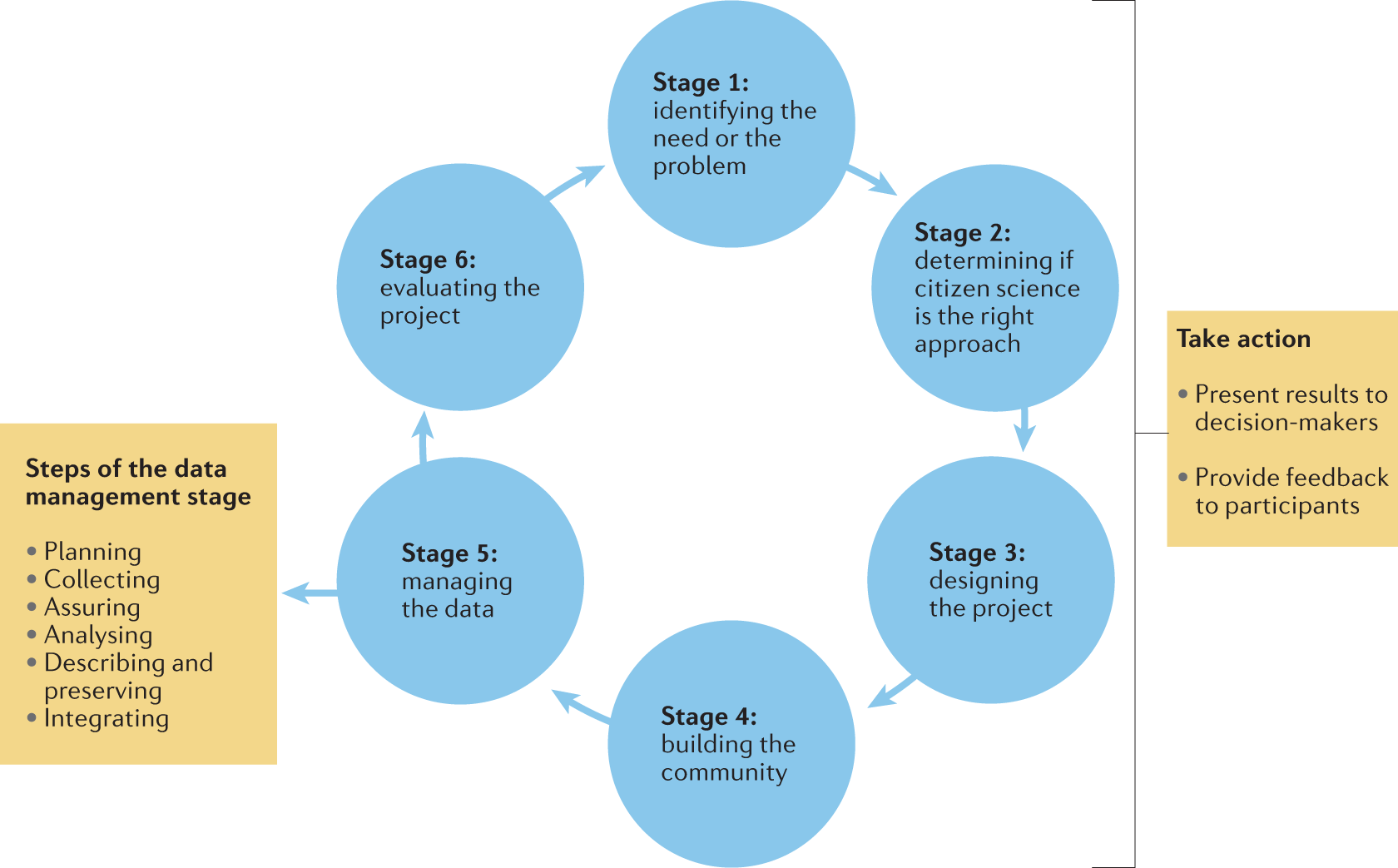
Citizen science is an increasingly acknowledged approach applied in many scientific domains, and particularly within the environmental and ecological sciences, in which non-professional participants contribute to data collection to advance scientific research. We present contributory citizen science as a valuable method to scientists and practitioners within the environmental and ecological sciences, focusing on the full life cycle of citizen science practice, from design to implementation, evaluation and data management. We highlight key issues in citizen science and how to address them, such as participant engagement and retention, data quality assurance and bias correction, as well as ethical considerations regarding data sharing. We also provide a range of examples to illustrate the diversity of applications, from biodiversity research and land cover assessment to forest health monitoring and marine pollution. The aspects of reproducibility and data sharing are considered, placing citizen science within an encompassing open science perspective. Finally, we discuss its limitations and challenges and present an outlook for the application of citizen science in multiple science domains.
Broadening Access to Data Science Education in High School and Higher Education through Open Source Tools, Infrastructure, and Training
Equitable data science education requires a multifaceted approach, involving high school and higher education, community involvement, and accessible tools. A renewed investment in public digital infrastructure is needed to support these efforts. Nonprofits play a crucial role in supporting these efforts, and increased representation in leadership can enhance their impact. By addressing these disparities, we can ensure a more inclusive future in data science.
Fed up with Big Tech, communities turn to data collectives for control
Data collectives and cooperatives, which let creators control the collection and distribution of their data, are emerging as preferred alternatives to big tech companies.

Who Will Keep Research Data Infrastructure Open and Running?
The scientific community must consider the longevity of open research infrastructure—why it might fail and how to prevent it.

Who Will Keep Research Data Infrastructure Open and Running?
The scientific community must consider the longevity of open research infrastructure—why it might fail and how to prevent it.