
Ethics and Information Technology -
Predictive policing AI is on the rise − making it accountable to the public could curb its harmful effects
AI that anticipates where crimes are likely to occur and who might commit them has a troubling track record. Democratic accountability could shine a light on the technology and how it’s used.
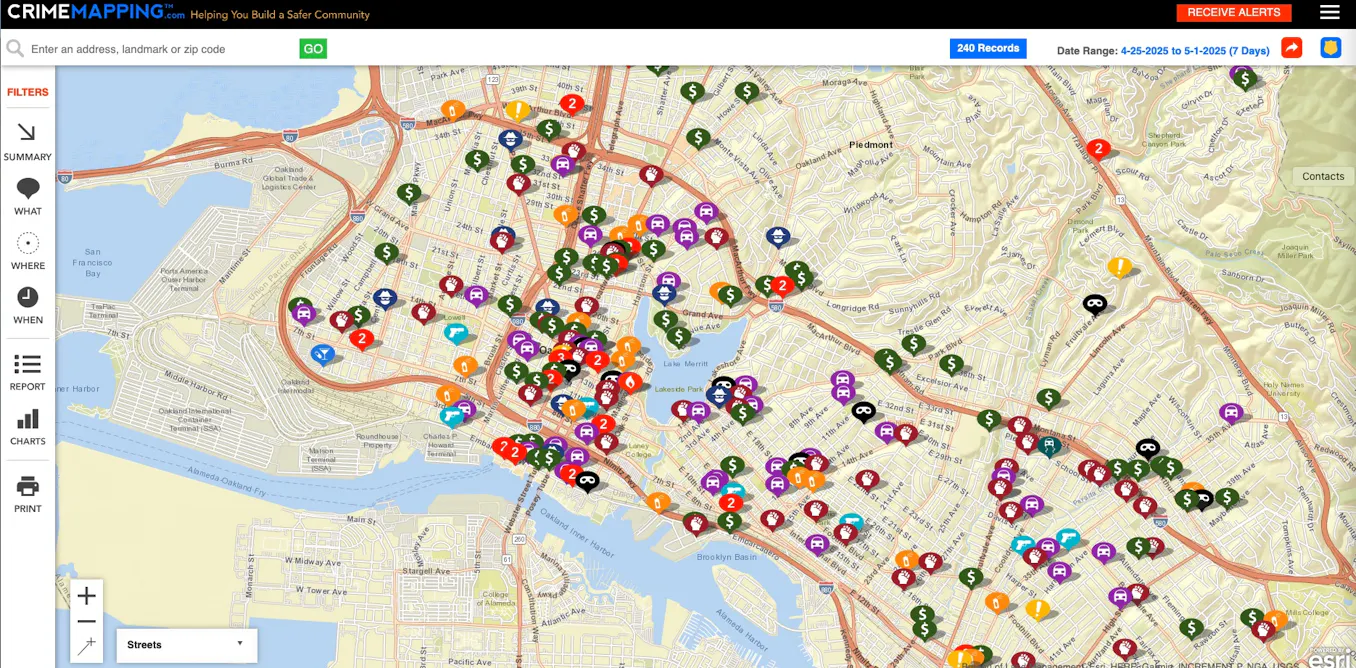
Predictive policing AI is on the rise − making it accountable to the public could curb its harmful effects
AI that anticipates where crimes are likely to occur and who might commit them has a troubling track record. Democratic accountability could shine a light on the technology and how it’s used.
AI, Ethics, and Society — Home
Artificial Intelligence, Predictive Policing, and Risk Assessment for Law Enforcement
There are widespread concerns about the use of artificial intelligence in law enforcement. Predictive policing and risk assessment are salient examples. Worries include the accuracy of forecasts that guide both activities, the prospect of bias, and an apparent lack of operational transparency. Nearly breathless media coverage of artificial intelligence helps shape the narrative. In this review, we address these issues by first unpacking depictions of artificial intelligence. Its use in predictive policing to forecast crimes in time and space is largely an exercise in spatial statistics that in principle can make policing more effective and more surgical. Its use in criminal justice risk assessment to forecast who will commit crimes is largely an exercise in adaptive, nonparametric regression. It can in principle allow law enforcement agencies to better provide for public safety with the least restrictive means necessary, which can mean far less use of incarceration. None of this is mysterious. Nevertheless, concerns about accuracy, fairness, and transparency are real, and there are tradeoffs between them for which there can be no technical fix. You can't have it all. Solutions will be found through political and legislative processes achieving an acceptable balance between competing priorities.

Artificial Intelligence, Predictive Policing, and Risk Assessment for Law Enforcement
There are widespread concerns about the use of artificial intelligence in law enforcement. Predictive policing and risk assessment are salient examples. Worries include the accuracy of forecasts that guide both activities, the prospect of bias, and an apparent lack of operational transparency. Nearly breathless media coverage of artificial intelligence helps shape the narrative. In this review, we address these issues by first unpacking depictions of artificial intelligence. Its use in predictive policing to forecast crimes in time and space is largely an exercise in spatial statistics that in principle can make policing more effective and more surgical. Its use in criminal justice risk assessment to forecast who will commit crimes is largely an exercise in adaptive, nonparametric regression. It can in principle allow law enforcement agencies to better provide for public safety with the least restrictive means necessary, which can mean far less use of incarceration. None of this is mysterious. Nevertheless, concerns about accuracy, fairness, and transparency are real, and there are tradeoffs between them for which there can be no technical fix. You can't have it all. Solutions will be found through political and legislative processes achieving an acceptable balance between competing priorities.
AI Ethics Class
Going beyond the “common suspects”: to be presumed innocent in the era of algorithms, big data and artificial intelligence
This article explores the trend of increasing automation in law enforcement and criminal justice settings through three use cases: predictive policing, machine evidence and recidivism algorithms. The focus lies on artificial-intelligence-driven tools and technologies employed, whether at pre-investigation stages or within criminal proceedings, in order to decode human behaviour and facilitate decision-making as to whom to investigate, arrest, prosecute, and eventually punish. In this context, this article first underlines the existence of a persistent dilemma between the goal of increasing the operational efficiency of police and judicial authorities and that of safeguarding fundamental rights of the affected individuals. Subsequently, it shifts the focus onto key principles of criminal procedure and the presumption of innocence in particular. Using Article 6 ECHR and the Directive (EU) 2016/343 as a starting point, it discusses challenges relating to the protective scope of presumption of innocence, the burden of proof rule and the in dubio pro reo principle as core elements of it. Given the transformations law enforcement and criminal proceedings go through in the era of algorithms, big data and artificial intelligence, this article advocates the adoption of specific procedural safeguards that will uphold rule of law requirements, and particularly transparency, fairness and explainability. In doing so, it also takes into account EU legislative initiatives, including the reform of the EU data protection acquis, the E-evidence Proposal, and the Proposal for an EU AI Act. Additionally, it argues in favour of revisiting the protective scope of key fundamental rights, considering, inter alia, the new dimensions suspicion has acquired.

Going beyond the “common suspects”: to be presumed innocent in the era of algorithms, big data and artificial intelligence
This article explores the trend of increasing automation in law enforcement and criminal justice settings through three use cases: predictive policing, machine evidence and recidivism algorithms. The focus lies on artificial-intelligence-driven tools and technologies employed, whether at pre-investigation stages or within criminal proceedings, in order to decode human behaviour and facilitate decision-making as to whom to investigate, arrest, prosecute, and eventually punish. In this context, this article first underlines the existence of a persistent dilemma between the goal of increasing the operational efficiency of police and judicial authorities and that of safeguarding fundamental rights of the affected individuals. Subsequently, it shifts the focus onto key principles of criminal procedure and the presumption of innocence in particular. Using Article 6 ECHR and the Directive (EU) 2016/343 as a starting point, it discusses challenges relating to the protective scope of presumption of innocence, the burden of proof rule and the in dubio pro reo principle as core elements of it. Given the transformations law enforcement and criminal proceedings go through in the era of algorithms, big data and artificial intelligence, this article advocates the adoption of specific procedural safeguards that will uphold rule of law requirements, and particularly transparency, fairness and explainability. In doing so, it also takes into account EU legislative initiatives, including the reform of the EU data protection acquis, the E-evidence Proposal, and the Proposal for an EU AI Act. Additionally, it argues in favour of revisiting the protective scope of key fundamental rights, considering, inter alia, the new dimensions suspicion has acquired.
How AI-powered policing is endangering the public’s trust in police
Growing concerns about police use of AI could erode the public’s perception of trust in the legal system.

How AI-powered policing is endangering the public’s trust in police
Growing concerns about police use of AI could erode the public’s perception of trust in the legal system.
How AI can lead to false arrests and wrongful convictions
Danger arises when law enforcement believes that AI models are retrieving certainties rather than generating likelihoods.

How AI can lead to false arrests and wrongful convictions
Danger arises when law enforcement believes that AI models are retrieving certainties rather than generating likelihoods.
The tech industry hijacking of the AI ethics research agenda and why we should reclaim it
This paper reflects on the tech industry’s colonization of the AI ethics research field and addresses conflicts of interest in public policymaking concerning AI. The AI ethics research community faces two intertwined challenges: In the first place, we have a tech industry heavily influencing the AI ethics research agenda. Secondly, cleaning up after the tech industry has implied that we have turned to value-driven design methods to bring ethics to AI design. But by framing research questions relevant to a technical practice, we have facilitated the technological solutionism behind the tech industry’s business model. Therefore, this paper takes the first steps to reshape the AI ethics research agenda by suggesting moving toward an emancipatory framework that brings politics to design while, at the same time, bearing in mind that AI is not to be treated as an inevitability. As a research community, we must focus on the repressive power dynamics exacerbated by AI and address challenges facing the vulnerable groups seldom heard, despite the fact that they are the ones most negatively affected by AI initiatives.

The Impact of Artificial Intelligence on Human Thought
This research paper examines, from a multidimensional perspective (cognitive, social, ethical, and philosophical), how AI is transforming human thought. It highlights a cognitive offloading effect: the externalization of mental functions to AI can reduce intellectual engagement and weaken critical thinking. On the social level, algorithmic personalization creates filter bubbles that limit the diversity of opinions and can lead to the homogenization of thought and polarization. This research also describes the mechanisms of algorithmic manipulation (exploitation of cognitive biases, automated disinformation, etc.) that amplify AI's power of influence. Finally, the question of potential artificial consciousness is discussed, along with its ethical implications. The report as a whole underscores the risks that AI poses to human intellectual autonomy and creativity, while proposing avenues (education, transparency, governance) to align AI development with the interests of humanity.

Unlawful by design: Exposing the human rights costs of generative AI - Amnesty International
This briefing examines how standalone generative AI systems, based on unlawful web scraping, are in conflict with international human rights law (IHRL) and standards through their design, development and deployment. While these technologies promise sophisticated automation and efficiency, they rely on data collection and model training practices that abuse privacy rights, enable discrimination, and threaten […]