

This article contains my response to the commentaries by Mazviita Chirimuuta, Tom Froese, Miriam Kyselo, and Claudia E. Vanney on The Blind Spot: Why Science Cannot Ignore Human Experience (Frank et al., 2024).
Situational Blindness
This response may be read as a standalone piece, though it will of course be more meaningful if you read the original article first.
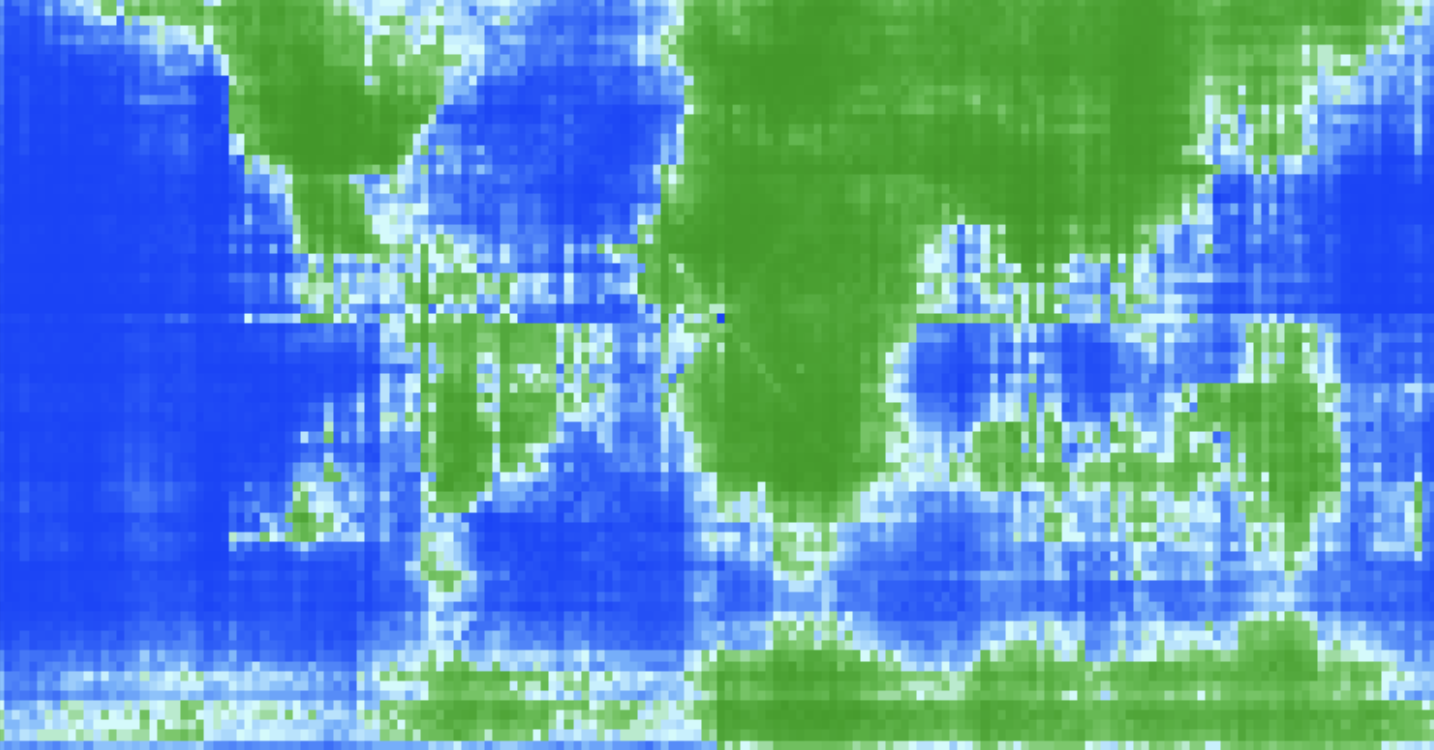
How Does A Blind Model See The Earth? — LessWrong
Sometimes I'm saddened remembering that we've viewed the Earth from space. We can see it all with certainty: there's no northwest passage to search f…
Guest post: If you’re going to critique science, be scientific about it
Loren K. Mell Editor’s note: This post responds to a Feb. 13 article in The Atlantic, “The Scientific Literature Can’t Save Us Now,” written by Retraction Watch cofounders Adam Marcus and Ivan Oran…
People who are blind from birth never develop schizophrenia – what this tells us about the psychiatric condition
Understanding why people born blind never develop schizophrenia could transform how we think about and treat one of medicine’s most baffling conditions.

The mistake we all make... and the simple experiment that reveals it
Your answer reveals how you see the world – and the common error that hampers our decision making. In an extract from his new book, psychologist Richard Nisbett reveals the ‘mindware’ to help us think smarter

People Who Can't Visualize Anything Are Challenging a 300-Year-Old Theory of Thought
Mental imagery might not be as central to complex human thought as we believed, philosophers say.

The misunderstood limits of folk science: an illusion of explanatory depth
People feel they understand complex phenomena with far greater precision, coherence, and depth than they really do; they are subject to an illusion—an illusion of explanatory depth. The illusion is f...

The Colonization of Confidence., Sightless Scribbles
A fabulously gay blind author.
The "Disability Dongle": Why Silicon Valley Hates Me and you., Sightless Scribbles
A fabulously gay blind author.
Rationality: What It Is, Why It Seems Scarce, Why It Matters by Steven Pinker
In the twenty-first century, humanity is reaching new heights of scientific understanding—and at ...
Andreas De Block on Twitter / X
It took Nature three years to publish this rebuttal, which clearly demonstrates the fundamental flaws in the original paper. In the meantime, the paper's conclusions influenced scientific debate and policy decisions. Such delays in correcting flawed research do real damage. https://t.co/QI3Ei3PE70— Andreas De Block (@DeblockBlock) August 13, 2026

Epistemic Vigilance
Humans massively depend on communication with others, but this leaves them open to the risk of being accidentally or intentionally misinformed. To ensure that, despite this risk, communication remain...

Breaking the silence
Research on science communication has largely focused on teaching scientists how to describe their studies in ways that interest the public while deepening their understanding of scientific exploration. However, there is another, often overlooked side to science communication—how scientists respond when questions arise about the integrity of their research. Often, the tendency has been to stay silent and wait for any controversy to pass or be resolved in professional forums. But in an age of growing, intense attacks on science, silence can be detrimental to both public trust and the careers of scientists who are under scrutiny. For better or worse, journalists, social media professionals, and the public may take a response of “no comment” as a concession that the critics are correct, so forthright communication about research questions is more urgent than ever.

Capturing our Attention by @neillevy.bsky.social "we possess sophisticated capacities of epistemic vigilance, which work reasonably well to distinguish reliable from unreliable information, but ... we do not have parallel defences against attentional capture" > tandfonline.com/doi/full/10.1080/00048402.202…
I’ve been working through the Turvey book on Rob Gray’s podcast and one key feature is the extended articulation of the argument that every attempt to handle perception other than direct perception is just an example of the same old Cartesian mistake with all the same problems. How accepted is this?

Reading Group: Turvey (2019), Lectures on Perception
psychsciencenotes.blogspot.com
