

This paper is guided by two research hypotheses: (1) In contemporary public discourse, many of the most urgent political problems are predominantly framed and understood in moral terms; (2) this shift in framing has far-reaching consequences, impeding our understanding of the underlying problems and their eventual solution. The two hypotheses are demonstrated using multiple examples, with the fight against climate change serving as the main case study. The moral framing (thinking in terms of individual actions, duties and obligations, blame and personal responsibility) is shown to crowd out political considerations (focused on institutions and policy), even when such moral considerations are either out of place or immaterial. Consequently, individual actions and responsibility are shown to be overemphasized in contemporary public discourse to such an extent that the viable political solutions are often discounted or overlooked.
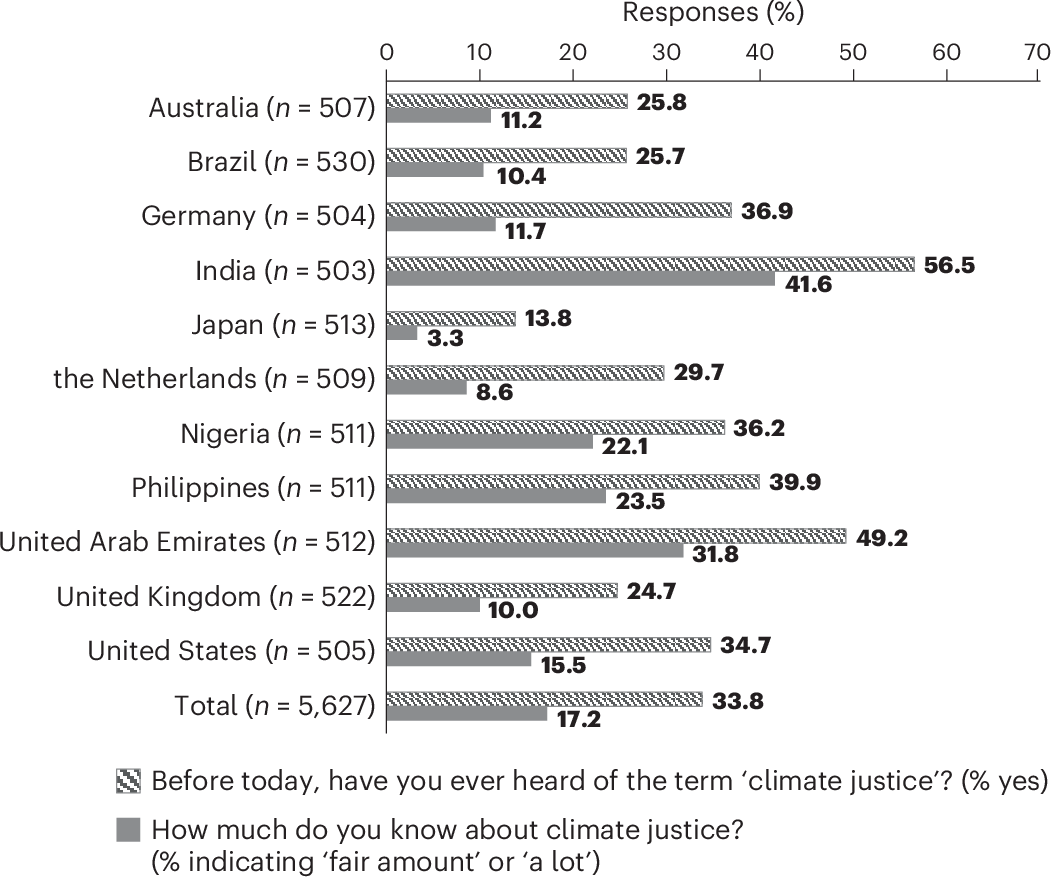
Climate justice beliefs related to climate action and policy support around the world
Climate justice is increasingly prominent in climate change communication and advocacy but little is known about public understanding of the concept or how widely it resonates with different groups. In our global survey of 5,627 adults in 11 countries spanning the global north and south, most participants (66.2%) had never heard of climate justice. Nonetheless, endorsement of climate justice beliefs was widespread (for example, acknowledging the disproportionate impact of climate change on poor people and the underpinning roles of capitalism and colonialism in the climate crisis). Climate justice beliefs were also associated with various indices of climate action and policy support. These associations tended to be stronger in countries with high GHG emissions and where social inequality is also more politically salient. The results highlight the value of climate justice as a motive for climate action across diverse geographical contexts.
The i-frame and the s-frame: How focusing on individual-level solutions has led behavioral public policy astray
An influential line of thinking in behavioral science, to which the two authors have long subscribed, is that many of society's most pressing problems can be addressed cheaply and effectively at the level of the individual, without modifying the system in which the individual operates. We now believe this was a mistake, along with, we suspect, many colleagues in both the academic and policy communities. Results from such interventions have been disappointingly modest. But more importantly, they have guided many (though by no means all) behavioral scientists to frame policy problems in individual, not systemic, terms: To adopt what we call the “i-frame,” rather than the “s-frame.” The difference may be more consequential than i-frame advocates have realized, by deflecting attention and support away from s-frame policies. Indeed, highlighting the i-frame is a long-established objective of corporate opponents of concerted systemic action such as regulation and taxation. We illustrate our argument briefly for six policy problems, and in depth with the examples of climate change, obesity, retirement savings, and pollution from plastic waste. We argue that the most important way in which behavioral scientists can contribute to public policy is by employing their skills to develop and implement value-creating system-level change.

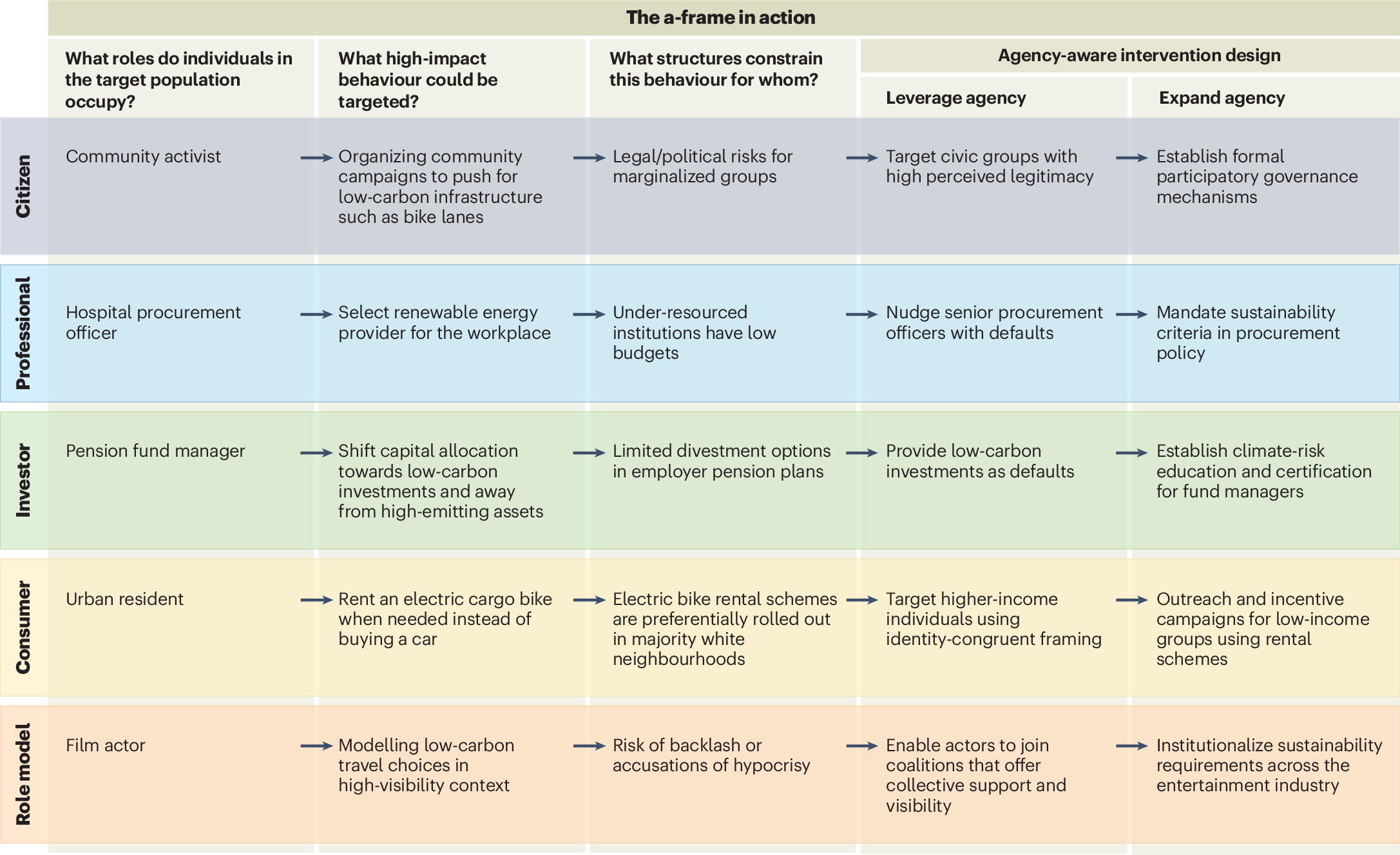
Leveraging agency for climate change mitigation
Climate debates often frame individual behaviour and systems change as distinct pathways to action. We suggest that social change arises from individuals’ agency within their roles in societal systems, and that this agency should be actively leveraged to achieve meaningful climate change mitigation.
Political Scenarios for Climate Disaster - Dissent Magazine
In the Global North we often act as if our future will be a warmer version of today: liberal capitalism, plus flood insurance, minus coral reefs. That future is a fantasy.

Europe is BURNING - why are politicians not acting?
Climate Change: Global Crisis To Local Action By Kevin Anderson
Correcting climate ‘misperceptions’ may not boost climate action - Carbon Brief
Most people "underestimate" general support for climate change and "overestimate" actual, real-world climate action.
Social Influence and Action — Jen Christiansen
I’m wary of climate solutions that are hyper focused on the action of individuals as opposed to systems and corporations. Do you experience carbon footprint guilt every time you board a plane to visit family too? Well, that whole schema was a product of the PR firm Ogilvy & Mather for British Petroleum. It was an effort to shift focus away from oil companies and onto individual responsibility to lower greenhouse gas emissions. For more, read “The carbon footprint sham” by Mark Kaufman for Mashable in 2021, and “Big oil coined ‘carbon footprints’ to blame us for their greed. Keep them on the hook” by Rebecca Solnit for The Guardian.

Climate doom may discourage climate action, but there’s a way to counter it
One way to guard against misinformation is to empower people to identify climate doom in the first place.

Natasha Walter: We’ve gone from climate denial to something worse – climate fatalism
The message in the western media, as global heating becomes undeniable, seems now to be that nothing can be done. That is unacceptable – especially for those in developing countries who are suffering so greatly from the crisis we created
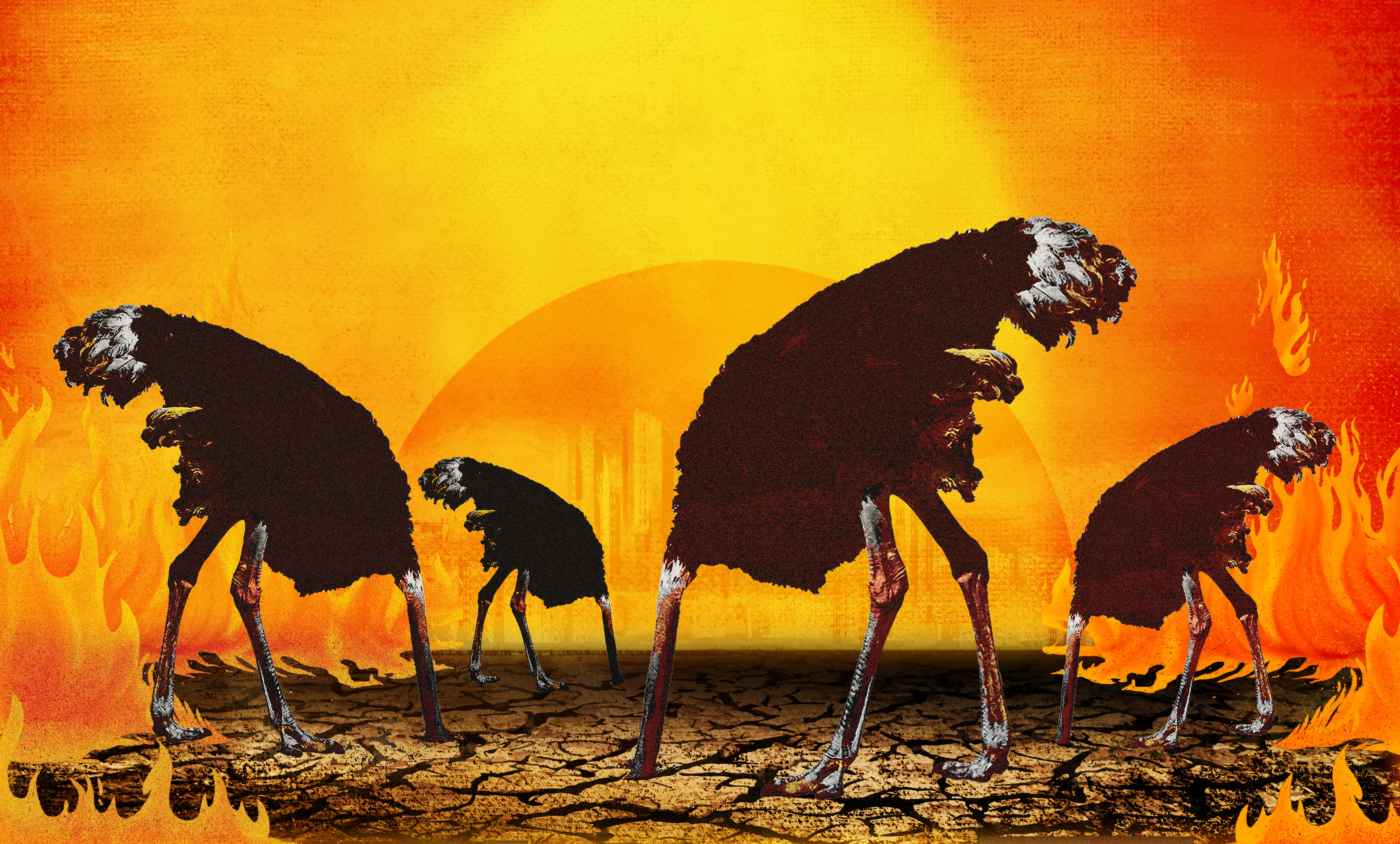
The climate crisis: a war on the world
The climate crisis is a self-destructive war, with aggressors and victims

Appropriate Technology, Permacomputing, Post Growth, and Ecomodernism.
To adapt to the changing climate, we need to radically rethink how and why we do the things we do. From technology, to social movements, to economics. The world is at stake. And we can change it.
Majority of US voters link extreme weather to climate crisis, study finds
Top Democrat says findings show public ‘way ahead of the politicians’ as Trump dismisses global heating as ‘hoax’

We asked our climate reporters to highlight one idea for positive change. We got a chronicle of global transformation
There are countless initiatives around the world that can inspire people and spur them into action. Amid the devastation of the climate crisis, our journalists strive to highlight these stories of hope

France’s big climate problem: The budget crunch
Historic heat is forcing the French government to rethink its spending plans.

Winning The Next Climate Fight
The Commons is an online library for the change makers of the world and for those interested in social change, activism, organising, advocacy and justice.
