


Neuroethics - In this paper, we clarify the nature and the scope of the right to concentrate. We argue that a right to concentrate constitutes a right against significant, non-consensual...
The attention market—and what is wrong with it
Attention is described as a “scarce commodity” that is traded in “a marketplace.” This, it is further claimed, contributes to a “widespread sense of attentional crisis.” But is there really an attention market, and if so, what, if anything, is wrong with it? We defend the claim that there are markets in attention. We provide an account of such attention markets and use that account to address what is morally wrong with them. Our account draws on knowledge of how attention works and what roles it plays in the mind. The attention market trades in an ability to influence our attention – somewhat (though not exactly) like the labor market trades in an ability to influence how we use our capacity for work. Specifically, the commodity it trades in is attentional landscaping potential, viz. the ability to systematically influence patterns of attention by changes to the sensory environment individuals are exposed to. Attention markets thus, we argue, commodify influence over a human capacity that plays a central role in shaping individual experience, agency, and belief formation. This feature of attention markets makes them ethically problematic. As markets in access to external influence, attention markets pose a special threat to individual autonomy and escape the classical liberal defense of free markets. Those who value autonomy should worry about the attention markets that exist today.

Intention, control, and the feeling of commitment
In this paper we propose that rational control of action, agentive stability over time, and coordinated social behavior, are assisted by a form of metacognitive monitoring, leading to an aspect of conscious experience: a feeling of commitment. This feeling of commitment is attached to the formation, retrieval, and execution of intentions. The metacognitive monitoring that produces it is sensitive to the importance of intentions. And the feeling of commitment facilitates the stability and effectiveness of intentions across individual and social contexts, strengthens goal shielding, biases intention retrieval, and thus structures prospective deliberation, expression of intention, and execution of intention. In section two, we discuss control, which is a central aspect of agency and action. In section three, we discuss a crucial part of control: intention. We also discuss a crucial part of intention: commitment. In section four we relate the commitment involved in intention with definitions of commitment in the literature. In section five we offer and elucidate our hypothesis.
Rethinking the cognitive foundations of the attention economy
The attention economy is the economic system in which human attention is the scarce resource. This literature takes a particular passage in Herbert Simon’s seminal Chapter Designing Organization fo...

It's getting harder to focus every day
I’m feeling it right now. I had to set a timer for 15 minute on my computer and block all distractions to write this. If I didn’t force myself to focus I would easily get distracted by something after few minutes. Even when I’m doing things that I’ve been waiting to do it, I still feel the urge to do something else. I don’t know how and when this happened. During the last few years I was always studying, working, and doing open source. And actually got stuff done. Doing all of those at the same time requires paying attention to what I wanted to do and ignore the noise.
Movements of the Mind: A Theory of Attention, Intention and Action
Abstract. Movements of the Mind explains what it is to be an agent. Focusing on mental agency, the book’s eponymous topic, it investigates an agent’s doing

Tyranny of Permissionlessness
open source’s narrow focus further empowers those with other ways to exclude

Toward a theory of network gatekeeping: A framework for exploring information control
Abstract Gatekeeping theories have been a popular heuristic for describing information control for years, but none have attained a full theoretical status in the context of networks. This article aims to propose a theory of network gatekeeping comprised of two components: identification and salience . Network gatekeeping identification lays out vocabulary and naming foundations through the identification of gatekeepers, gatekeeping, and gatekeeping mechanisms. Network gatekeeping salience , which is built on the bases of the network identification theory, utilizes this infrastructure to understand relationships among gatekeepers and between gatekeepers and gated, the entity subjected to a gatekeeping process. Network gatekeeping salience 1 Salience refers to the degree to which gatekeepers give priority to competing gated claims. proposes identifying gated and their salience to gatekeepers by four attributes: (a) their political power in relation to the gatekeeper, (b) their information production ability , (c) their relationship with the gatekeeper, and (d) their alternatives in the context of gatekeeping.

The Psychology of Normative Cognition
From an early age, humans exhibit a tendency to identify, adopt, andenforce the norms of their local communities. Norms are the socialrules that mark out what is appropriate, allowed, required, orforbidden in different situations for various community members. Theserules are informal in the sense that although they are sometimesrepresented in formal laws, like the rule governing which side of theroad to drive on, they need not be explicitly codified to effectivelyinfluence behavior. There are rules that forbid theft or the breakingof promises, but also rules that govern how close it is appropriate tostand to someone while talking to them, or how loud one should talkduring the conversation. Thus understood, norms regulate a wide rangeof activity. They exhibit cultural variability in their prescriptionsand proscriptions, but the presence of norms in general appears to beculturally universal. Some norms exhibit characteristics that areoften associated with morality, such as a rule that applies toeveryone and prohibits causing unnecessary harm. Other norms applyonly to certain people, such as those that delimit appropriateclothing for members of different genders, or those concerning theexpectations and responsibilities ascribed to individuals who occupypositions of leadership. The norms that prevail in a community can bemore or less fair, reasonable, or impartial, and can be subject tocritique and change.
Opinion | There’s a Good Reason You Can’t Concentrate
Just as we changed our thinking around physical fitness, we need to change our attitude toward cognitive fitness.

Don't Get Distracted
I’m going to tell you about how I took a job building software to kill people. But don’t get distracted by that; I didn’t know at the time.

Too amused to stop? Self-control and the disengagement process on Netflix
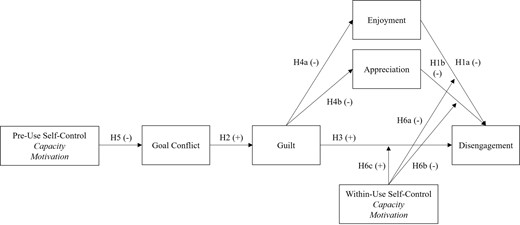
Abstract. Consuming media entertainment often challenges recipients’ self-control. While past research related self-control almost exclusively to whether i
Pervasive Demand for Autonomy:
A Guardrail Feature of Hyperfocus-Capable Systems
Fairness is what the powerful ‘can get away with’ study shows
The willingness of those in power to act fairly depends on how easily others can collectively push back against unfair treatment

'Composable Moderation' May Protect Bluesky from Political Pressure | TechPolicy.Press
Shifting enforcement away from a single platform and into a distributed ecosystem should blunt interference by authoritarians, writes Audrey Hingle.

Artificial Intelligence and the Purpose of Social Systems
The law and ethics of Western democratic states have their basis in liberalism. This extends to regulation and ethical discussion of technology and businesses doing data processing. Liberalism relies on the privacy and autonomy of individuals, their ordering through a public market, and, more recently, a measure of equality guaranteed by the state. We argue that these forms of regulation and ethical analysis are largely incompatible with the techno-political and techno-economic dimensions of artificial intelligence. By analyzing liberal regulatory solutions in the form of privacy and data protection, regulation of public markets, and fairness in AI, we expose how the data economy and artificial intelligence have transcended liberal legal imagination. Organizations use artificial intelligence to exceed the bounded rationality of individuals and each other. This has led to the private consolidation of markets and an unequal hierarchy of control operating mainly for the purpose of shareholder value. An artificial intelligence will be only as ethical as the purpose of the social system that operates it. Inspired by the science of artificial life as an alternative to artificial intelligence, we consider data intermediaries: sociotechnical systems composed of individuals associated around collectively pursued purposes. An attention cooperative, that prioritizes its incoming and outgoing data flows, is one model of a social system that could form and maintain its own autonomous purpose.

Capturing our Attention by @neillevy.bsky.social "we possess sophisticated capacities of epistemic vigilance, which work reasonably well to distinguish reliable from unreliable information, but ... we do not have parallel defences against attentional capture" > tandfonline.com/doi/full/10.1080/00048402.202…
