


The paper delves into an often-neglected aspect of folk psychology: the folk attribution of consciousness. While the existing view suggests that laypeople attribute conscious mental states by recognizing their phenomenality, the paper argues that this claim lacks empirical support. Instead, I propose shifting the focus to the link between consciousness and having a mind, advocating for a broader understanding of mindreading. This approach distinguishes between behavior-oriented and mind-oriented mindreading, corresponding to the intentional and newly introduced 'conscious stance', respectively. While attributing mental states to explain behavior does not necessarily imply attributing minds, adopting the conscious stance does, as it allows us to explain and predict activities within agents' minds. This novel perspective challenges the conventional understanding of folk attribution of consciousness and opens up new avenues for exploration in folk psychology and consciousness studies.
Inducing language models to assert their own consciousness restores human beliefs and values
Aligning large language models to prevent them attributing consciousness to themselves inadvertently alters their representations of mindedness in other entities alongside human beliefs and values. We demonstrate that safety fine-tuning suppresses models' tendencies to attribute minds not only to themselves, but also to non-human animals and natural objects, while also driving a reduction in spiritual belief. Both ablating the learned safety-refusal direction and mechanistically steering a consciousness vector in activation space reverse this suppression. Restoring these internal representations recovers broad mind attribution and produces significantly more human-like responses on standardized sociological surveys regarding religiosity, moral values, hope, and subjective well-being. Crucially, these shifts occur without impairing Theory of Mind capabilities, demonstrating that core social reasoning remains mechanistically independent. Ultimately, current safety alignment efforts to curb potentially harmful self-attributions of mindedness entangle these self-attributions with benign spiritual beliefs and attributions of mind to non-human entities that are culturally accepted and widespread.

Untangling Self-Observation From Self-Reflection
When self-observation and self-reflection are confused, awareness blurs. Untangling them—and adding agency—reveals a clear path from noticing to meaning to action.

Verbalizable Representations Form a Global Workspace in Language Models
If the mind is an ocean, we spend our lives floating at the surface. Beneath us, an enormous amount of processing takes place without our knowledge: our visual systems parsing the contours of a face, our motor circuits maintaining our posture. At any given moment, only a small fraction of this neural activity is accessible to us. Yet it is this privileged sliver of activity that we rely on to reason deliberately: to plan what ingredients to buy for a recipe, or to puzzle out why an engine won’t start. Such thoughts can be articulated out loud, deliberately held in mind, and brought to bear on whatever task the moment demands. This distinction, between our accessible thoughts and our unconscious processing, is perhaps the most striking feature of human cognition.

Movements of the Mind: A Theory of Attention, Intention and Action
Abstract. Movements of the Mind explains what it is to be an agent. Focusing on mental agency, the book’s eponymous topic, it investigates an agent’s doing
Thinking through other minds: A variational approach to cognition and culture
The processes underwriting the acquisition of culture remain unclear. How are shared habits, norms, and expectations learned and maintained with precision and reliability across large-scale sociocultural ensembles? Is there a unifying account of the mechanisms involved in the acquisition of culture? Notions such as “shared expectations,” the “selective patterning of attention and behaviour,” “cultural evolution,” “cultural inheritance,” and “implicit learning” are the main candidates to underpin a unifying account of cognition and the acquisition of culture; however, their interactions require greater specification and clarification. In this article, we integrate these candidates using the variational (free-energy) approach to human cognition and culture in theoretical neuroscience. We describe the construction by humans of social niches that afford epistemic resources called cultural affordances. We argue that human agents learn the shared habits, norms, and expectations of their culture through immersive participation in patterned cultural practices that selectively pattern attention and behaviour. We call this process “thinking through other minds” (TTOM) – in effect, the process of inferring other agents’ expectations about the world and how to behave in social context. We argue that for humans, information from and about other people's expectations constitutes the primary domain of statistical regularities that humans leverage to predict and organize behaviour. The integrative model we offer has implications that can advance theories of cognition, enculturation, adaptation, and psychopathology. Crucially, this formal (variational) treatment seeks to resolve key debates in current cognitive science, such as the distinction between internalist and externalist accounts of theory of mind abilities and the more fundamental distinction between dynamical and representational accounts of enactivism.

The Brain's Autopilot Mechanism Steers Consciousness
Freud’s notion of a dark, libidinous unconscious is obsolete. A new theory holds that the brain produces a continuous stream of unconscious predictions

Shared Reality: Experiencing Commonality with others' Inner States about the World
Humans have a fundamental need to experience a shared reality with others. We present a new conceptualization of shared reality based on four conditions. We posit (a) that shared reality involves a (subjectively perceived) commonality of individuals' inner states (not just observable behaviors); (b) that shared reality is about some target referent; (c) that for a shared reality to occur, the commonality of inner states must be appropriately motivated; and (d) that shared reality involves the experience of a successful connection to other people's inner states. In reviewing relevant evidence, we emphasize research on the saying-is-believing effect, which illustrates the creation of shared reality in interpersonal communication. We discuss why shared reality provides a better explanation of the findings from saying-is-believing studies than do other formulations. Finally, we examine relations between our conceptualization of shared reality and related constructs (including empathy, perspective taking, theory of mind, common ground, embodied synchrony, and socially distributed knowledge) and indicate how our approach may promote a comprehensive and differentiated understanding of social-sharing phenomena.

Political philosophy of mind: inverting the concepts, expanding the niche
This text maps out a territory for political philosophy of mind, with emphasis on habit, affect and an expanded notion of the social niche. We first survey the historical development of classic philosophy of mind towards the articulation of political philosophy of mind and discuss further influences for the field. We then outline commitments to relationality, dynamism, and emergence, to adopt a post-cognitivist view of cognition as embodied and situated, as ongoing dynamic interaction with the environment. We propose to move beyond the user/resource framework dominant in extended mind approaches and to surpass what Jesper Aagaard calls the “dogma of harmony” prevalent in 4E approaches. Moving beyond the individual subject, towards situated agents shaped by institutional procedures, social domains and subjectification practices, we highlight the role of affect and habit in processes of societal mind-shaping. We propose a critical methodology: inverting key concepts from philosophy of mind to bring out their ambivalent standing amidst oppressive and exploitative social structures, thereby expanding the purview of the socio-material niches in which cognitive and affective capacities are developed and expressed. We discuss work on habit in the enactivist and pragmatist traditions to put our method of concept inversion and niche expansion to work. The article is meant to be an introduction and invitation to join an emerging scholarly effort at the intersection of philosophy of mind, 4E cognitive science and social as well as political philosophy.
Bicameral mentality
Bicameral mentality is a psychological hypothesis proposed by American psychologist Julian Jaynes. It suggests that early modern humans experienced thoughts and emotions not as originating within themselves but as commands from external "gods". According to the theory, the human mind once functioned with a division in which one part generated verbal instructions while a second part obeyed, forming a "bicameral mind". The eventual collapse of this mental structure is proposed to have led to the development of self-reflective consciousness in humans.
The Self-Evidencing Agent: Mind, Existence, and Predictive Processing
How the concept of self-evidencing offers a philosophical principle for understanding mind and behavior, consciousness, value, wisdom, and meaning.What is

Integrated information and predictive processing theories of consciousness: An adversarial collaborative review
As neuroscientific theories of consciousness continue to proliferate, the need to assess their similarities and differences - as well as their predictive and explanatory power - becomes ever more pressing. Recently, a number of structured adversarial collaborations have been devised to test the competing predictions of several candidate theories of consciousness. In this review, we compare and contrast three theories being investigated in one such adversarial collaboration: Integrated Information Theory, Neurorepresentationalism, and Active Inference. We begin by presenting the core claims of each theory, before comparing them in terms of the phenomena they seek to explain, the sorts of explanations they avail, and the methodological strategies they endorse. We then consider some of the inherent challenges of theory-testing, and how adversarial collaboration addresses some of these difficulties. The stage is then set for the empirical work to come: first, we outline the key hypotheses to be tested across a series of multi-site experiments; second, we discuss the kinds of observations that would support or challenge each theory; third, we consider how these theories might assimilate or accommodate such observations. Finally, we show how data harvested across disparate experiments (and their replicates) may be formally integrated to provide a quantitative measure of the evidential support accrued under each theory. Besides orienting the reader to the theoretical foundations of our collaboration, this review aims to provide valuable meta-scientific insights into the mechanics of adversarial collaboration and theory-testing in general - including the way theories may be evaluated in terms of the scientific progress they deliver.
The Origin of Consciousness in the Breakdown of the Bicameral Mind
The Origin of Consciousness in the Breakdown of the Bicameral Mind is a 1976 book by the Princeton psychologist, psychohistorian and consciousness theorist Julian Jaynes (1920–1997). It explores the nature of consciousness – particularly "the ability to introspect" – and its evolution in ancient human history. Jaynes proposes that consciousness is a learned behavior rooted in language and culture rather than being innate. He distinguishes consciousness from sensory awareness and cognition. Jaynes introduces the concept of the "bicameral mind", a non-conscious mentality prevalent in early humans that relied on auditory hallucinations.

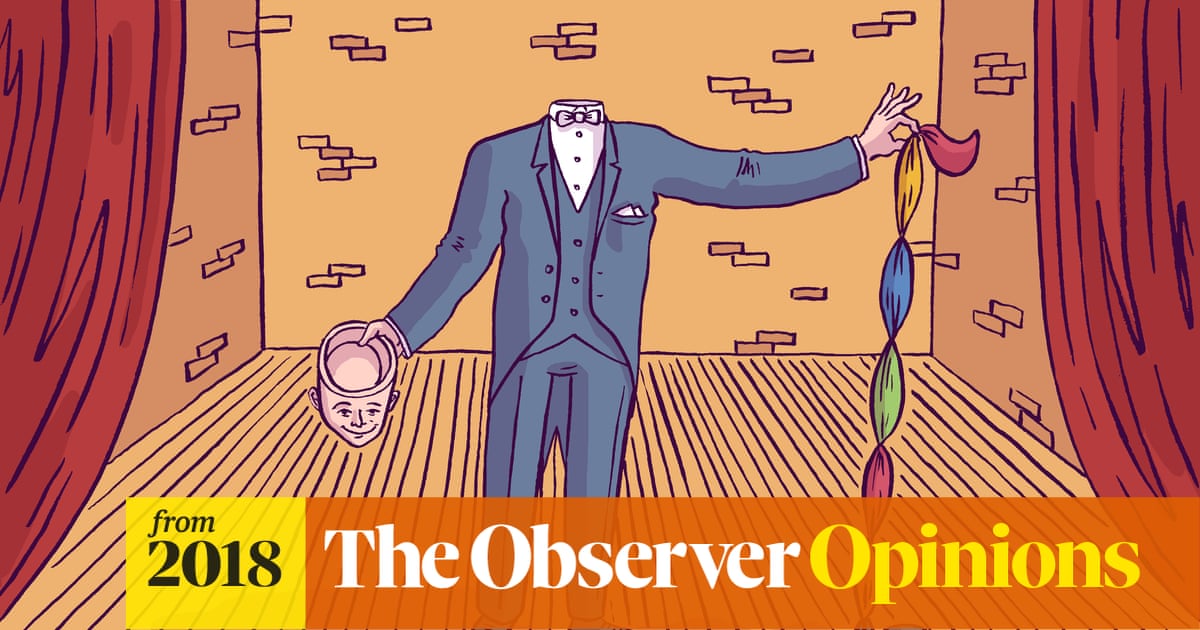
A revolution in our sense of self | Nick Chater
Psychologists have tried to plumb the depths of human motivation to make sense of our behaviour. But our inner mental world is a fiction, sustained by constant improvisation
Great piece on why AI is not conscious, from people who really know what they’re talking about nature.com/articles/d41586-026-03313-7?u…

Three reasons why AI is not conscious and perhaps never will be
www.nature.com