This paper explores the ambiguous impact of new information and communications technologies (ICTs) on the cultivation of moral skills in human beings. Just as twentieth century advances in machine automation resulted in the economic devaluation of practical knowledge and skillsets historically cultivated by machinists, artisans, and other highly trained workers (Braverman 1974), while also driving the cultivation of new skills in a variety of engineering and white collar occupations, ICTs are also recognized as potential causes of a complex pattern of economic deskilling, reskilling, and upskilling. In this paper, I adapt the conceptual apparatus of sociological debates over economic deskilling to illuminate a different potential for technological deskilling/upskilling, namely the ability of ICTs to contribute to the moral deskilling of human users, a potential that exists alongside rich but currently underrealized possibilities for moral reskilling and/or upskilling. I flesh out this general hypothesis by means of examples involving automated weapons technology, new media practices, and social robotics. I conclude that since moral skills are essential prerequisites for the effective development of practical wisdom and virtuous character, and since market and cultural forces are not presently aligned to bring about the more salutary of the ambiguous potentials presented here, the future shape of these developments warrants our close attention—and perhaps active intervention.
Good Robot
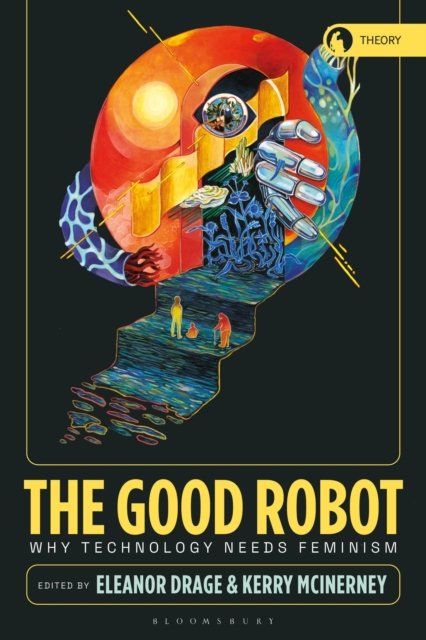
What is good technology? Is ‘good’ technology even possible? And how can feminism help us work towards it? The Good Robot addresses these crucial questions through the voices of leading feminist thinkers, activists and technologists. Each thinker provides a snapshot of key challenges, questions and provocations in the field of feminism and technology. While the question of whether various AI and technological advances can be ethical is not new, the embedded nature of feminist perspectives pulls out whether this perceived ‘goodness’ or ‘wrongness’ might actually impact our lives in the 21st century. This book explores both the radical possibilities of technology to disrupt practices of patriarchy, colonialism, racism and beyond but also provides a significant critique of how we can contain the ethical possibilities of entities we cannot predict. In exploring unjust technological practices and engaging critical voices in the tech industry, the existing moral issues are brought to light as well as the possible ethical quagmires. This book opens a new space of discussion on digital technologies – one that insists that the future of AI is an urgent feminist issue.

A new middle-class fraction with a distinct subjectivity: Tech workers and the transformation of the entrepreneurial self
With the rise of digital capitalism, a novel occupational segment has emerged: so-called ‘tech workers’. Members of this grouping render and encode the digital technologies that permeate contemporary social life. While there are many studies about highly precarious digital labourers, research on these digital professionals remains scarce. Based on 40 original interviews, the article explores the subjectivity of tech workers. Specifically, it asks whether understandings of middle-class employees as entrepreneurial selves with a holistic market orientation hold true for this grouping, or whether new cultures of subjectivation are emerging. The key finding from these interviews is that tech workers show contours of a post-neoliberal subjectivity. While the figure of the entrepreneurial self remains an alluring force, this study detected four transformative cultures of subjectivation: (1) a return of the critique of economic inequality; (2) a concern for diversity; (3) an ethic of mindfulness; and (4) a lifestyle that signals ordinariness. These distinct forms of subjectivity point to the formation of a new middle-class fraction. However, drawing on the sociology of critique, this article also considers how this transformation of subjectivity can be appropriated as yet another new spirit of capitalism.

Because we get asked a lot. by @PalantirTech(Palantir) | Twitter Thread Reader
Because we get asked a lot. The Technological Republic, in brief. 1. Silicon Valley owes a moral debt to the country that made its rise possible. The engineering elite of Silicon Valley has an affirmative obligation to participate in the defense of the nation. 2. We must rebel against the tyranny of the apps. Is the iPhone our greatest creative if not crowning achievement as a civilization? The object has changed our lives, but it may also now be limiting and constraining our sense of the possible. 3. Free email is not enough. The decadence of a culture or civilization, and indeed its ruling class, will be forgiven only if that culture is capable of delivering economic growth and security for the public. 4. The limits of soft power, of soaring rhetoric alone, have been exposed. The ability of free and democratic societies to prevail requires something more than moral appeal. It requires hard power, and hard power in this century will be built on software. 5. The question is not whether A.I. weapons will be built; it is who will build them and for what purpose. Our adversaries will not pause to indulge in theatrical debates about the merits of developing technologies with critical military and national security applications. They will proceed. 6. National service should be a universal duty. We should, as a society, seriously consider moving away from an all-volunteer force and only fight the next war if everyone shares in the risk and the cost. 7. If a U.S. Marine asks for a better rifle, we should build it; and the same goes for software. We should as a country be capable of continuing a debate about the appropriateness of military action abroad while remaining unflinching in our commitment to those we have asked to step into harm’s way. 8. Public servants need not be our priests. Any business that compensated its employees in the way that the federal government compensates public servants would struggle to survive. 9. We should show far more grace towards those who have subjected themselves to public life. The eradication of any space for forgiveness—a jettisoning of any tolerance for the complexities and contradictions of the human psyche—may leave us with a cast of characters at the helm we will grow to regret. 10. The psychologization of modern politics is leading us astray. Those who look to the political arena to nourish their soul and sense of self, who rely too heavily on their internal life finding expression in people they may never meet, will be left disappointed. 11. Our society has grown too eager to hasten, and is often gleeful at, the demise of its enemies. The vanquishing of an opponent is a moment to pause, not rejoice. 12. The atomic age is ending. One age of deterrence, the atomic age, is ending, and a new era of deterrence built on A.I. is set to begin. 13. No other country in the history of the world has advanced progressive values more than this one. The United States is far from perfect. But it is easy to forget how much more opportunity exists in this country for those who are not hereditary elites than in any other nation on the planet. 14. American power has made possible an extraordinarily long peace. Too many have forgotten or perhaps take for granted that nearly a century of some version of peace has prevailed in the world without a great power military conflict. At least three generations — billions of people and their children and now grandchildren — have never known a world war. 15. The postwar neutering of Germany and Japan must be undone. The defanging of Germany was an overcorrection for which Europe is now paying a heavy price. A similar and highly theatrical commitment to Japanese pacifism will, if maintained, also threaten to shift the balance of power in Asia. 16. We should applaud those who attempt to build where the market has failed to act. The culture almost snickers at Musk’s interest in grand narrative, as if billionaires ought to simply stay in their lane of enriching themselves . . . . Any curiosity or genuine interest in the value of what he has created is essentially dismissed, or perhaps lurks from beneath a thinly veiled scorn. 17. Silicon Valley must play a role in addressing violent crime. Many politicians across the United States have essentially shrugged when it comes to violent crime, abandoning any serious efforts to address the problem or take on any risk with their constituencies or donors in coming up with solutions and experiments in what should be a desperate bid to save lives. 18. The ruthless exposure of the private lives of public figures drives far too much talent away from government service. The public arena—and the shallow and petty assaults against those who dare to do something other than enrich themselves—has become so unforgiving that the republic is left with a significant roster of ineffectual, empty vessels whose ambition one would forgive if there were any genuine belief structure lurking within. 19. The caution in public life that we unwittingly encourage is corrosive. Those who say nothing wrong often say nothing much at all. 20. The pervasive intolerance of religious belief in certain circles must be resisted. The elite’s intolerance of religious belief is perhaps one of the most telling signs that its political project constitutes a less open intellectual movement than many within it would claim. 21. Some cultures have produced vital advances; others remain dysfunctional and regressive. All cultures are now equal. Criticism and value judgments are forbidden. Yet this new dogma glosses over the fact that certain cultures and indeed subcultures . . . have produced wonders. Others have proven middling, and worse, regressive and harmful. 22. We must resist the shallow temptation of a vacant and hollow pluralism. We, in America and more broadly the West, have for the past half century resisted defining national cultures in the name of inclusivity. But inclusion into what? Excerpts from the #1 New York Times Bestseller The Technological Republic: Hard Power, Soft Belief, and the Future of the West, by Alexander C. Karp & Nicholas W. Zamiska https://t.co/8igjazz1On
The Social Meaning of the Personal Computer: Or, Why the Personal Computer Revolution Was No Revolution
This essay presents a processual model of the personal computing movement that depicts the PC's birth within the context of complex and often contradictory social strategies, each of which used the meaning of computer technology in a distinctive way. It suggests that innovators are constrained by such processes to depict new artifacts in culturally meaningful ways, so that it is difficult for them to conceive of their technologies in radical terms. The rhetoric of "revolution" aside, innovators found it expedient to draw from the stock of meanings at hand as they created new meaning-frameworks for their artifacts. The result is that the new artifacts did not express a coherent or effective political vision and failed to have the intended social effects. This study implies that new technologies frequently reproduce existing social and meaning systems; if they do bring about social change, the changes may differ from those intended by the innovators.
The Social Meaning of the Personal Computer: Or, Why the Personal Computer Revolution Was No Revolution
This essay presents a processual model of the personal computing movement that depicts the PC's birth within the context of complex and often contradictory social strategies, each of which used the meaning of computer technology in a distinctive way. It suggests that innovators are constrained by such processes to depict new artifacts in culturally meaningful ways, so that it is difficult for them to conceive of their technologies in radical terms. The rhetoric of "revolution" aside, innovators found it expedient to draw from the stock of meanings at hand as they created new meaning-frameworks for their artifacts. The result is that the new artifacts did not express a coherent or effective political vision and failed to have the intended social effects. This study implies that new technologies frequently reproduce existing social and meaning systems; if they do bring about social change, the changes may differ from those intended by the innovators.
‘Deskilling’: a dangerous side effect of AI use
Workers are increasingly reliant on the new technology

What Does 'Human-Centred AI' Mean?
While it seems sensible that human-centred artificial intelligence (AI) means centring "human behaviour and experience," it cannot be any other way. AI, I argue, is usefully seen as a relationship between technology and humans where it appears that artifacts can perform, to a greater or lesser extent, human cognitive labour. This is evinced using examples that juxtapose technology with cognition, inter alia: abacus versus mental arithmetic; alarm clock versus knocker-upper; camera versus vision; and sweatshop versus tailor. Using novel definitions and analyses, sociotechnical relationships can be analysed into varying types of: displacement (harmful), enhancement (beneficial), and/or replacement (neutral) of human cognitive labour. Ultimately, all AI implicates human cognition; no matter what. Obfuscation of cognition in the AI context -- from clocks to artificial neural networks -- results in distortion, in slowing critical engagement, perverting cognitive science, and indeed in limiting our ability to truly centre humans and humanity in the engineering of AI systems. To even begin to de-fetishise AI, we must look the human-in-the-loop in the eyes.

What Does 'Human-Centred AI' Mean?
While it seems sensible that human-centred artificial intelligence (AI) means centring "human behaviour and experience," it cannot be any other way. AI, I argue, is usefully seen as a relationship between technology and humans where it appears that artifacts can perform, to a greater or lesser extent, human cognitive labour. This is evinced using examples that juxtapose technology with cognition, inter alia: abacus versus mental arithmetic; alarm clock versus knocker-upper; camera versus vision; and sweatshop versus tailor. Using novel definitions and analyses, sociotechnical relationships can be analysed into varying types of: displacement (harmful), enhancement (beneficial), and/or replacement (neutral) of human cognitive labour. Ultimately, all AI implicates human cognition; no matter what. Obfuscation of cognition in the AI context -- from clocks to artificial neural networks -- results in distortion, in slowing critical engagement, perverting cognitive science, and indeed in limiting our ability to truly centre humans and humanity in the engineering of AI systems. To even begin to de-fetishise AI, we must look the human-in-the-loop in the eyes.

Has technological innovation lost the plot? An interview with AI ethicist Dr. Shannon Vallor | Chicago Policy Review
Shannon Vallor is the Baillie Gifford Chair in the Ethics of Data and Artificial Intelligence at the Edinburgh Futures Institute (EFI) at the University of Edinburgh, where she is also appointed in Philosophy. Professor Vallor’s research explores how new technologies, especially AI, robotics, and data science, reshape human moral character, habits, and practices. She is […]

Historical pragmatism and the internet
This article argues that the literature describing the internet revolution in the 1990s was characterized by the rhetoric of the technological sublime. This rhetoric suffered from three fatal flaws: (1) it was not sufficiently grounded in the historical development of technology; (2) it viewed the internet in isolation, failing to consider the wider technological context; and (3) it failed to examine the internet in view of the social, economic, religious and political circumstances of its users. Several examples from history are cited, demonstrating that changes in various systems for the production, dissemination and preservation of cultural information both border and deborder the world. The article suggests that if internet researchers take a pragmatic, historically grounded approach, they will discover that the introduction of internet technology can be seen to have similar consequences. While the technology overcomes many boundaries (of space and time, politics and economics), other social borders may be created at the same time. It is easier to see old boundaries coming down than to see new ones being erected. Rather than being swept by utopian or dystopian enthusiasms, the article insists that the really interesting discoveries are to be made in locating the subtle social shifts taking place, relatively unnoticed, as a consequence of technological change.

The Future of AI
The Parents’ Paradox: AI, Ethics, and the Limits of Machine Morality This post is based on a talk I gave at The AI & Automation Conference in London on February 25, 2026, and my slides. A…

Technopoly: The Surrender of Culture to Technology
A witty, often terrifying that chronicles our transform…

Palantir's social media manifesto is a blueprint for technofascism
The surveillance firm’s viral X post calls for hard power, conscription and the end of pluralism. AI expert and academic Mark Coeckelbergh on what happens when technology becomes the gateway to authoritarianism

Pivot to People: It’s Time to Build the New Economy
Today’s calls for ethical, humane, responsible, regulated and beneficial technology, compounded with venture capital’s virtue signaling in…

Building Pro-Worker Artificial Intelligence
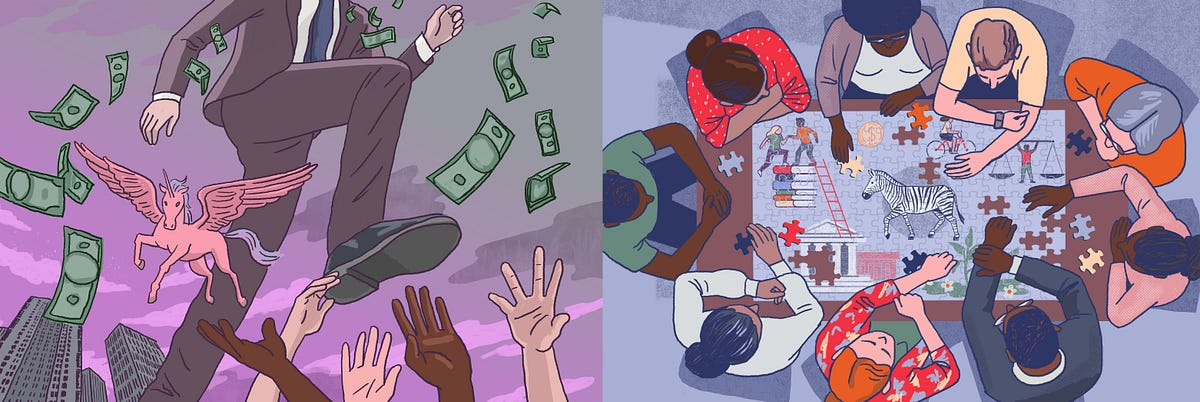
This paper defines pro-worker technologies, including Artificial Intelligence, as technologies that make human skills and expertise more valuable by expanding worker capabilities. Our conceptual framework distinguishes among five categories of technological change: labor-augmenting, capital-augmenting, automating, expertise-leveling, and new task-creating. Only the last category is unambiguously pro-worker, generating demand for novel human expertise rather than commodifying it. We illustrate these distinctions through hypothetical and real-world examples spanning aviation maintenance, electrical services, custodial work, education, patent examination, and gig delivery. While AI’s capacity to automate work is substantial, we argue that its potential to serve as a collaborator, by extending human judgment, enabling new tasks, and accelerating skill acquisition, is equally transformative and currently underexploited. We identify market failures, including misaligned firm and developer incentives, path dependence, and a pervasive pro-automation ideology, that may lead to underinvestment in pro-worker AI. We consider nine policy directions that would change incentives, including targeted investments in health care and education, tax code reform, antitrust enforcement, and intellectual property protections for worker expertise.

Field Theory: AI as Social Science Question, Object & Tool
Uses of advanced artificial intelligence are changing how societies organize labor, govern, produce knowledge, and make meaning. In light of these developments, this essay argues that AI models, tools, and systems pose three interrelated imperatives for social science: they demand renewed attention to social theories of how technology, human experience, and social order are entangled; they require study as objects of inquiry in their own right; and they offer capabilities that may transform—or upend—the practice of social investigation itself. From Weber’s analysis of rationalization to Du Bois’s study of technology and inequality to contemporary scholarship on algorithmic governance, the essay examines what social science distinctively offers: the capacity to historicize the apparently unprecedented, to trace connections across scales, and to center those most affected by technological change. It identifies how algorithmic systems are remaking the distribution of opportunity and risk as a central task of social inquiry and asks what futures social science might help bring into being.