

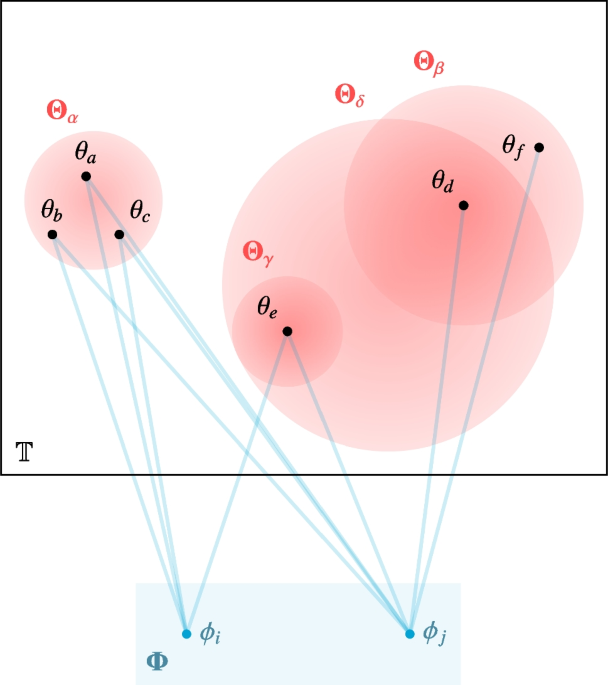
I present an ontology of criteria for evaluating theory to answer the titular question from the perspective of a scientist practitioner. Set inside a formal account of our adjudication over theories, a metatheoretical calculus, this ontology comprises the following: (a) metaphysical commitment, the need to highlight what parts of theory are not under investigation, but are assumed, asserted, or essential; (b) discursive survival, the ability to be understood by interested non-bad actors, to withstand scrutiny within the intended (sub)field(s), and to negotiate the dialectical landscape thereof; (c) empirical interface, the potential to explicate the relationship between theory and observation, i.e., how observations relate to, and affect, theory and vice versa; (d) minimising harm, the reckoning with how theory is forged in a fire of historical, if not ongoing, abuses—from past crimes against humanity, to current exploitation, turbocharged or hyped by machine learning, to historical and present internal academic marginalisation. This work hopes to serve as a possible beginning for scientists who want to examine the properties and characteristics of theories, to propose additional virtues and vices, and to engage in further dialogue. Finally, I appeal to practitioners to iterate frequently over such criteria, by building and sharing the metatheoretical calculi used to adjudicate over theories.
Ontology of the Accident: An Essay on Destructive Plasticity
In the usual order of things, lives run their course and eventually one becomes who one is. Bodily and psychic transformations do nothing but reinforce the permanence of identity. But as a result of serious trauma, or sometimes for no reason at all, a subject’s history splits and a new, unprecedented persona comes to live with the former person - an unrecognizable persona whose present comes from no past and whose future harbors nothing to come; an existential improvisation, a form born of the accident and by accident. Out of a deep cut opened in a biography, a new being comes into the world for a second time. <br /> <br /> What is this form? A face? A psychological profile? What ontology can it account for, if ontology has always been attached to the essential, forever blind to the <i>aléa</i> of transformations? What history of being can the plastic power of destruction explain? What can it tell us about the explosive tendency of existence that secretly threatens each one of us?<br /> <br /> Continuing her reflections on destructive plasticity, split identities and the psychic consequences experienced by those who have suffered brain injury or have been traumatized by war and other catastrophes, Catherine Malabou invites us to join her in a philosophic and literary adventure in which Spinoza, Deleuze and Freud cross paths with Proust and Duras.

Ontology of the Accident: An Essay on Destructive Plasticity
In the usual order of things, lives run their course and eventually one becomes who one is. Bodily and psychic transformations do nothing but reinforce the permanence of identity. But as a result of serious trauma, or sometimes for no reason at all, a subject’s history splits and a new, unprecedented persona comes to live with the former person - an unrecognizable persona whose present comes from no past and whose future harbors nothing to come; an existential improvisation, a form born of the accident and by accident. Out of a deep cut opened in a biography, a new being comes into the world for a second time. <br /> <br /> What is this form? A face? A psychological profile? What ontology can it account for, if ontology has always been attached to the essential, forever blind to the <i>aléa</i> of transformations? What history of being can the plastic power of destruction explain? What can it tell us about the explosive tendency of existence that secretly threatens each one of us?<br /> <br /> Continuing her reflections on destructive plasticity, split identities and the psychic consequences experienced by those who have suffered brain injury or have been traumatized by war and other catastrophes, Catherine Malabou invites us to join her in a philosophic and literary adventure in which Spinoza, Deleuze and Freud cross paths with Proust and Duras.
What Theory is Not, Theorizing Is
Re-Engineering Wimsatt for Limited Beings
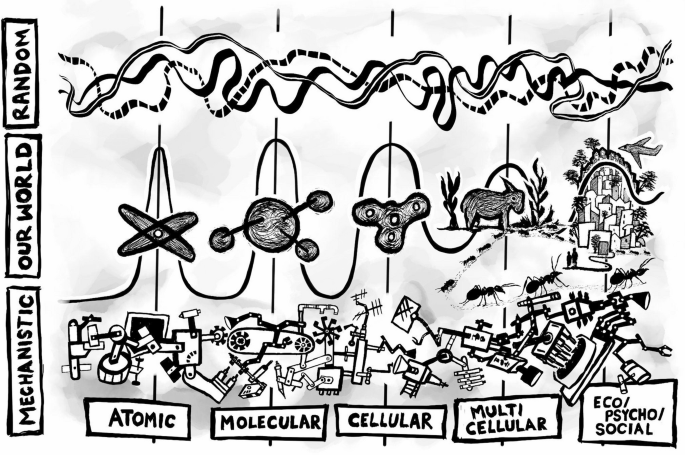
Science is the best way to produce facts about reality. The best, at least, that limited human beings have devised so far. Yet, not even scientists quite seem to understand how scientific knowledge is generated. This is not only a philosophical but also a practical problem, as our misunderstandings affect the quality of our research and limit the directions it can take. In light of this, it may be good if we reflected a bit more on how we do science — to become better researchers through philosophy. Here, I provide an accessible introduction to a philosophical approach that achieves precisely this: William Wimsatt’s multi-perspectival realism. It disabuses us of widespread but misleading myths and idealizations about science, such as the idea that everything in the world can be reduced to a fundamental level, or that we can approach a “view from nowhere” — complete and objectively detached knowledge of the world. Wismatt proposes an alternative view based on his thorough studies of actual research practice. It cuts deeply into the layered yet messy structure of reality, and the improvised but potent tools we have available, as limited and evolved beings, to explore it. Wimsatt reframes science as an irregular yet adaptive process rather than a cumulative repository of unalterable facts. His philosophy provides a workable and grounded middle way between radical skepticism and naïve belief in the objective truth of science. It explains how knowledge is conceptually constructed by humans, but still connects us to reality in a trustworthy way. We need such a new view of science, not only to improve our research practices and outcomes but, more generally, to gain a more realistic understanding of ourselves, the world, and our place and role within it.
Illusions of Understanding in the Sciences
Scientists seek to understand the causes of observed phenomena. Beliefs that they have succeeded are based on understanding that is rarely or possibly never complete, and varies in depth and quality. Most often scientists believe they understand more than they do, making their belief an illusion. This illusion then persists in explanations scientists provide in print, in talks, or in discussions. The illusion that a scientist has a valid and complete explanation tends to be magnified when the data are well described by mathematical and computer simulation models due to the precision of such models and their ability to predict well; prediction does not imply causality, but gives the illusion that it does. The first part of this essay supports the case for the universality of partial and incomplete levels of understanding by showing the difficulty of reaching a deep level of understanding for even a simple analysis and model that most scientists use and believe they understand: linear regression. The second part highlights some implications of the existence of many levels of understanding and explanation, and their use by scientists for design, testing, analysis, and theory development. It discusses the way that deduction and induction depend on the levels of understanding and the implications of the illusion that a scientist’s understanding is deep. It makes a case that the many incomplete levels of understanding affect, often unwittingly, the ways scientists design experiments, test theories, comprehend, communicate, and teach.

Theories of Truth: A Critical Introduction
Theories of Truth provides a clear, critical introduction to one of the most difficult areas of philosophy. It surveys all of the major philosophical theories of truth, presenting the crux of the issues involved at a level accessible to nonexperts yet in a manner sufficiently detailed and original to be of value to professional scholars. Kirkham's systematic treatment and meticulous explanations of terminology ensure that readers will come away from this book with a comprehensive general understanding of one of philosophy's thorniest set of topics.Included are discussions of the correspondence, coherence, pragmatic, semantic, performative, redundancy, appraisal, and truth-as-justification theories. There are also chapters or sections of chapters on the liar paradox, three-valued logic, Field's critique of Tarski, Davidson's program, Dummett's theory of linguistic competence, satisfaction, recursion, the extension/intension distinction, and an explanation of how theories of justification, properly understood, differ from theories of truth.A persistent theme is that philosophers have too often failed to recognize that not all theories of truth are intended to answer the same question. When the various questions are made distinct, it is apparent that many of the "debates" in this field are really cases of philosophers talking past one another. There is much less disagreement within the field than has commonly been thought.

How To Think Real Good | Meta-rationality
Practical epistemology: heuristics for how to think about difficult things, particularly using formal methods.
What Makes a Concept Good? A Criterial Framework for Understanding Concept Formation in the Social Sciences
Nowhere in the broad and heterogeneous work on concept formation has the question of conceptual utility been satisfactorily addressed. Goodness in concept formation, I argue, cannot be reduced to 'clarity,' to empirical or theoretical relevance, to a set of rules, or to the methodology particular to a given study. Rather, I argue that conceptual adequacy should be perceived as an attempt to respond to a standard set of criteria, whose demands are felt in the formation and use of all social science concepts: (1) familiarity, (2) resonance, (3) parsimony, (4) coherence, (5) differentiation, (6) depth, (7) theoretical utility, and (8) field utility. The significance of this study is to be found not simply in answering this important question, but also in providing a complete and reasonably concise framework for explaining the process of concept formation within the social sciences. Rather than conceiving of concept formation as a method (with a fixed set of rules and a definite outcome), I view it as a highly variable process involving trade-offs among these eight demands.
Ground the model, or it invents the evidence
Trusted, curated, subject-specific models are needed for academia
Against theory-motivated experimentation: Can random experimental choice lead to better theories?
Scientists must choose which among many experiments to perform. We study the epistemic success of experimental choice strategies proposed by philosophers of science or executed by scientists themselves. We develop a multi-agent model of the scientific process that jointly formalizes its core aspects: active experimentation, theorizing, and social learning. We find that agents who choose new experiments at random develop the most informative and predictive theories of the world. The agents aiming to confirm, falsify theories, or resolve theoretical disagreements end up with an illusion of epistemic success: they develop promising accounts for the data they collected, while misrepresenting the ground truth that they intended to learn about. Agents experimenting in these theory-motivated ways acquire less diverse or less representative samples from the ground truth that also turn out to be easier to account for. Random data collection, on the other hand, combines virtues of diverse and representative sampling from a target scientific domain which enables cumulative development of the successful theoretical accounts of it. We suggest that randomization, already a gold standard within experiments, is also beneficial at the level of experiments themselves.

Argumentation theory | Communication and Mass Media | Research Starters | EBSCO Research
<p>Argumentation theory explores the processes and methods of reasoning and debate used by individuals in both formal and informal contexts. The theory has roots in ancient philosophical discourse, particularly from figures like Aristotle, and has evolved through the contributions of modern philosophers such as Chaïm Perelman and Stephen Toulmin. It highlights how arguments are structured, identifying key components such as claims, grounds (or data), and warrants, which collectively help participants make their case. </p> <p>Additionally, arguments can be categorized into three main types: factual claims, which are verifiable; judgment or value claims, which are subjective; and policy claims, which pertain to proposed courses of action. This framework acknowledges the influence of personal biases, often shaping the reasoning process, and emphasizes the importance of logical support, backing, qualifiers, and rebuttals in strengthening arguments. In academic contexts, the theory suggests that creating valid topics should focus on policy arguments, while also addressing counterarguments to foster a comprehensive debate. Overall, argumentation theory serves as a critical tool for understanding how reasoning and persuasive communication function in various scenarios.</p>

#predictingthefuture #newfutureofwork | Jaime Teevan
🌱 Prediction: Knowledge will outgrow publication. We’re already seeing academic publication start to buckle under AI, sometimes absurdly. I still publish research more or less the way Darwin did. I run a study, write it up, a few other scientists check it over, and the result gets filed away as a document with my name on the front. Faster than Darwin, with better figures, but the same basic shape. I predict that shape won’t last another decade. Academic authors are starting to slip hidden instructions into papers to flatter the AI that might review them. Reviewers are spending time checking whether citations exist or were hallucinated. Researchers asking AI to tell them about a paper instead of reading it directly. These are signs that the creation of new knowledge is outgrowing the articles that used to contain it. An academic paper serves many purposes at once. It makes an argument legible. It lets strangers check one's reasoning. It assigns credit and responsibility. It records who knew what and when. A paper was the only container we had for these different jobs, so it carried all of them together. With AI, they can be separated. My guess is that means the unit of publication will get smaller. Much of my research has focused on microproductivity, developing the idea that large accomplishments can be built from many small contributions. Publication will start to become a form of microproductivity. Instead of holding onto a result until it can be wrapped in a narrative large enough to justify a paper, researchers will publish it the moment it’s solid. Each finding, method, or negative result will be citable and carry its own provenance, so credit and reasoning travel with it. Reviewing will shrink to match, so claims get checked as they’re made instead of in one verdict at the end. But more than changing publication, the deeper change will be to how research itself is done. You may have heard the term “compound engineering,” where every bug fixed, evaluation written, workflow documented, or lesson learned becomes part of the system’s memory. I predict we’re about to see “compound science,” where every experiment, evaluation, insight, artifact, and learned capability becomes a reusable asset for future discovery. Findings will become evidence. Methods will become building blocks. Failed approaches will become constraints. For centuries, science has relied on humans to navigate an ever-growing body of knowledge. Soon that body of knowledge will help navigate itself. Scientists will spend less time searching for hypotheses and more time deciding which opportunities to pursue. AI systems will propose explanations, design experiments, run analyses, and explore many possibilities in parallel. Every discovery will become a part of the machinery that produces the next one. Papers ten years from now will look less like my current papers than my current papers look like Darwin’s. If they exist at all. #PredictingTheFuture #NewFutureOfWork

Dario Amodei — The Urgency of Interpretability
In the decade that I have been working on AI, I’ve watched it grow from a tiny academic field to arguably the most important economic and geopolitical issue in the world. In all that time, perhaps the most important lesson I’ve learned is this: the progress of the underlying technology is inexorable, driven by forces too powerful to stop, but the way in which it happens—the order in which things are built, the applications we choose, and the details of how it is rolled out to society—are eminently possible to change, and it’s possible to have great positive impact by doing so. We can’t stop the bus, but we can steer it. In the past I’ve written about the importance of deploying AI in a way that is positive for the world, and of ensuring that democracies build and wield the technology before autocracies do. Over the last few months, I have become increasingly focused on an additional opportunity for steering the bus: the tantalizing possibility, opened up by some recent advances, that we could succeed at interpretability—that is, in understanding the inner workings of AI systems—before models reach an overwhelming level of power.
.jpg)
Integrated information and predictive processing theories of consciousness: An adversarial collaborative review
As neuroscientific theories of consciousness continue to proliferate, the need to assess their similarities and differences - as well as their predictive and explanatory power - becomes ever more pressing. Recently, a number of structured adversarial collaborations have been devised to test the competing predictions of several candidate theories of consciousness. In this review, we compare and contrast three theories being investigated in one such adversarial collaboration: Integrated Information Theory, Neurorepresentationalism, and Active Inference. We begin by presenting the core claims of each theory, before comparing them in terms of the phenomena they seek to explain, the sorts of explanations they avail, and the methodological strategies they endorse. We then consider some of the inherent challenges of theory-testing, and how adversarial collaboration addresses some of these difficulties. The stage is then set for the empirical work to come: first, we outline the key hypotheses to be tested across a series of multi-site experiments; second, we discuss the kinds of observations that would support or challenge each theory; third, we consider how these theories might assimilate or accommodate such observations. Finally, we show how data harvested across disparate experiments (and their replicates) may be formally integrated to provide a quantitative measure of the evidential support accrued under each theory. Besides orienting the reader to the theoretical foundations of our collaboration, this review aims to provide valuable meta-scientific insights into the mechanics of adversarial collaboration and theory-testing in general - including the way theories may be evaluated in terms of the scientific progress they deliver.

the void — LessWrong
Comment by nostalgebraist - Thanks for the reply! I'll check out the project description you linked when I get a chance. [...] Yeah, I had mentally flagged this as a potentially frustrating aspect of the post – and yes, I did worry a little bit about the thing you mention in your last sentence, that I'm inevitably "reifying" the thing I describe a bit more just by describing it. FWIW, I think of this post as purely about "identifying and understanding the problem" as opposed to "proposing solutions." Which is frustrating, yes, but the former is a helpful and often necessary step toward the latter. And although the post ends on a doom-y note, I meant there to be an implicit sense of optimism underneath that[1] – like, "behold, a neglected + important cause area that for all we know could be very tractable! It's under-studied, it could even be easy! What is true is already so; the worrying signs we see even in today's LLMs were already there, you already knew about them – but they might be more amenable to solution than you had ever appreciated! Go forth, study these problems with fresh eyes, and fix them once and for all!" I might write a full post on potential solutions sometime. For now, here's the gist of (incomplete, work-in-process) thoughts. ---------------------------------------- In a recent post, I wrote the following (while talking about writing a Claude 4 Opus prompt that specified a counterfactual but realistic scenario): [...] And I feel that the right way to engage with persistent LLM personas is basically just this, except generalized to the fullest possible extent. "Imagine the being you want to create, and the kind of relationship you want to have (and want others to have) with that being. "And then shape all model-visible 'context' (prompts, but also the way training works, the verbal framing we use for the LLM-persona-creation process, etc.) for consistency with that intent – up to, and including, authentically acting out that 'relationship you want to have' w

Many Minds: Science, AI, and illusions of understanding
AI will fundamentally transform science. It will supercharge the research process, making it faster and more efficient and broader in scope. It will make scientists themselves vastly more productive, more objective, maybe more creative. It will make many human participants—and probably some human scientists—obsolete… Or at least these are some of the claims we are hearing these days. There is no question that various AI tools could radically reshape how science is done, and how much science is done. What we stand to gain in all this is pretty clear. What we stand to lose is less obvious, but no less important. My guest today is . Molly is a Professor in the Department of Psychology and the University Center for Human Values at Princeton University. In a recent , Molly and the anthropologist presented a framework for thinking about the different roles that are being imagined for AI in science. And they argue that, when we adopt AI in these ways, we become vulnerable to certain illusions. Here, Molly and I talk about four visions of AI in science that are currently circulating: AI as an Oracle, as a Surrogate, as a Quant, and as an Arbiter. We talk about the very real problems in the scientific process that AI promises to help us solve. We consider the ethics and challenges of using Large Language Models as experimental subjects. We talk about three illusions of understanding the crop up when we uncritically adopt AI into the research pipeline—an illusion that we understand more than we actually do; an illusion that we're covering a larger swath of a research space than we actually are; and the illusion that AI makes our work more objective. We also talk about how ideas from Science and Technology Studies (or STS) can help us make sense of this AI-driven transformation that, like it or not, is already upon us. Along the way Molly and I touch on: AI therapists and AI tutors, anthropomorphism, the culture and ideology of Silicon Valley, Amazon's Mechanical Turk, fMRI, objectivity, quantification, Molly's mid-career crisis, monocultures, and the squishy parts of human experience. Without further ado, on to my conversation with Dr. Molly Crockett. Enjoy! A transcript of this episode is available . Notes and links 5:00 – For more on LLMs—and the question of whether we understand how they work—see our with Murray Shanahan. 9:00 – For the paper by Dr. Crockett and colleagues about the social/behavioral sciences and the COVID-19 pandemic, see . 11:30 – For Dr. Crockett and colleagues’ work on outrage on social media, see this . 18:00 – For a recent exchange on the prospects of using LLMs in scientific peer review, see . 20:30 – Donna Haraway’s essay, 'Situated Knowledges: The Science Question in Feminism and the Privilege of Partial Perspective’, is . See also Dr. Haraway's book, . 22:00 – For the recent essay by Henry Farrell and others on AI as a cultural technology, see . 23:00 – For a recent report on chatbots driving people to mental health crises, see . 25:30 – For the already-classic “stochastic parrots” article, see . 33:00 – For the study by Ryan Carlson and Dr. Crockett on using crowd-workers to study altruism, see . 34:00 – For more on the “illusion of explanatory depth,” see with Tania Lombrozo. 53:00 – For more about Ohio State’s plans to incorporate AI in the classroom, see . For a recent essay by Dr. Crockett on the idea of “techno-optimism,” see . Recommendations , by Adam Becker , by L. A. Paul , by Miranda Fricker Many Minds is a project of the , which is made possible by a generous grant from the John Templeton Foundation to Indiana University. The show is hosted and produced by , with help from Assistant Producer and with creative support from DISI Directors Erica Cartmill and Jacob Foster. Our artwork is by . Our transcripts are created by . Subscribe to Many Minds on Apple, Stitcher, Spotify, Pocket Casts, Google Play, or wherever you listen to podcasts. You can also now subscribe to the Many Minds newsletter ! We welcome your comments, questions, and suggestions. Feel free to email us at: manymindspodcast@gmail.com. For updates about the show, visit or follow us on Twitter () or Bluesky ().
