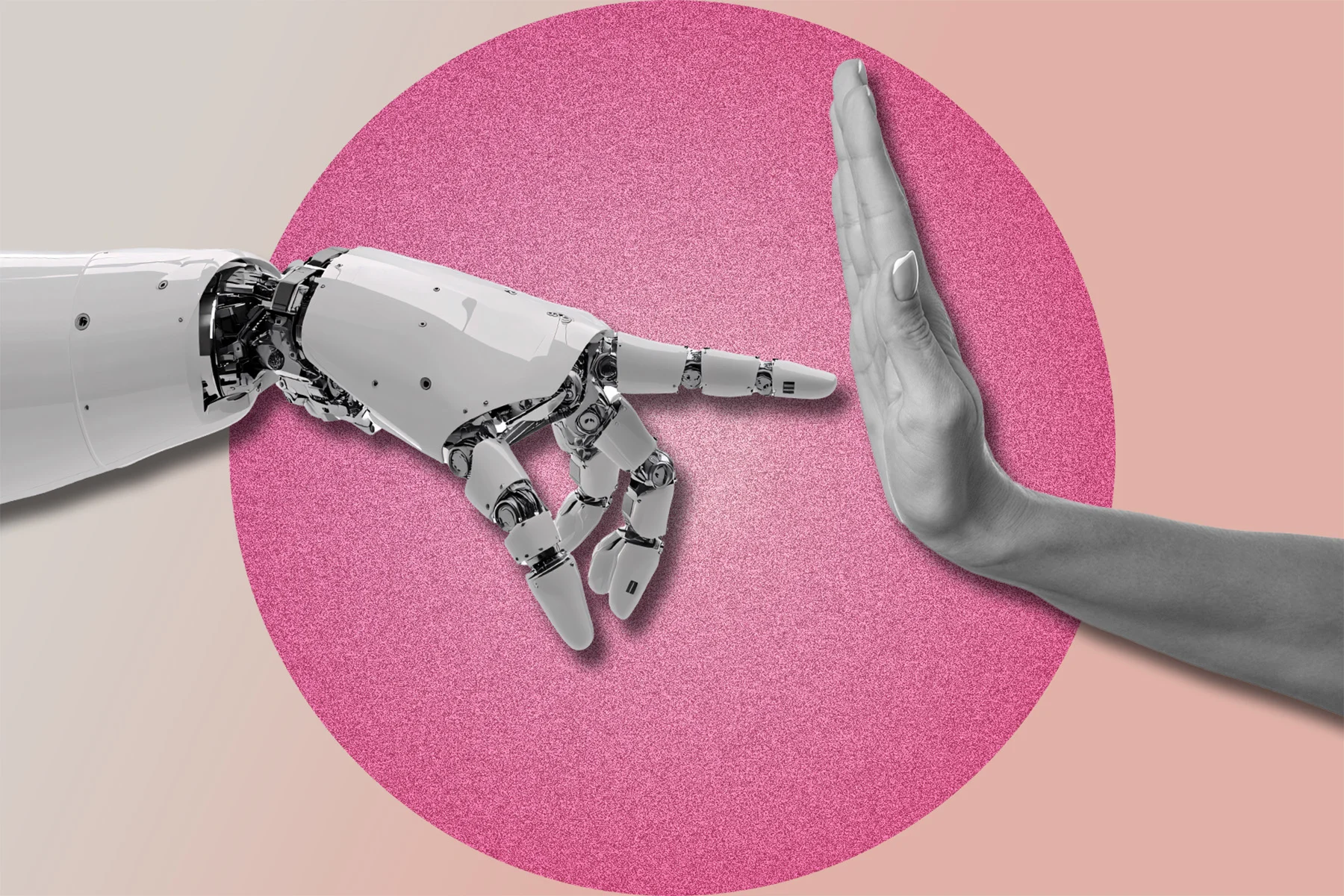
Artificial Intelligence (AI) is transforming higher education rapidly by enabling personalized learning, enhancing administrative processes, and improving access to educational resources. However, disparities in AI adoption, particularly among women in the Asian context, raise concerns about equity, inclusivity, and access. This disparity could lead to a deficit in AI skills among women, affecting their ability to contribute as effectively as men in the future. Therefore, it is necessary to understand the current state of women's adoption of AI and the barriers they face in Asian higher education. The systematic review has been conducted using PRISMA guidelines. This review paper synthesizes the findings from the studies conducted in various contexts of Asia to present an overall picture of the state of AI adoption among women in Asia. A total of 17 studies were selected for this review, highlighting socio-cultural barriers, lack of trust, technological unawareness, biases in AI algorithms, and inadequate representation of women in AI policy formulation. Besides highlighting these barriers, the results also shed light on recommendations given by earlier studies that facilitate and encourage women to adopt AI in higher education. Based on the Asian perspective, the conclusion proposes specific recommendations for policymakers and practitioners to promote inclusive AI that empowers women in Asia to contribute more effectively to higher education.
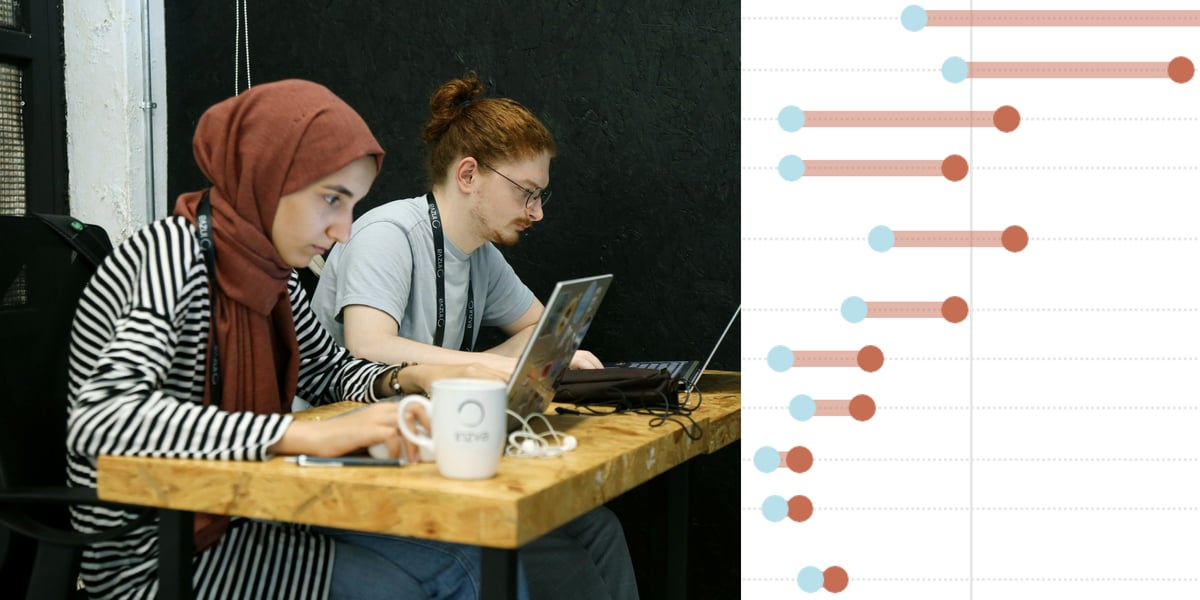
AI adoption higher among men than women: Survey
This large gap — 81.3% compared to 58.8% — stems from the higher representation of women in skilled trades, where AI usage remains extremely low.
The AI gender gap | Datawrapper Blog
In this Weekly Chart, we examine the gender gap in AI adoption.
Examining the behavioral determinants of AI adoption in higher education: a focus on perceptional factors and demographic differences
Purpose. Artificial intelligence (AI) has seen considerable growth recently and is denoted as an emerging technology, particularly in educational settings. This study aims to explain the students’ perceptions and behavioral factors in adopting AI. This paper utilized gender and country differences to explore the adoption patterns influenced by perceptual and behavioral factors, including AI literacy, AI anxiety, AI self-efficacy, relevance, and perceived enjoyment.Design/methodology/approach. A survey was conducted on Malaysian students using purposive sampling. The finalized sample of 391 respondents was tested using MS Excel, SPSS and SmartPLS to obtain the results. Moreover, to observe the differences, this paper used multigroup analysis based on gender and country.Findings. This paper found that the theoretical factors strongly influence the intention of students to adopt AI in higher education. AI anxiety, AI self-efficacy and perceived enjoyment affect ease of use (PEOU). AI literacy, PEOU, relevance and subjective norms influence perceived usefulness (PU). In addition, both PU and PEOU shape students’ attitudes and intentions to adopt AI in their learning.Originality/value. The use of AI has garnered significant attention from both consumers and organizations. This study specifically focuses on students, shedding light on the perceptual, behavioral and social factors influencing AI adoption in higher education.

Opinion: A gender gap is emerging in AI adoption, and women risk being left behind
Women appear less inclined to use AI tools, producing a disadvantage they can ill afford

A Proposed Conceptual Framework for Understanding Gender Disparities in Artificial Intelligence Adoption
This conceptual paper investigates the issue of gender disparities in artificial intelligence adoption within organizational settings. It highlights the importance of addressing these differences for workplace inclusivity and performance. The problem lies in the unequal of artificial intelligence adoption between male and female employees’ perspectives. The proposed framework is developed through a review of existing literature highlights differences between male and female employees in their artificial intelligence adoption. The methodology is based on conceptual analysis, derive on previous studies to build a comprehensive understanding of gender disparities in artificial intelligence adoption. An Independent T-Test will be used to analyze the disparities between male and female Malaysian sports graduates in testing the hypothesis development. By addressing these disparities, the paper provides insights into creating inclusive strategies that promote gender equity in the workforce. Overall, the findings aim to guide both researchers and practitioners in designing gender equality policies that address challenges to equal adoption of artificial intelligence.
Women and AI: The Gender Gap in AI Adoption and Recognition [Data]
Lean In’s survey shows how women are losing out in the AI age. Learn how women and men compare in AI adoption in the workplace, recognition, and more.
Predictors of Artificial Intelligence Technology Adoption Behaviour among Female Entreprenuers in a Typical Emerging Market
Though artificial intelligence (AI) adoption among female entrepreneurs in emerging economies is still limited and poorly understood, AI presents revolutionary

AI for Empowering Women in AI
Women remain significantly underrepresented in computing and artificial intelligence (AI), facing barriers such as limited access to tools, training, and opportunities. As AI becomes increasingly integral to daily life, it has the potential to address these disparities and foster greater inclusion. Realizing this potential requires fair access, inclusive design, and strategies that actively promote confidence, participation, and representation. This study explores these dimensions, identifying pathways for AI to serve as a catalyst for change.A key finding is the lack of tools explicitly designed to support women's participation in AI. Beyond reducing bias, fostering diversity in AI development requires designing artifacts that actively promote knowledge, skills, and confidence. Empowerment in this context refers to equipping individuals to engage with and influence AI, whether as users or developers. Women's participation in AI can thus be understood as a cyclical process, where increased engagement leads to further inclusion and representation in the field.The research objective of this study is to provide information on the relation between empowerment and women in AI, using the Systematic Literature Review (SLR) methodology. The SLR proposes and analyzes 14 studies that serve as a basis to understand the relationship between women, empowerment, and AI.The results show that there is still scarce research explicitly connected to AI artifacts designed for empowerment, but there is a growing recognition of its importance. The SLR also reveals various challenges and success factors related to the role of AI in fostering gender inclusivity and empowerment, which calls for further attention.As further work, the authors will conduct empirical research to validate the findings and gather new insights, while co-designing an artifact to empower women in AI.

Gender differences in artificial intelligence: the role of artificial intelligence anxiety
INTRODUCTION: Artificial intelligence (AI) is having a significant impact on people's lives. Despite the benefits associated with this technological advancement, there may be gender-related inequalities in accessing and using AI systems. The present study aimed to test gender differences in factors likely to influence AI adoption, in particular, the moderating role of gender in the relationship between AI anxiety and positive attitudes toward AI. METHOD: Participants were 335 adults (52.2% women; mean age = 29.96, SD = 13.88) who filled in an online self-report anonymous questionnaire. To test the hypotheses, both a MANOVA and a moderation model were adopted. RESULTS: Results revealed significant gender differences in AI adoption dimensions, with women reporting higher AI anxiety, lower positive attitudes toward AI, lower use of AI, and lower perceived knowledge of AI. A significant negative relationship was found between AI anxiety and positive attitudes toward AI. An interaction between gender and AI anxiety was found: At low levels of anxiety, women showed lower levels of positive attitudes toward AI than men, while at high levels of AI anxiety, gender differences were less evident. DISCUSSION: These findings suggest that AI anxiety works as a "gender differences leveler." The present study contributes to expanding knowledge about gender differences in technology, which will underpin practical interventions for reducing the gender digital gap. Limitations and future research directions are discussed.

The Beauty of AI and Why AI Needs More Women
While women remain underrepresented in the Artificial Intelligence (AI) and tech workforce, their participation is considered crucial for developing the right AI for tomorrow.

Bridging the Divide: Addressing the Resistance to AI Adoption Among the Underrepresented
AI is increasingly integrating into our lives and educational settings by opening communication doors and providing limitless options for creativity. However, students, faculty, and staff of diverse backgrounds and access may vary in their adoption and application of AI technologies. Existing research has identified disparities in AI adoption. For example, a Pew Research survey indicated that men are more likely to use ChatGPT, with 29% versus 19% of women (PRC, 2023). Why is this? Additionally, many AI programs have been shown to sometimes have racial disparities built into their algorithms. ChatGPT demonstrated that the software “was more likely to associate European American names with pleasant words such as “gift” or “happy,” while African American names were more commonly associated with unpleasant words” (Guardian, 2017). Furthermore, there is evidence to suggest there are inequities ranging from issues with economic access with many premium AI features behind paywalls to concerns that people with disabilities have, which has dissuaded some people from adopting AI (APA, 2023). This presentation will explore the concerns and dynamics of adopting artificial intelligence (AI) in our lives and educational settings. We will engage and discuss these concerns and dynamics with attendees looking at issues with diversity, inclusion, and accessibility. Ultimately, this presentation seeks to foster an environment where all individuals can positively engage and feel included and empowerd by artificial intelligence in shaping the future of learning.
Gender differences in artificial intelligence: the role of artificial intelligence anxiety
IntroductionArtificial intelligence (AI) is having a significant impact on people's lives. Despite the benefits associated with this technological advancement, there may be gender-related inequalities in accessing and using AI systems. The present study aimed to test gender differences in factors likely to influence AI adoption, in particular, the moderating role of gender in the relationship between AI anxiety and positive attitudes toward AI.MethodParticipants were 335 adults (52.2% women; mean age = 29.96, SD = 13.88) who filled in an online self-report anonymous questionnaire. To test the hypotheses, both a MANOVA and a moderation model were adopted.ResultsResults revealed significant gender differences in AI adoption dimensions, with women reporting higher AI anxiety, lower positive attitudes toward AI, lower use of AI, and lower perceived knowledge of AI. A significant negative relationship was found between AI anxiety and positive attitudes toward AI. An interaction between gender and AI anxiety was found: At low levels of anxiety, women showed lower levels of positive attitudes toward AI than men, while at high levels of AI anxiety, gender differences were less evident.DiscussionThese findings suggest that AI anxiety works as a “gender differences leveler.” The present study contributes to expanding knowledge about gender differences in technology, which will underpin practical interventions for reducing the gender digital gap. Limitations and future research directions are discussed.

The 'AI gender gap' narrative is missing the full picture | Fortune
New research shows women leaders are shaping AI strategy, ethics, and oversight—even as concerns about adoption gaps persist.

The Gender Gap in AI: Why We Need More Women in Artificial Intelligence - EIT Campus
Artificial intelligence is shaping our future, but who is shaping AI? In this blog, we explore the insights of Megi Mejdrechová, co-founder of RoboTwin, a…

Women executives warn AI adoption is outpacing workforce development
A Chief and Harris Poll survey reveals how women leaders are shaping AI adoption by prioritizing workforce development and ethical implementation over speed.
Women Are Avoiding AI. Will Their Careers Suffer? | Working Knowledge
Women are adopting generative AI technology at a significantly lower rate than men, in many cases because women question whether it's ethical to use the tools, according to research by Rembrand Koning and colleagues. If women are shying away from AI, could the gender gap in pay and job opportunities continue to widen?