

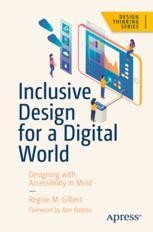
In this book, readers will learn the Web Content Accessibility Guidelines (WCAG) 2.1 requirements, emerging technologies such as VR and AR, best practices for web development, and implementation of inclusive design. Begin understanding the immense opportunities in designing for accessibility.
UI/UX Guidelines - User Experience Design & Technology
The Web Content Accessibility Guidelines (WCAG) are a set of internationally recognized standards for making web content accessible to people with disabilities. Created by the Web Accessibility Initiative (WAI) of the World Wide Web Consortium (W3C), WCAG provides a framework for designing inclusive digital platforms that cater to diverse user needs, including those with visual, auditory, cognitive, and physical impairments.
lukeslp/awesome-accessibility
Curated list of accessibility resources, tools, and best practices for creating inclusive digital experiences
Digital accessibility is real and tangible
A workshop using real-life examples and first-hand experience of how assistive technology works can result in a deeper understanding of accessibility needs

WCAG 3’s road to hell is paved with supplemental requirements · Eric Eggert
First, I want to apologize to the participants of the Accessibility Guidelines Working Group (AGWG) at W3C, as this blog post will …

WebAIM: Web Accessibility In Mind
Expanding the potential of the web for people with disabilities by empowering individuals and organizations to create accessible content.
A threat model for accessibility on the web - Alice
A explanation of the primary threat to accessibility on the web, and a call to action for the web standards community

A11Y Arcade
Learn web accessibility through interactive games. Master WCAG standards while playing visual, cognitive, and motor skill challenges.
Practical Accessibility — A get-right-down-to-it online course for Web designers and developers who want to start creating more accessible Web user interfaces and digital products today
A get-right-down-to-it online course for Web designers and developers who want to start creating more accessible Web user interfaces and digital products today

a11y.quest - 128 questions to level up your accessibility game
128 questions to level up your web accessibility game. Practice WCAG 2.2, ARIA, semantic HTML, keyboard, and contrast, with plain-English answers.
WebAIM: The WebAIM Million - The 2026 report on the accessibility of the top 1,000,000 home pages
For the eighth consecutive year, WebAIM conducted an accessibility evaluation of the home pages for the top 1,000,000 web sites. The evaluation was conducted using the WAVE stand-alone API (with additional tools to collect site technology and category data). The results provide an overview of and insight into the current state of web accessibility for individuals with disabilities as well as trends over time.
WAVE Web Accessibility Evaluation Tools
WAVE® is a suite of evaluation tools that helps authors make their web content more accessible to individuals with disabilities. WAVE can identify many accessibility and Web Content Accessibility Guideline (WCAG) errors, but also facilitates human evaluation of web content. Our philosophy is to focus on issues that we know impact end users, facilitate human evaluation, and to educate about web accessibility.
brief history of browser accessibility support
Author: steve faulkner The Paciello Group contact: [email protected]
Artificial Intelligence (AI) and Accessibility Research Symposium 2023
Accessibility resources free online from the international standards organization: W3C Web Accessibility Initiative (WAI).
Introducing the Accessible Components Library - TetraLogical
We've open-sourced our Accessible Components Library, and, as you might expect, this includes the HTML, CSS, and JavaScript code. But, we thought, "Why stop there?" So, we've also published our documentation, including the accessibility requirements, test scenarios, and even the working automated tests which validate each one.
Usability/UX/Accessability Research? · Issue #819 · w3c-fedid/FedCM
I'm curious if this work has any usability, UX, or accessibility research that supports the designs here? Are there non-goals, or handling of failure case scenarios that have been envisioned an...