

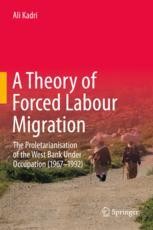
This book focuses on labour dislocation and migration of Palestinians between 1967 and 1990. In particular, it highlights the social transformations in the occupied Palestinian territory where Palestinian labour was permitted to work in Israel from 1968 onwards.
US Labor & Imperialism Pt. 2: Zionism w/ Jeff Schuhrke (Palestine Pt. 16)
The Rise and Fall of the Palestinian-Arab Middle Class Under the British Mandate, 1920–39
The Palestinian-Arab middle class under the Mandate may be characterized as bourgeois and educated, similarly to bourgeois classes that have developed in the West in the Modern era. The bourgeois characteristics of the Palestinian-Arab middle class, and their influence on its historical trajectory during the Mandate era, have not been studied in depth yet. This article aims to focus on a local aspect of the rise of the middle class in the region in that period: the rise of the Palestinian-Arab middle class under the Mandate, until the Palestinian-Arab Revolt (1936–9). The main hypothesis is that particular bourgeois social and cultural characteristics prevented the middle class full incorporation into the Palestinian-Arab National Movement, and even led to estrangement between the middle class and the national leadership, as well as members of lower strata, especially the villagers. Members of the middle class, mostly Christians but Muslims as well, espoused in their daily life modern habits, ideas, and customs, as a means to distinguish between themselves and other classes, similarly to their parallels in the West, and like their contemporaries elsewhere in the Eastern Mediterranean, as has demonstrated by Watenpaugh. Those gaps reached their climax during the years of revolt.
The Ethnic Cleansing of Palestine | Oneworld
Renowned Israeli historian, Ilan Pappe’s groundbreaking work on the formation of the State of Israel. ‘Along with the late Edward Said, Ilan Pappe is the most eloquent writer of Palestinian history.’ NEW STATESMAN Between 1947 and 1949, over 400 Palestinian villages were deliberately destroyed, civilians were massacred and around a million men, women, and […]

Men of Capital in Mandate Palestine
This essay examines Palestinian “men of capital” in British-ruled Palestine. It lays out their historical erasure as the product of settler colonialism; the historiographic dominance of the aristoc...

Modern Day Slavery: the Kafala System in Lebanon
"Two hundred and fifty thousand workers under the Kafala system in Lebanon are currently struggling to survive in an exploitative system."

The Arab Worker under the Palestine Mandate (1937)
Palestinian trade unionist George Mansour (b. 1905 – d. 1963) initially worked as a baker, then as school teacher in Nazareth before his family moved to Jaffa in 1927, where he worked first in tra...

Voting with Their Feet: Democratic Backsliding and Market-Minded Migration - Evidence from Israel and Europe
Using a comparative framework, the study examines how variations in political regimes across Israel and Europe shape patterns of international migration. In both contexts, episodes of democratic backsliding serve as quasi-exogenous shocks that reveal the causal link between institutional erosion and outward mobility. In Israel, the origin of democratic backsliding lies in a corruption shock—the criminal indictment of the prime minister—which escalated into an executive–judicial shock as the government launched an anti-democratic judicial overhaul. This confrontation between the executive and judiciary provides a natural experiment for identifying how institutional breakdowns shape migration decisions. In Europe, the origin of democratic backsliding stems from a “Syrian shock”—a massive refugee inflow that strained administrative capacity, polarized politics, and weakened liberal institutions. The resulting governance erosion triggered emigration responses structurally like those observed in Israel. Using a difference-in-differences (DiD) estimation, the study identifies causal effects of democratic erosion on migration flows. Across both settings, out-migration emerges as a market-minded response to illiberal regime change—a behavioral signal of sensitivity to policies that features nationalizing industries, restrict free speech, and undermine the rule of law. Together, the Israeli and European experiences demonstrate that illiberal governance functions as a systemic push factor for emigration, beyond standard economic explanations.

The Palestinian Nakba and its Continuous Repercussions
Adel Manna', The Palestinian Nakba and its Continuous Repercussions, Israel Studies, Vol. 18, No. 2, Summer 2013, Shared Narratives—A Palestinian-Israeli Dialogue / Guest Editors: Paul Scham, Benjamin Pogrund, and As'ad Ghanem
The secret mission to rescue the UN’s vital Palestinian refugee archive
Millions of documents chronicling generations of trauma saved from Gaza and East Jerusalem in 10-month Unrwa operation
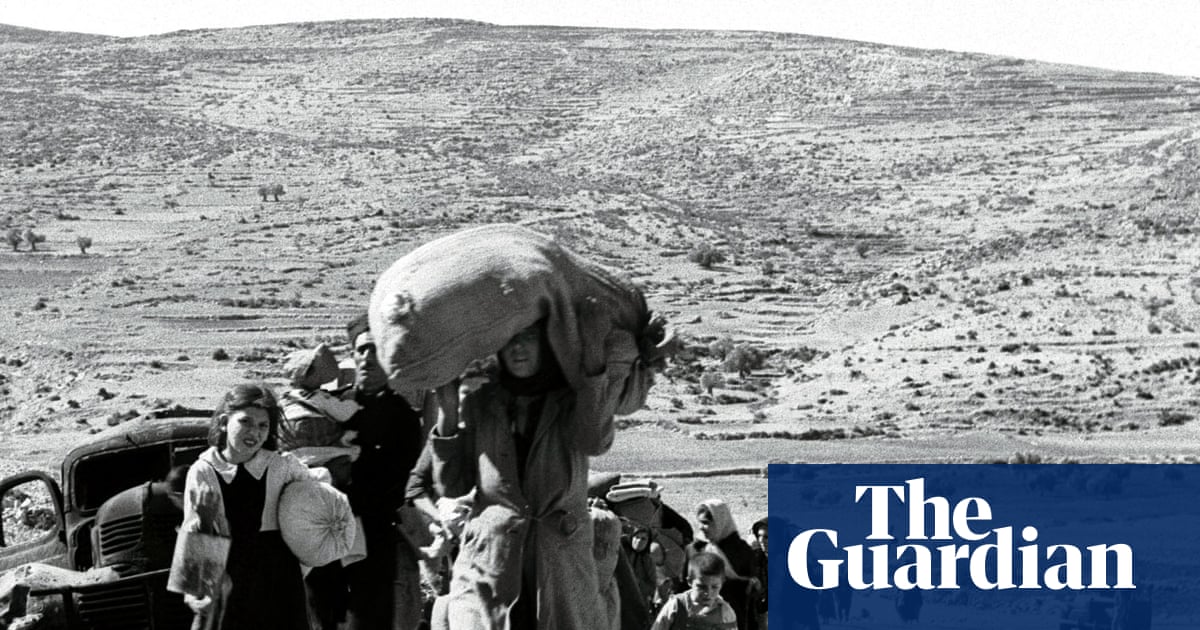
Britain’s Palestine failure and the collapse of the international rules-based order
Britain dithers on the sidelines instead of seizing the opportunity to address a century-old injustice inflicted on the Palestinian people

The Hundred Years' War on Palestine
A landmark history of one hundred years of war waged against the Palestinians from the foremost US historian of the Middle East, told through pivotal events ...
With Freedom in Our Ears
Contributors bring to light the presence and persistence of Jewish anarchism throughout histories of radical labor, women's studies, political theory, multilingual literature, and ethnic studies.
Gaza: Israeli Killings of Palestinians Seeking Food Are War Crimes
Israeli forces at the sites of a new US-backed aid distribution system in Gaza have routinely opened fire on starving Palestinian civilians in acts that amount to serious violations of international law and war crimes, Human Rights Watch said today.

Israel: What Went Wrong?
A leading Israeli American scholar of the Holocaust explores and explains his native country's intensifying turn toward violence and exclusion.The distinguished historian Omer Bartov was born on a kibbutz, grew up in Tel Aviv, and served in the Israel Defense Forces during the Yom Kippur War. He went on to become a leading scholar of the German army and the Holocaust, before turning his attention to his native country.In Israel: What Went Wrong?, Bartov sketches the tragic transformation of Zionism, a movement that sought to emancipate European Jewry from oppression, into a state ideology of ethno-nationalism. How is it possible, he asks, that a state founded in the immediate aftermath of the Holocaust, an event that gave legitimacy to a national home for the Jews, stands credibly accused of perpetrating large-scale war crimes? How do we come to terms with the fact that Israel’s war of destruction is being conducted with the support, laced with denial and indifference, of so many of its Jewish citizens?Tracing the roots of the violent events currently unfolding in Israel and the occupied territories, Bartov tracks his country's moral tribulations and considers the origins of Zionism, the intertwining of Israel’s independence with Palestinian displacement, the politics of the Holocaust, controversies over the term "genocide," and the uncertain future. The result is a searing and urgent critique that addresses today’s debates over Zionism and the future of Israel with rigor and depth.
'Zionism Led to Genocide. It Must Disappear': Omer Bartov's New Book …
archived 25 Apr 2026 07:22:14 UTC

Habermas as an ethnic thinker Par Excellence: on critique, Palestine and the role of intellectuals
Taking Habermas’ 2023 statement on Palestinians-Israel as the point of entry, this article examines his concept of critique. Against the dominant view of him as a philosopher of ‘universalism’ and ...
