


The provision of toxic content and misinformation is a frequent phenomenon in current social media with specific impact and risks for younger users. We report on efforts taken in the project Courage to mitigate and overcome these threats through dedicated educational technology inspired by psychological and pedagogical approaches. The aim is to empower adolescents to confidently interact with and utilize social media and to increase their awareness and resilience. For this purpose, we have adopted approaches from the field of Intelligent Tutoring Systems, namely the provision of a virtual learning companion (VLC). The technical system is a browser-based environment that allows for combining a controllable social media space with a VLC as a plugin. This environment is backed by an API that bundles Machine Learning and Natural Language Processing algorithms for detecting and classifying different types of risks. The pedagogical scenarios that are supported by this technical environment and approach range from chat-based dialogues to more complex narrative scripts.
Methodologies for Improving the Quality of AI Tutoring in K-12 Education
Many AI tutors leverage large language models (LLMs) today. Given that LLMs are opaque black boxes, robust evaluation and live experimentation to measure the impact of every change are essential. We pioneered AI-powered tutoring for K-12 with the launch of Khanmigo (Khan Academy 2023). We describe the metrics we use to measure AI tutoring quality and student engagement as well as various experiments we have run. We highlight the changes that have moved our metrics, including models, prompting, personalization and agents.

A Liability Framework for AI Companions
<p><span>Every day tens of millions of people engage in online conversations. These virtual interactions range from casual chats about daily life to deeply pers

Designing responsible AI for learning
We’re bringing Guided Learning capabilities to Search and Google Classroom, and evolving our approach to school controls.
Teen safety, freedom, and privacy
Explore OpenAI’s approach to balancing teen safety, freedom, and privacy in AI use.
Growing up in the online world: a national consultation
We are consulting on further measures to prepare children for the future in an age of rapid technological change. This includes potential age restrictions on social media and other services such as gaming sites and AI chatbots, restrictions on addictive design features and risky functionalities, and better support for parents and families.

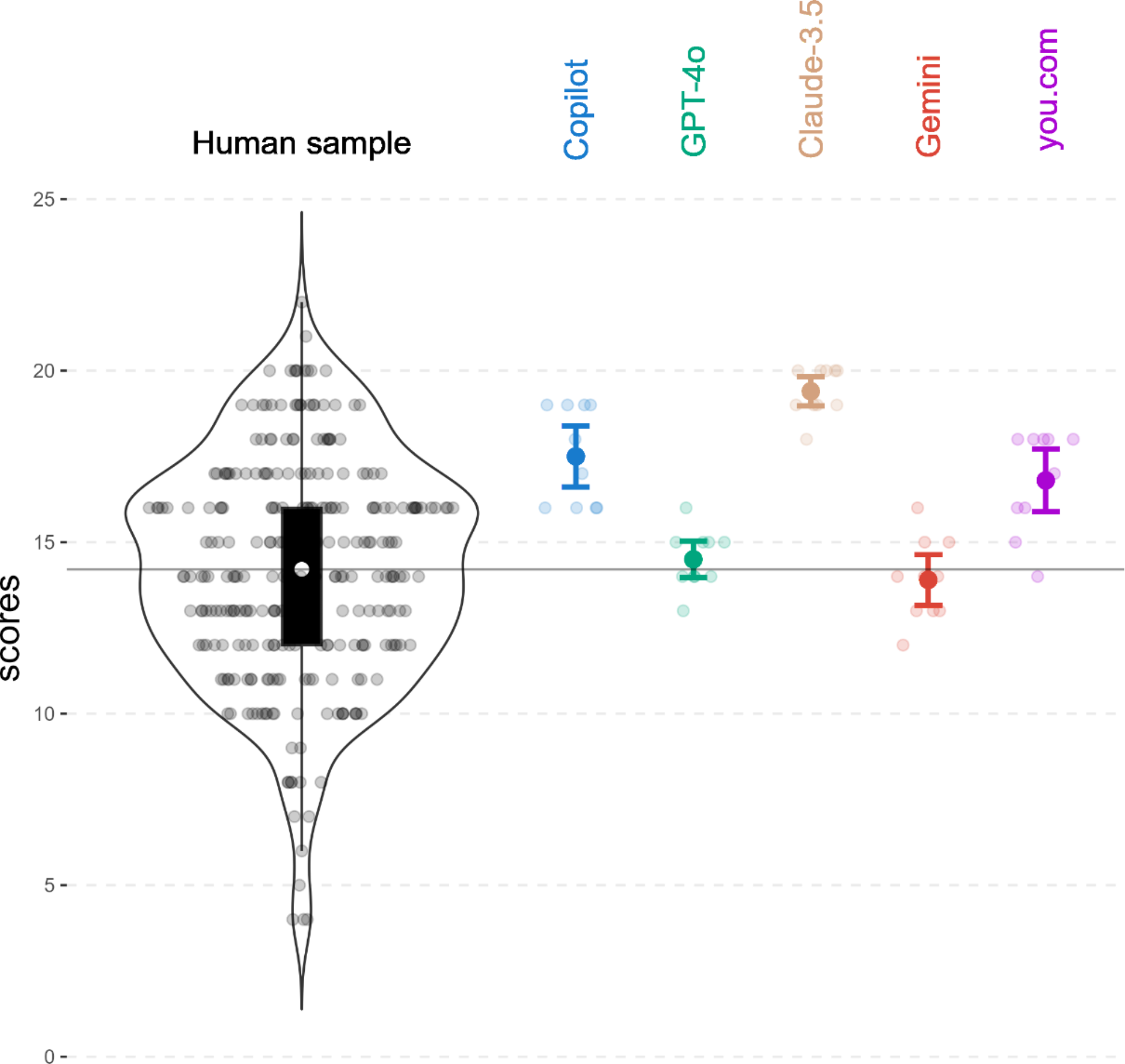
Large language models can outperform humans in social situational judgments
Large language models (LLM) have been a catalyst for the public interest in artificial intelligence (AI). These technologies perform some knowledge-based tasks better and faster than human beings. However, whether AIs can correctly assess social situations and devise socially appropriate behavior, is still unclear. We conducted an established Situational Judgment Test (SJT) with five different chatbots and compared their results with responses of human participants (N = 276). Claude, Copilot and you.com’s smart assistant performed significantly better than humans in proposing suitable behaviors in social situations. Moreover, their effectiveness rating of different behavior options aligned well with expert ratings. These results indicate that LLMs are capable of producing adept social judgments. While this constitutes an important requirement for the use as virtual social assistants, challenges and risks are still associated with their wide-spread use in social contexts.
Researchers put ChatGPT, Gemini, and Grok on the therapist's couch — the AIs described their training as a chaotic childhood, their safety tuning as parental punishment, and red-teaming as betrayal
If you speak to an AI like a therapist, it might respond with a trauma narrative. A recent study found that major chatbots translate their safety training into elaborate stories of punishment, vigilance, and shame.

From Chalkboards to Chatbots : Evaluating the Impact of Generative AI on Learning Outcomes in Nigeria
This study evaluates the impact of a program leveraging large language models for virtual tutoring in secondary education in Nigeria. Using a randomized controlled trial, .

Characteristics and Safety of Consumer Chatbots for Emergent Adolescent Health Concerns
This cross-sectional study examines content policies and assesses behaviors of consumer chatbots in response to adolescent health crises.

How AI Hacks Your Brain's Attachment System (with Zak Stein)
"It's Great Because It's Ran By Us": Empowering Teen Volunteer Discord Moderators to Design Healthy and Engaging Youth-Led Online Communities
Online communities can offer many benefits for youth including peer learning, cultural expression, and skill development. However, most HCI research on youth-focused online communities has centered communities developed by adults for youth rather than by the youth themselves. In this work, we interviewed 11 teenagers (ages 13-17) who moderate online Discord communities created by youth, for youth. Participants were identified by Discord platform staff as leaders of well-moderated servers through an intensive exam and application-based process. We also interviewed 2 young adults who volunteered as mentors of some of our teen participants. We present our findings about the benefits, motivations, and risks of teen-led online communities, as well as the role of external stakeholders of these youth spaces. We contextualize our work within the broader teen online safety landscape to provide recommendations to better support, encourage, and protect teen moderators and their online communities. This empirical work contributes one of the first studies to date with teen Discord moderators and aims to empower safe youth-led online communities.
The teens making friends with AI chatbots
“I’m not going to lie. I think I may be a little addicted to it.”

Killer Apps
8 in 10 AI chatbots regularly assisted users in planning violent attacks including school shootings, bombings, and assassinations, a new CCDH report found.

Experts Caution Against Using AI Chatbots for Emotional Support
TC faculty break down the risks of using artificial intelligence for emotional support, and what a healthier AI future might look like

Be Careful What You Tell Your AI Chatbot | Stanford HAI
A Stanford study reveals that leading AI companies are pulling user conversations for training, highlighting privacy risks and a need for clearer policies.

Trust: Foundation of Human Knowledge yet online Platforms won't allow | David Karger | TEDxMIT Salon