

We present a theory of self-representing cognitive systems grounded in $$([0,\infty ],+)$$([0,∞],+)-enriched category theory and the Yoneda lemma. The central object is a self-representing $$([0,\infty ],+)$$([0,∞],+)-enriched category $$\mathcal{C}$$C—a Lawvere metric space whose objects are complete epistemic architectures, whose hom-values record directed informational upgrade costs, and which is separated, closed under internal homs, and bilaterally Cauchy complete—together with a contractive cognitive endofunctor $$F:\mathcal{C}\rightarrow \mathcal{C}$$F:C→Cmodelling iterative self-improvement. We establish eight results in a single logical arc. The Horizon Theorem shows that the Yoneda embedding $$\varphi (A)=\mathcal{C}(-,A)$$φ(A)=C(-,A)is never essentially surjective: $$\mathcal{C}$$C sits strictly inside its own free Cauchy completion $$\mathcal{P}(\mathcal{C})$$P(C), with the non-representable presheaves forming a topologically dense family, proved via a reflexivity argument. The Lawvere–Banach Attractor Theorem shows that every contractive endofunctor on a bilaterally complete, separated $$([0,\infty ],+)$$([0,∞],+)-enriched category converges to a unique fixed point $$\mathbf {\Omega }$$Ωat a geometric rate. The Boundary Derivation Theorem shows that $$\mathbf {\Omega }$$Ωis the minimal F-invariant substructure of $$\mathcal{C}$$C, with all of $$\mathcal{C}$$Cas its basin of attraction—the constitutional boundary, derived rather than postulated. The Horizon Expansion Theorem shows that each strictly ascending self-modification produces a new, quantitatively distinct non-representable witness. Beyond these four central results, we prove that Kleene and Bourbaki–Witt conditions yield only non-expansiveness when metrised, that contractive endofunctors form a monoid, and that the Yoneda horizon admits an observable diagnostic stabilising in finite time. The architectural section derives structural corrigibility and the alignment-incompleteness duality among five implications. The organising duality is exact: the non-surjectivity of $$\varphi $$φ and the existence of $$\mathbf {\Omega }$$Ωare two faces of the same $$([0,\infty ],+)$$([0,∞],+)-enriched structure. $$\mathbf {\Omega }$$Ωinhabits the space between them—not as a postulate, but as a proof. We argue that the eight theorems constitute universal laws of contractive cognitive systems: a stable constitutional boundary is not an engineering design choice but a topological inevitability for any reliably self-improving agent operating within a self-representing enriched metric space. The postulate becomes a theorem. The boundary is not imposed. It emerges.
emilyriehl/yoneda
comparative formalizations of the Yoneda lemma for 1-categories and infinity-categories
Basic Category Theory
This short introductory category theory textbook is for readers with relatively little mathematical background (e.g. the first half of an undergraduate mathematics degree). At its heart is the concept of a universal property, important throughout mathematics. After a chapter introducing the basic definitions, separate chapters present three ways of expressing universal properties: via adjoint functors, representable functors, and limits. A final chapter ties the three together. For each new categorical concept, a generous supply of examples is provided, taken from different parts of mathematics. At points where the leap in abstraction is particularly great (such as the Yoneda lemma), the reader will find careful and extensive explanations.

Seven Sketches in Compositionality: An Invitation to Applied Category Theory
This book is an invitation to discover advanced topics in category theory through concrete, real-world examples. It aims to give a tour: a gentle, quick introduction to guide later exploration. The tour takes place over seven sketches, each pairing an evocative application, such as databases, electric circuits, or dynamical systems, with the exploration of a categorical structure, such as adjoint functors, enriched categories, or toposes. No prior knowledge of category theory is assumed. A feedback form for typos, comments, questions, and suggestions is available here: https://docs.google.com/document/d/160G9OFcP5DWT8Stn7TxdVx83DJnnf7d5GML0_FOD5Wg/edit
Categories for the Working Mathematician
Categories for the Working Mathematician provides an array of general ideas useful in a wide variety of fields. Starting from the foundations, this book illuminates the concepts of category, functor, natural transformation, and duality. The book then turns to adjoint functors, which provide a description of universal constructions, an analysis of the representations of functors by sets of morphisms, and a means of manipulating direct and inverse limits. These categorical concepts are extensively illustrated in the remaining chapters, which include many applications of the basic existence theorem for adjoint functors. The categories of algebraic systems are constructed from certain adjoint-like data and characterized by Beck's theorem. After considering a variety of applications, the book continues with the construction and exploitation of Kan extensions. This second edition includes a number of revisions and additions, including two new chapters on topics of active interest. One is onsymmetric monoidal categories and braided monoidal categories and the coherence theorems for them. The second describes 2-categories and the higher dimensional categories which have recently come into prominence. The bibliography has also been expanded to cover some of the many other recent advances concerning categories.
the metagraph
A substrate for decentralized cognition, grounded in reflexive directed hypergraphs, machine-native encoding, and federated knowledge.
Internal type theory
We introduce categories with families as a new notion of model for a basic framework of dependent types. This notion is close to ordinary syntax and yet has a clean categorical description. We also present categories with families as a generalized algebraic theory. Then we define categories with families formally in Martin-Löf's intensional intuitionistic type theory. Finally, we discuss the coherence problem for these internal categories with families.

The Abstraction Fallacy: Why AI Can Simulate But Not Instantiate Consciousness
Computational functionalism dominates current debates on AI consciousness. This is the hypothesis that subjective experience emerges entirely from abstract causal topology, regardless of the underlying physical substrate. We argue this view fundamentally mischaracterizes how physics relates to information. We call this mistake the Abstraction Fallacy. Tracing the causal origins of abstraction reveals that symbolic computation is not an intrinsic physical process. Instead, it is a mapmaker-dependent description. It requires an active, experiencing cognitive agent to alphabetize continuous physics into a finite set of meaningful states. Consequently, we do not need a complete, finalized theory of consciousness to assess AI sentience—a demand that simply pushes the question beyond near-term resolution and deepens the AI welfare trap. What we actually need is a rigorous ontology of computation. The framework proposed here explicitly separates simulation (behavioral mimicry driven by vehicle causality) from instantiation (intrinsic physical constitution driven by content causality). Establishing this ontological boundary shows why algorithmic symbol manipulation is structurally incapable of instantiating experience. Crucially, this argument does not rely on biological exclusivity. If an artificial system were ever conscious, it would be because of its specific physical constitution, never its syntactic architecture. Ultimately, this framework offers a physically grounded refutation of computational functionalism to resolve the current uncertainty surrounding AI consciousness.

The science of consciousness does not need another theory, it needs a minimal unifying model
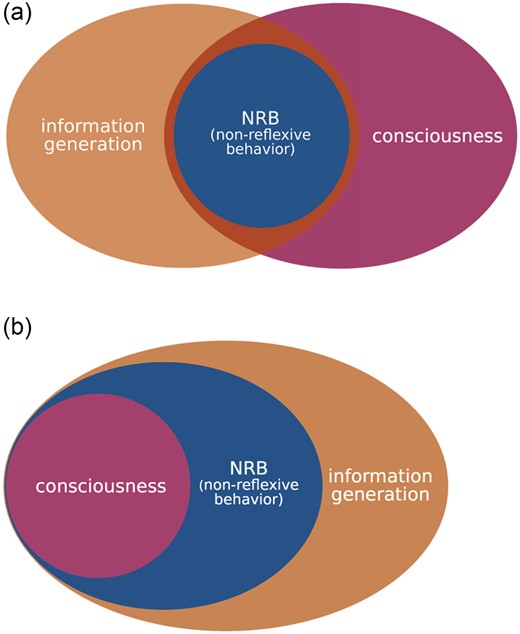
Abstract. This article discusses a hypothesis recently put forward by Kanai et al., according to which information generation constitutes a functional basi
Basic Concepts of Enriched Category Theory
Originally published as: Cambridge University Press, Lecture Notes in Mathematics 64, 1982.
Elements of ∞-Category Theory in nLab
on (∞,1)-category theory formulated via ∞-cosmoi and the homotopy 2-category of (∞,1)-categories (formal ( ∞ , 1 ) (\infty,1) -category theory).
Alexander Lerchner, The Abstraction Fallacy: Why AI Can Simulate But Not Instantiate Consciousness - PhilPapers
Computational functionalism dominates current debates on AI consciousness. This is the hypothesis that subjective experience emerges entirely from abstract causal topology, regardless of the underlying physical substrate. We argue this view ...

Conceptual mathematics: a first introduction to categories
Conceptual mathematics by F. W. Lawvere, 2009, Cambridge University Press edition, in English - 2nd ed.

F. William Lawvere, Stephen H. Schanuel Conceptual Mathematics A First Introduction To Categories ( 2009, Cambridge University Press) ( 1)
Category Theory first introduction

Alexander Lerchner, The Abstraction Fallacy: Why AI Can Simulate But Not Instantiate Consciousness - PhilArchive
Computational functionalism dominates current debates on AI consciousness. This is the hypothesis that subjective experience emerges entirely from abstract causal topology, regardless of the underlying physical substrate. We argue this view ...

Interactions that reshape the interfaces of the interacting parties
Polynomial functors model systems with interfaces: each polynomial specifies the outputs a system can produce and, for each output, the inputs it accepts. The bicategory $\mathbb{O}\mathbf{rg}$ of dynamic organizations \cite{spivak2021learners} gives a notion of state-driven interaction patterns that evolves over time, but each system's interface remains fixed throughout the interaction. Yet in many systems, the outputs sent and inputs received can reshape the interface itself: a cell differentiating in response to chemical signals gains or loses receptors; a sensor damaged by its input loses a channel; a neural network may grow its output resolution during training. Here we introduce *polynomial trees*, elements of the terminal $(u\triangleleft u)$-coalgebra where $u$ is the polynomial associated to a universe of sets, to model such systems: a polynomial tree is a coinductive tree whose nodes carry polynomials, and in which each round of interaction -- an output chosen and an input received -- determines a child tree, hence the next interface. We construct a monoidal closed category $\mathbf{PolyTr}$ of polynomial trees, with coinductively-defined morphisms, tensor product, and internal hom. We then build a bicategory $\mathbb{O}\mathbf{rgTr}$ generalizing $\mathbb{O}\mathbf{rg}$, whose hom-categories parametrize morphisms by state sets with coinductive action-and-update data. We provide a locally fully faithful functor $\mathbb{O}\mathbf{rg}\to\mathbb{O}\mathbf{rgTr}$ via constant trees, those for which the interfaces do not change through time. We illustrate the generalization by suggesting a notion of progressive generative adversarial networks, where gradient feedback determines when the image-generation interface grows to a higher resolution.
The Lambek Calculus
There is a noticeable revival of categorial grammar these days, as a vehicle for linguistic description. The systems used differ somewhat from the original calculus of Ajdukiewicz and Bar-Hillel, however. In particular, there is a component of rules for ‘type change’ of expressions, making for greater flexibility and elegance. One fundamental system of this kind is the so-called ‘Lambek Calculus’, whose type-change rules show a close analogy with the inference rules of constructive propositional logic. In this paper, we present one calculus of this kind, and survey its theoretical properties as a device in linguistic semantics. Our two main new contributions are a new and complete semantics for this calculus, as well as a modest study of its language-accepting capacity. In this way, we hope to provide a better understanding of the background theory of flexible categorial grammar, in tandem with its descriptive uses.
