


In a consumer culture, people make sense of their everyday existence based on meanings generated during the consumption process. These meanings feature in establishing human identities and communicating them to others. Brands fulfill a pivotal role in conveying the...
The role of storytelling in the creation of brand love: the PANDORA case
The study of storytelling and brand love is justified by the need to understand the potential of storytelling as a tool that marketers have available to positively influence the love felt by the consumers toward a particular brand. In this case, we ...

Beloved
At Beloved, we inspire, support, and nourish spiritual leaders who are creating new Jewish spaces of sacred belonging.

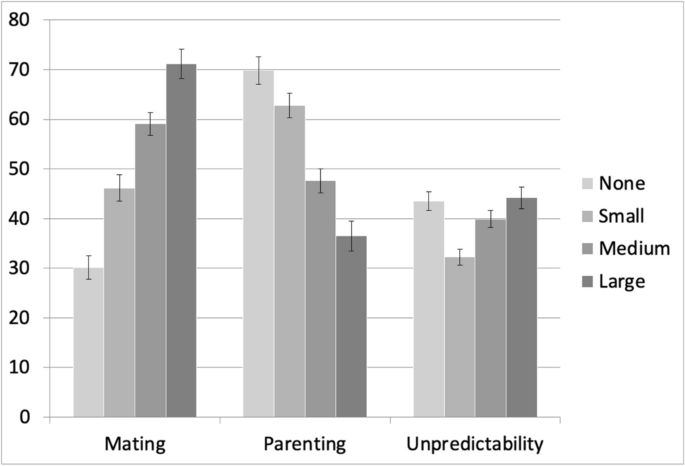
Advancing the Understanding of Phenotypic Mimicry in Men’s Conspicuous Consumption
Two studies advance the understanding of phenotypic mimicry in consumer products. Product features mimicking more prominent male secondary sexual characteristics are associated with men’s behavioral strategies which are higher in mating effort and lower in paternal investment in offspring, in parallel with reproductive strategies across species and within the human population. The first study demonstrated a continuous relationship between the sizes of luxury brand logos and perceptions of the owners’ life histories. Two partial replications reproduced Study 1 results. Study 2 demonstrated that a manipulation of coloration, another fundamental dimension of variation in secondary sex characteristics, generates a similar pattern of results. In both studies, men owning shirts with more prominent sensory characteristics were believed to use authority and intimidation as strategies for advancing social status, whereas men owning shirts with less showy characteristics were believed to demonstrate useful abilities and foster cooperative alliances. Participants also recognized the strategic use of luxury display properties across social contexts.
Evolution of Consumption: A Psychological Ownership Framework
Technological innovations are creating new products, services, and markets that satisfy enduring consumer needs. These technological innovations create value for consumers and firms in many ways, but they also disrupt psychological ownership––the feeling that a thing is “MINE.” The authors describe two key dimensions of this technology-driven evolution of consumption pertaining to psychological ownership: (1) replacing legal ownership of private goods with legal access rights to goods and services owned and used by others and (2) replacing “solid” material goods with “liquid” experiential goods. They propose that these consumption changes can have three effects on psychological ownership: they can threaten it, cause it to transfer to other targets, and create new opportunities to preserve it. These changes and their effects are organized in a framework and examined across three macro trends in marketing: (1) growth of the sharing economy, (2) digitization of goods and services, and (3) expansion of personal data. This psychological ownership framework generates future research opportunities and actionable marketing strategies for firms aiming to preserve the positive consequences of psychological ownership and navigate cases for which it is a liability.

Measuring the Hedonic and Utilitarian Dimensions of Consumer Attitude
This article reports the development and validation of a parsimonious, generalizable scale that measures the hedonic and utilitarian dimensions of consumer attitudes toward product categories and different brands within categories. The hedonic/utilitarian (HED/UT) scale includes ten semantic differential response items, five of which refer to the hedonic dimension and five of which refer to the utilitarian dimension of consumer attitudes. The authors conducted six studies to establish the unidimensionality, reliability, and validity of the two HED/UT subscales. In reaching the final scale, the authors also develop and implement a unique process of paring down a psychometrically sound but otherwise too large set of items. Nomological validity is established by replacing a typical, one-dimensional attitude toward the brand measure with the hedonic and utilitarian dimensions in a central route processing model. Results suggest that the hedonic and utilitarian constructs are two distinct dimensions of brand attitude and are reliably and validly measured by the HED/UT scale.
Kao Beauty Brands
Celebration of Individuality. To shine a light on you and your life.
Restoring Consumer Sovereignty
For decades, there has been broad consensus within antitrust, intellectual property, and consumer law scholarship that consumers make decisions in their own best interests by consciously weighting the market’s relative prices, quantities, and qualities against each other. That consensus is unraveling in light of novel findings from cognitive and social psychology that explain how individuals’ concepts of what they prefer drive the global economy. At the same time, producers nowadays no longer merely satisfy consumers’ needs but also communicate their values, identities, and aspirations through the sale and marketing of products. As part of the growing interest in observations such as these, a wealth of psychological studies challenge the fundamental teaching of economics that the interplay of demand and supply of goods in a free market economy provides us with material wealth. This book provides a normative defense of that assumption and a theoretical framework for understanding its contradictions. It argues that the erosion of consumer sovereignty through the ability of product manufacturers and sellers to systematically take advantage of individuals’ psychological weaknesses demands a twenty-first-century reconceptualization of the consumer and a modern account of how the law should regulate the digital economy. Such an account is justified to ensure a diverse marketplace in which consumers can influence how our societies are structured and arranged. By examining the role that market manipulation plays, it offers ingredients for a realistic descriptive and normative market regulatory theory that is aware of its political economy, its behavioral suppositions, and its distributional consequences.
6 ways to make your home feel like a love letter to yourself, from interior designer Amber Guyton
Interior designer and author behind “Soulful Maximalism,” Amber Guyton, shares how color, art, comfort, and culture can transform any space.

What makes people flourish? A new survey of more than 200,000 people across 22 countries looks for global patterns and local differences
A global study seeks insights into what helps people feel happy, healthy and satisfied – and what holds them back.

Community ≠ Marketing: Why We Need Go-to-Community, Not Just Go-to-Market
Community is the “new” moat (or so some have said), and it’s true: Having a community helps protect against competitor companies or products entering your territory. Whether that community is a group of power users, open source contributors, creators, or even just a brand (or franchise)’s super fans, it lends greater brand awareness, higher switching... Read More

Tightwads and spendthrifts: An interdisciplinary review
Consumers rely on a “pain of paying” to help deter their spending. While this is beneficial for some consumers, others experience levels of pain that create problems. “Tightwads” experience too much pain when considering spending and therefore spend less than they would ideally like to spend. By contrast, “spendthrifts” experience too little pain and therefore spend more than they would ideally like to spend. Neither are happy with how they handle money. In the decade since the tightwad‐spendthrift construct was introduced, much has been learned about what it is and is not (e.g., frugality, greed), what contextual factors are likely to reduce its importance, how it plays a role within romantic relationships, and when it might first emerge in childhood. This paper reviews the wide range of interdisciplinary research relevant to the tightwad‐spendthrift construct and proposes several directions for new research.

loveletter.pics
loveletter.pics is an art project dedicated to sharing love through handwritten words. be inspired by the romances of strangers, or leave behind a piece of your own heart. lose yourself in affectionate words, wander through the loops of handwritten letters, and feel the intimacy carried within every piece.
How social media is fueling an intense form of romantic obsession
The digital world is primed to fuel episodes of profound infatuation known as limerence.
