


Check out my Link in Bio page to learn more.
Linkat | Create a Link in Bio for Bluesky
Linkat is an ATProto service for creating a "Link in Bio" for Bluesky. Your links are saved in your PDS.
Link in bio tool: All your links with widgets in one link | Linkname
Privacy-first link in bio.
Yanan Rahim Navarez Melo — Bio Sites
Create a free link in bio with Bio Sites by Squarespace. Showcase your links, earn money, and grow your brand online, all with one link.

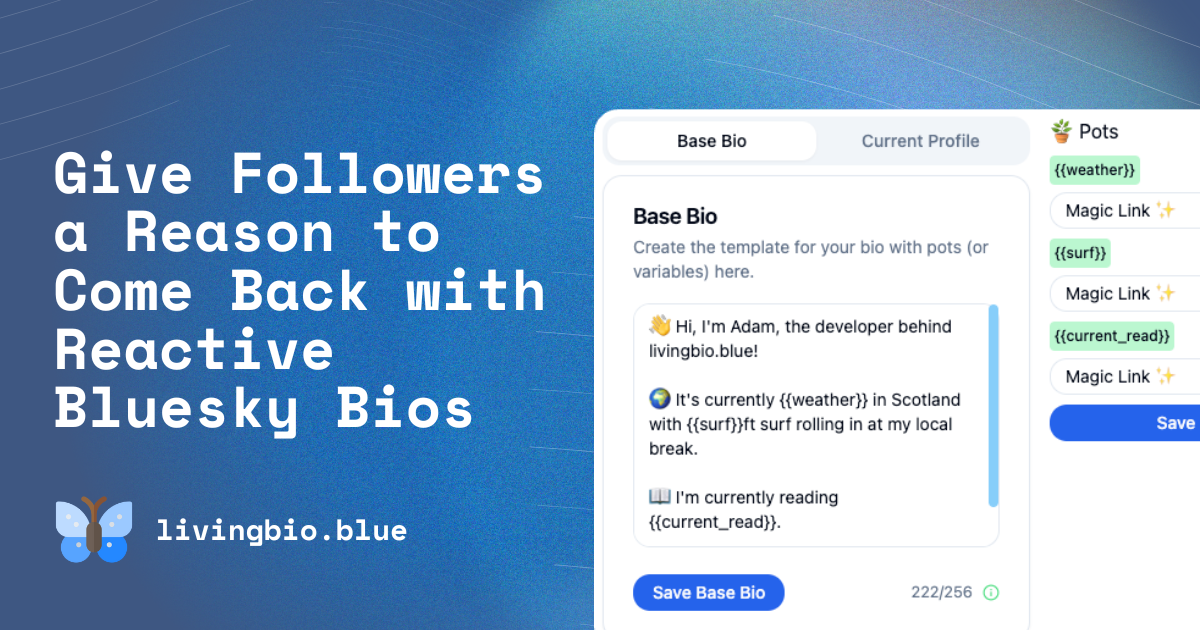
Reactive Bluesky Bios - livingbio.blue
livingbio.blue lets you add custom placeholders to your Bluesky bio, which can be updated automatically by automation tools such as Zapier or Make. Cool!
RCCX Genetic Module Theory
NOTE: This page is modified from a summary of findings available at the RCCX and Illness website.

SOLU / Bioart Society
SOLU / Bioart Society Panimokatu 1, 3rd floor 00580 Helsinki Finland info@bioartsociety.fi

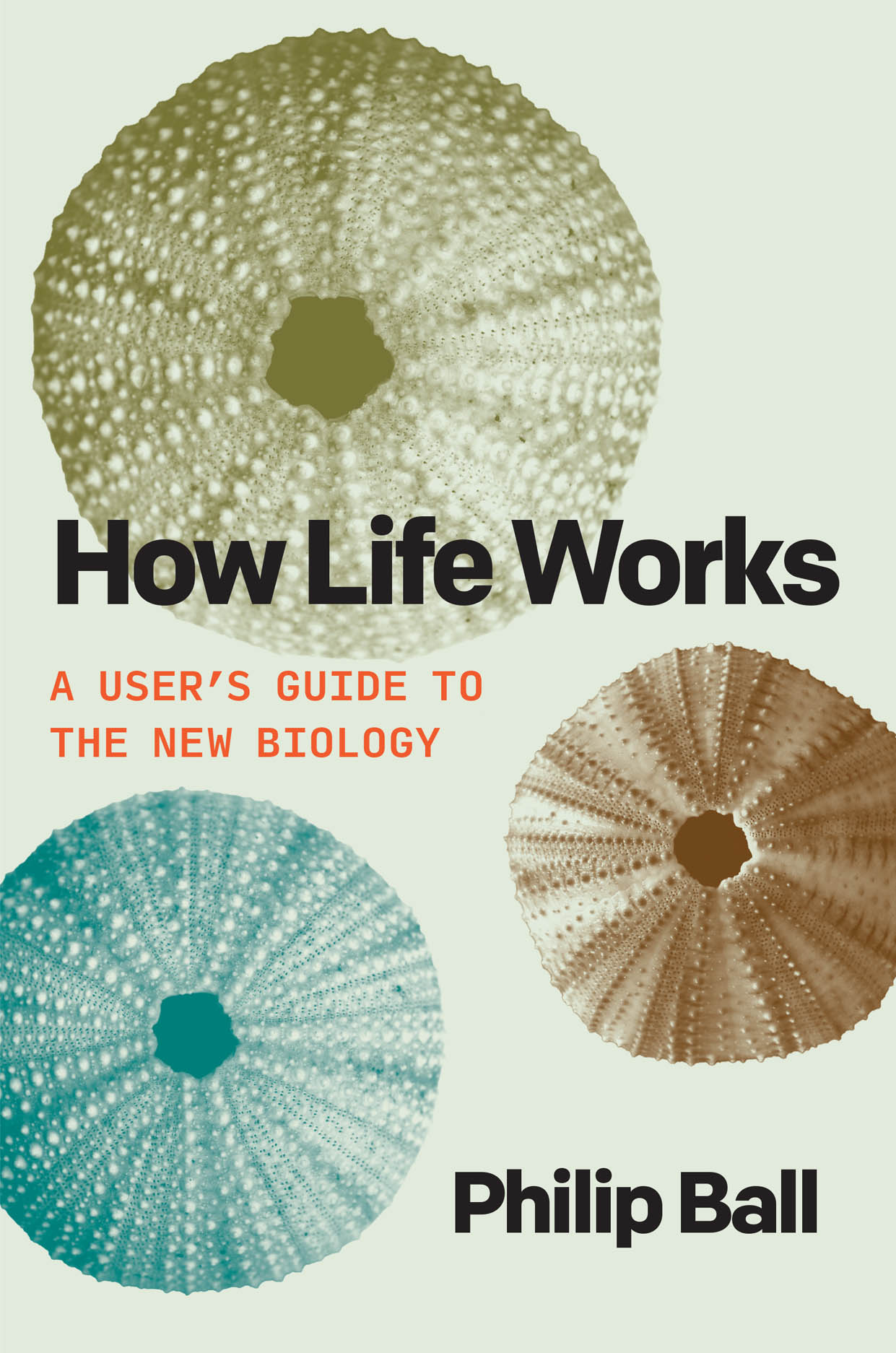
How Life Works: A User’s Guide to the New Biology
“Bold and intriguing.”—Wall Street Journal • “Penetrating. . . . Provocative and profound.”—Publishers Weekly (starred review) • “Offers plenty of food for thought.”—Kirkus Reviews (starred review) “Ball’s marvelous book is both wide-ranging and deep. . . . I could not put it down.”—Siddhartha Mukherjee, author of The Song of the Cell and the Pulitzer Prize–winning The Emperor of All Maladies A new, cutting-edge vision of biology that revises our understanding of what life itself is, how to enhance it, and what possibilities it offers. Biology is undergoing a quiet but profound transformation. Several aspects of the standard picture of how life works—the idea of the genome as a blueprint, of genes as instructions for building an organism, of proteins as precisely tailored molecular machines, of cells as entities with fixed identities, and more—have been exposed as incomplete, misleading, or wrong. In How Life Works, Philip Ball explores the new biology, revealing life to be a far richer, more ingenious affair than we had guessed. Ball explains that there is no unique place to look for an answer to this question: life is a system of many levels—genes, proteins, cells, tissues, and body modules such as the immune system and the nervous system—each with its own rules and principles. How Life Works explains how these levels operate, interface, and work together (most of the time). With this knowledge come new possibilities. Today we can redesign and reconfigure living systems, tissues, and organisms. We can reprogram cells, for instance, to carry out new tasks and grow into structures not seen in the natural world. As we discover the conditions that dictate the forms into which cells organize themselves, our ability to guide and select the outcomes becomes ever more extraordinary. Some researchers believe that ultimately we will be able to regenerate limbs and organs, and perhaps even create new life forms that evolution has never imagined. Incorporating the latest research and insights, How Life Works is a sweeping journey into this new frontier of the life sciences, a realm that will reshape our understanding of life as we know it.
Researcher Pages

All things related to personal pages for researchers on atproto
Read through atproto proposal-0016 and took some notes on important points that I think are worth sharing and talking about.

Reading Proposal 0016: What atproto’s “Permissioned Data” Actually Does
ngerakines.leaflet.pubAtproto guides

Tutorials about at proto and how to use it
Sifa — Portable professional identity on the open web

Lanyards - Researcher Profiles on AT Protocol

Ronen Tamari (@ronentk.me)

Mosh Lee (@mosh.bsky.social)

How It Works | Bluesky Protocol Services
pub search
On an Atmosphere OS - Scott's Thoughts
Why good non-techie user documentation is vital for a wider embrace of the ATmosphere - Debbie's Blatherings - by Debbie Ridpath Ohi
What It Means for Universities to Run Their Own PDS: The Potential of DID as Academic Infrastructure - Nightflight

i want to do a little ✨ ama about atproto ✨ in this thread. no question is too simple if you’ve been curious about atproto but don’t know…
