


Qualitative research methods could help us to improve our understanding of medicine. Rather than thinking of qualitative and quantitative strategies as incompatible, they should be seen as complementary. Although procedures for textual interpretation differ from those of statistical analysis, because of the different type of data used and questions to be answered, the underlying principles are much the same. In this article I propose relevance, validity, and reflexivity as overall standards for qualitative inquiry.
Evidence appraisal: a scoping review, conceptual framework, and research agenda
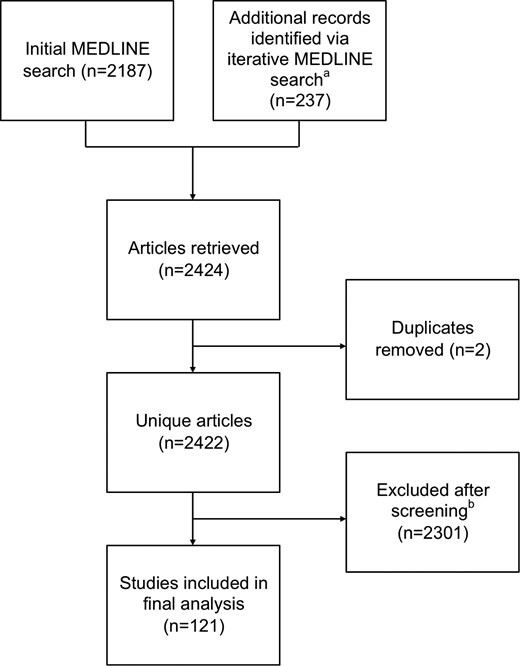
Abstract Objective Critical appraisal of clinical evidence promises to help prevent, detect, and address flaws related to study importance, ethics, validity, applicability, and reporting. These research issues are of growing concern. The purpose of this scoping review is to survey the current literature on evidence appraisal to develop a conceptual framework and an informatics research agenda. Methods We conducted an iterative literature search of Medline for discussion or research on the critical appraisal of clinical evidence. After title and abstract review, 121 articles were included in the analysis. We performed qualitative thematic analysis to describe the evidence appraisal architecture and its issues and opportunities. From this analysis, we derived a conceptual framework and an informatics research agenda. Results We identified 68 themes in 10 categories. This analysis revealed that the practice of evidence appraisal is quite common but is rarely subjected to documentation, organization, validation, integration, or uptake. This is related to underdeveloped tools, scant incentives, and insufficient acquisition of appraisal data and transformation of the data into usable knowledge. Discussion The gaps in acquiring appraisal data, transforming the data into actionable information and knowledge, and ensuring its dissemination and adoption can be addressed with proven informatics approaches. Conclusions Evidence appraisal faces several challenges, but implementing an informatics research agenda would likely help realize the potential of evidence appraisal for improving the rigor and value of clinical evidence.
(PDF) Building a Conceptual Framework: Philosophy, Definitions, and Procedure
PDF | In this paper the author proposes a new qualitative method for building conceptual frameworks for phenomena that are linked to multidisciplinary... | Find, read and cite all the research you need on ResearchGate
Identity, positionality and reflexivity: relevance and application to research paramedics
This article introduces the reader to the concepts of identity, positionality and reflexivity and outlines their relevance to research paramedics. We outline how a researcher’s identity and positionality can influence all aspects of research, including the research question, study design, data collection and data analysis. We discuss that the ‘insider’ position of paramedics conducting research with other paramedics or within their specific clinical setting has considerable benefits to participant access, understanding of data and dissemination, while highlighting the difficulties of role duality and power dynamics. While positionality is concerned with the researcher clearly stating their assumptions relating to the research topic, the research design, context and process, as well as the research participants; reflexivity involves the researcher questioning their assumptions and finding strategies to address these. The researcher must reflect upon the way the research is carried out and explain to the reader how they moved through the research processes to reach certain conclusions, with the aim of producing a trustworthy and honest account of the research. Throughout this article, we provide examples of how these concepts have been considered and applied by a research paramedic while conducting their PhD research studies within a pre-hospital setting, to illustrate how they can be applied practically.
Document Analysis as a Qualitative Research Method
This article examines the function of documents as a data source in qualitative research and discusses document analysis procedure in the context of actual research experiences. Targeted to research novices, the article takes a nuts‐and‐bolts approach to document analysis. It describes the nature and forms of documents, outlines the advantages and limitations of document analysis, and offers specific examples of the use of documents in the research process. The application of document analysis to a grounded theory study is illustrated.

Is replication <i>possible</i> in qualitative research? A response to Makel et al. (2022)
There has been much debate in recent years about how open research practices, which have been promoted in efforts to improve research robustness, may (not) be appropriate for qualitative methodolog...

Conducting a Qualitative Document Analysis
Document analysis has been an underused approach to qualitative research. This approach can be valuable for various reasons. When used to analyze pre-existing texts, this method allows researchers to conduct studies they might otherwise not be able to complete. Some researchers may not have the resources or time needed to do field research. Although videoconferencing technology and other types of software can be used to reduce some of the obstacles qualitative researchers sometimes encounter, these tools are associated with various problems. Participants might be unskillful in using technology or may not be able to afford it. Conducting a document analysis can also reduce some of the ethical concerns associated with other qualitative methods. Since document analysis is a valuable research method, one would expect to find a wide variety of literature on this topic. Unfortunately, the literature on documentary research is scant. This paper is designed to close the gap in the literature on conducting a qualitative document analysis by focusing on the advantages and limitations of using documents as a source of data and providing strategies for selecting documents. It also offers reasons for using reflexive thematic analysis and includes a hypothetical example of how a researcher might conduct a document analysis.
Address research questions fast • Gems
Your qualitative study in one place, enhanced by AI.

Sample Size in Qualitative Interview Studies: Guided by Information Power
Sample sizes must be ascertained in qualitative studies like in quantitative studies but not by the same means. The prevailing concept for sample size in qualitative studies is “saturation.” Saturation is closely tied to a specific methodology, and the term is inconsistently applied. We propose the concept “information power” to guide adequate sample size for qualitative studies. Information power indicates that the more information the sample holds, relevant for the actual study, the lower amount of participants is needed. We suggest that the size of a sample with sufficient information power depends on (a) the aim of the study, (b) sample specificity, (c) use of established theory, (d) quality of dialogue, and (e) analysis strategy. We present a model where these elements of information and their relevant dimensions are related to information power. Application of this model in the planning and during data collection of a qualitative study is discussed.

We Reject the Use of Generative Artificial Intelligence for Reflexive Qualitative Research
Four hundred and nineteen experienced qualitative researchers from 32 countries invite readers of Qualitative Inquiry to consider their position on use of generative artificial intelligence (GenAI) for qualitative research. We hold the position that analytic approaches such as reflexive thematic analysis are human research practices requiring a subjective, positioned, and reflexive researcher and therefore the use of GenAI in such approaches is not methodologically congruent. We additionally reject GenAI for reflexive qualitative approaches on the grounds of social and environmental justice.
We Reject the Use of Generative Artificial Intelligence for Reflexive Qualitative Research
Four hundred and nineteen experienced qualitative researchers from 32 countries invite readers of Qualitative Inquiry to consider their position on use of generative artificial intelligence (GenAI) for qualitative research. We hold the position that analytic approaches such as reflexive thematic analysis are human research practices requiring a subjective, positioned, and reflexive researcher and therefore the use of GenAI in such approaches is not methodologically congruent. We additionally reject GenAI for reflexive qualitative approaches on the grounds of social and environmental justice.
Document analysis in health policy research: the READ approach
Abstract. Document analysis is one of the most commonly used and powerful methods in health policy research. While existing qualitative research manuals of
Practical Guide to Grounded Theory Research — Delve
Learn how to do grounded theory, a popular qualitative research methodology where data collection and analysis happen together in cycles.

Quadro
Qualitative Data Analysis (QDA) for social scientists. An open alternative to MAXQDA and atlas.ti, using Markdown to store data and research codes.
Fact Sheet 3: ME/CFS: Information for Medical Professionals
Fact Sheet 3: ME/CFS: Information for Medical Professionals Published December 2025 Link to pdf: ME/CFS: Information for Medical Professionals.pdf Discussion thread: Fact sheet #3: Information...
“Statistical Significance” and Statistical Reporting: Moving Beyond Binary
Null hypothesis significance testing (NHST) is the default approach to statistical analysis and reporting in marketing and the biomedical and social sciences more broadly. Despite its default role, NHST has long been criticized by both statisticians and applied researchers, including those within marketing. Therefore, the authors propose a major transition in statistical analysis and reporting. Specifically, they propose moving beyond binary: abandoning NHST as the default approach to statistical analysis and reporting. To facilitate this, they briefly review some of the principal problems associated with NHST. They next discuss some principles that they believe should underlie statistical analysis and reporting. They then use these principles to motivate some guidelines for statistical analysis and reporting. They next provide some examples that illustrate statistical analysis and reporting that adheres to their principles and guidelines. They conclude with a brief discussion.
Language Access in Healthcare — Discourse Graph
An open, AI-assisted evidence synthesis of how language concordance — matching patients with providers or interpreters who share their language — affects healthcare outcomes. Every question, claim, evidence item, caveat, and source is its own addressable node.
