Plus: elder screen time, internet sobriety and the Barnes & Noble renaissance
Digital Hygiene — Real Life
Dietary metaphors for internet use blame individuals for systemic hazards

The Slow Death of Online Safety
Meet the Real Screen Addicts: the Elderly - Slashdot
Britain's National Centre for Gaming Disorders has treated 67 people over the age of 40 since opening in 2019. The oldest patient was a 72-year-old woman with a smartphone gaming obsession. Britons over 65 spent more than three hours a day online on smartphones, computers and tablets last year, acco...

The 75-Year-Old Screenagers
Seniors are spending more time than ever on their slop-filled, scam-riddled feeds. It has become their adult children’s job to save them.

#cybersafety #ageverification #privacy #minors #ai | Parry Aftab
Internet Age-Verification Causing More Risks than It’s Worth This is not a new issue. Regulators and policymakers have raised it for the last 28 years as the way the keep kids safer online. They compare it to having to flash an ID to purchase regulated content or items (porn, cigarettes, alcohol, restricted medications, age-restricted movies, amusement rides, etc.) But verification online is very different and vastly riskier than flashing an ID in real life. For one, it’s collecting personally-identifiable information about our kids. For two, it puts that information in the too-often untrustworthy digital hands of tech companies. For three, while porn, alcohol and regulated drugs may be a clear-cut case for restricting access to adults, access to the Internet is very different. Yet, regulations begun in the UK and adopted globally have begun a weighted cybersafety approach that, in my humble opinion, prefers excluding young people from digital technology over teaching the cybersafety and digital life skills. That, in my 32 years of work in the fields of cybersafety and protection of minors online, was and remains a mistake. One of my best known quotes, repeated in Congressional and state legislative testimony and in the media is: “The greatest single risk our children face online is being denied access. We have solutions for everything else.” (my testimony before the FTC) Some proponents of age-verification have opted to denying them access unless they give up confirmable personally-identifiable info, such as selfies, feeding AI with PII, and govt or school credentials. I argue that this gives social networks, game providers and digital app operators a wealth of PII to be used for profiling, marketing and collecting far too much. With their privacy at stake, too often incompetent, malicious and greedy producers and mega-tech industry players, can’t and shouldn’t be trusted with the personal info of our most vulnerable - our kids. And AI will now be tasked with collecting everything it can find about our kids to be able to “age-verify.” (It’s ability to age-verify is less reliable with youth as their data-sets are more limited.) I served on a task force appointed by 49 state attorneys general, charged to research and weigh-in on this issue. We concluded that age-verification wasn’t feasible. While this task force was formed many years ago, with the exception of a fortified AI, not much as changed. Our children’s privacy remains, or should remain, paramount. We have robust filtering and blocking technologies. The adult industry has adopted an age-gated model. And parents can restrict access using device-specific tools. And, many well-intentioned age-verification laws were adopted too quickly for thoughtful discourse. Or by governments more prone to censorship/content restrictions. I fear in our quest to protect our kids we have thrown our babies out with the bath water. #cybersafety #ageverification #privacy #minors #AI

The Insidious World of Lolcows
Within the internet’s darkest ecosystems, provoking the mentally ill has become full-time entertainment.

angel of the sfv on X: "*Thanksgiving dinner 2080* Me (has dementia):…
archived 15 Dec 2023 16:41:16 UTC

The Researchers Who Want Dads-to-Be to Stop Drinking - The Atlantic
archived 17 Jul 2026 13:02:43 UTC

Caring in the age of AI
History, Sugar and Sex: Why Mixed Drinks Were Terrible for 30 Years
Imagine you are overworked, sleep-deprived and keen to begin your weekend with...

The digital exiles: Why people are abandoning their smartphones - Coda Story
A growing movement of “former screenagers” is calling for a screen-free, surveillance-free life, for a chance to build a future beyond tech capture

No Sense of Place: The Impact of Electronic Media on Social Behavior
Electronic media present us with a collage of experiences from everyplace. We eat dinner at home while watching starving children thousands of miles away reach out to us for food. From our easy chairs, we stare at blindfolded hostages, and coolly


Home
I thought I'd make two of these three classic games available here for people who's old Apples no longer work, only have a PC to use and want a nostalgic trip back to when fuel and beer were cheap, darts were dangerous and everyone was smiling.
In Favor of Enjoying Things on Purpose
The human being is an enjoyment-seeking creature. There’s a reason people are always trying to restrain themselves from excessive eating, drinking, scrolling, and shoppin...

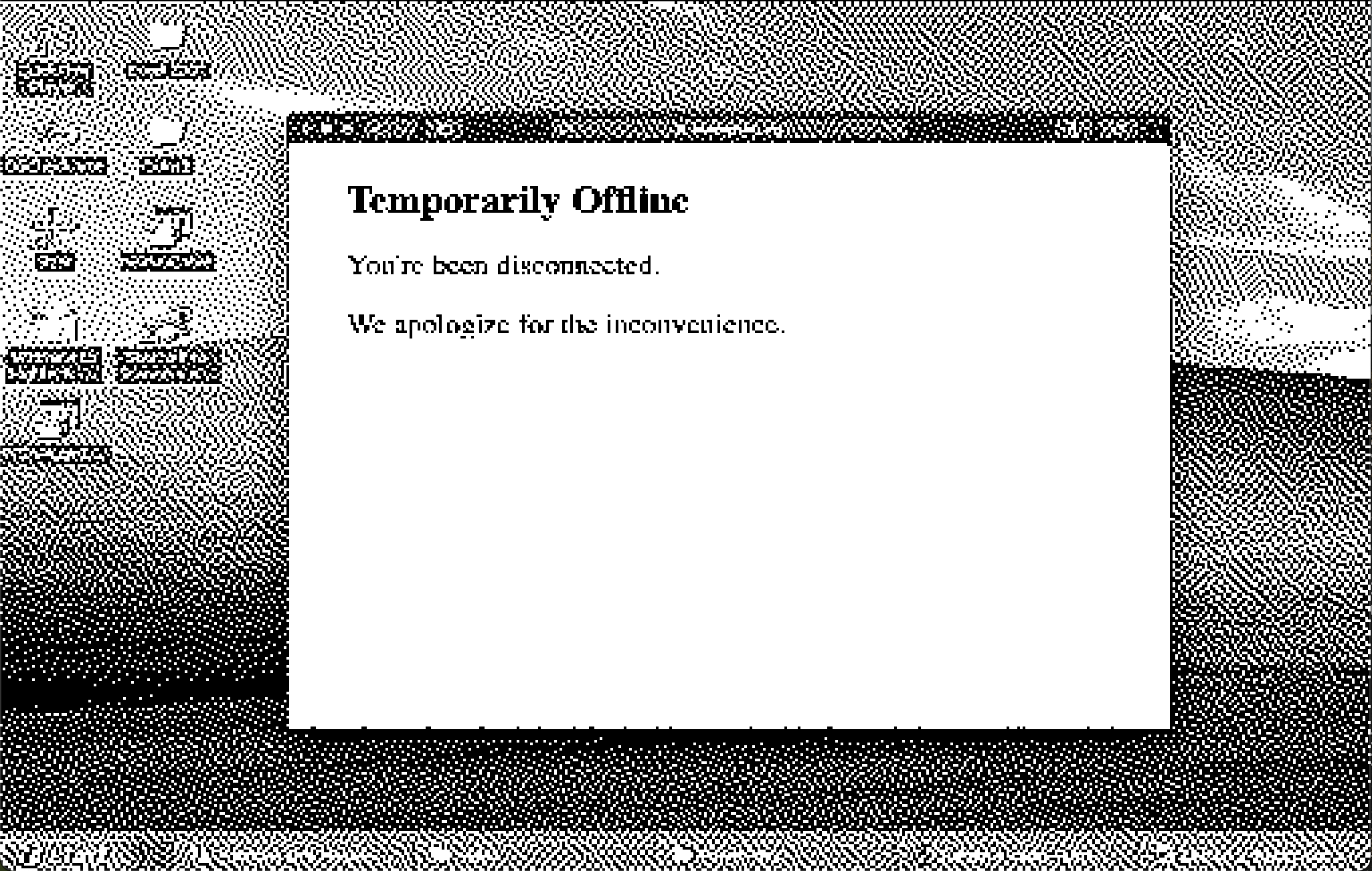
Temporarily Offline
A slightly unerving game on technological violence induced by pseudosimplicity and increasingly awful UI.