

Vulkan Ray Tracing Tutorial KHR
A comprehensive tutorial for learning Vulkan ray tracing with practical examples.
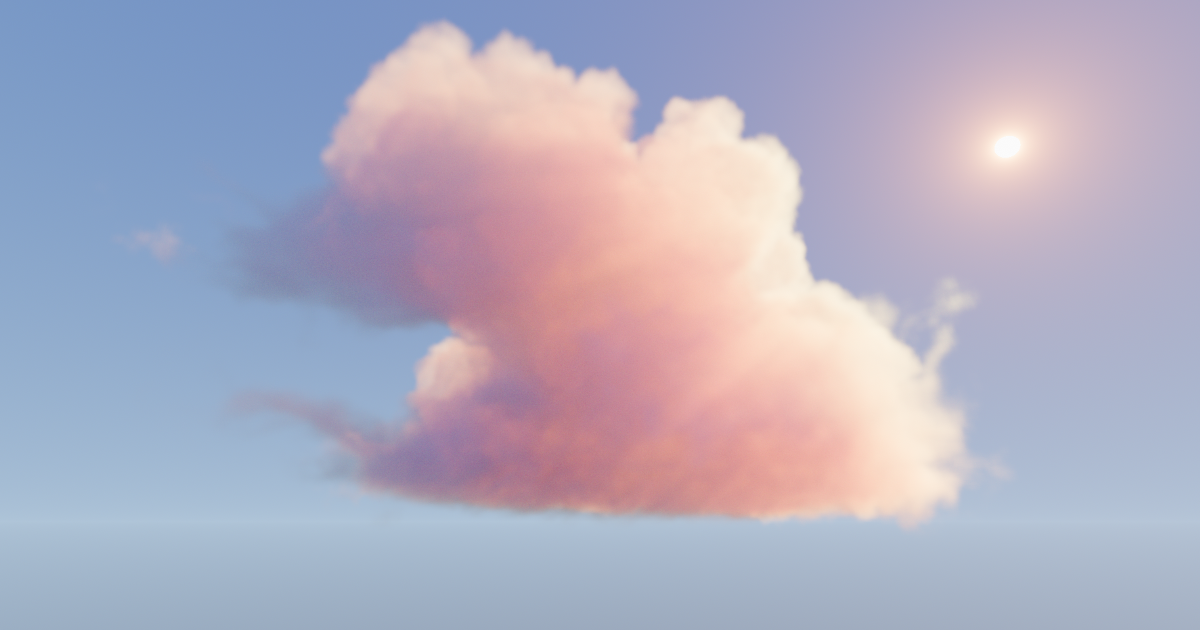
Release Neural Cloud Scattering · dBagrat/rendering-demos
Cheap cloud scattering approximation using tiny neural networks that I was working on a while back for our engine. iPhone 12, 1080p, 60+ fps
The nature of voids: I. Watershed void finders and their connection with theoretical models
The statistical study of voids in the matter distribution promises to be an important tool for precision cosmology, but there are known discrepancies between theoretical models of voids and the voids actually found in large simulations or galaxy surveys. The empirical properties of observed voids are also not well understood. In this paper, we study voids in an N-body simulation, using the ZOBOV watershed algorithm. As in other studies, we use sets of subsampled dark matter particles as tracers to identify voids, but we use the full-resolution simulation output to measure dark matter densities at the identified locations. Voids span a wide range of sizes and densities, but there is a clear trend towards larger voids containing deeper density minima, a trend which is expected for all watershed void finders. We also find that the tracer density at void locations is usually smaller than the true density, and that this relationship depends on the sampling density of tracers. We show that fits given in the literature fail to match the observed density profiles of voids. The average enclosed density contrast within watershed voids varies widely with both the size of the void and the minimum density within it, but is always far from the shell crossing threshold expected from theoretical models. Voids with deeper density minima also show much broader density profiles. We discuss the implications of these results for the excursion set approach to modelling such voids.


Visualizing GL_NV_shader_sm_builtins
Using GL_NV_shader_sm_builtins to visualize Streaming Multiprocessors and Warps
A guide to fast voxel ray tracing using sparse 64-trees
If you have ever tried to ray trace voxels before, you might have heard about Sparse Voxel Octrees. They are one of those ideas that are just simple and clever enough to be intriguing, but not so great to hold in practice at the basic premise.
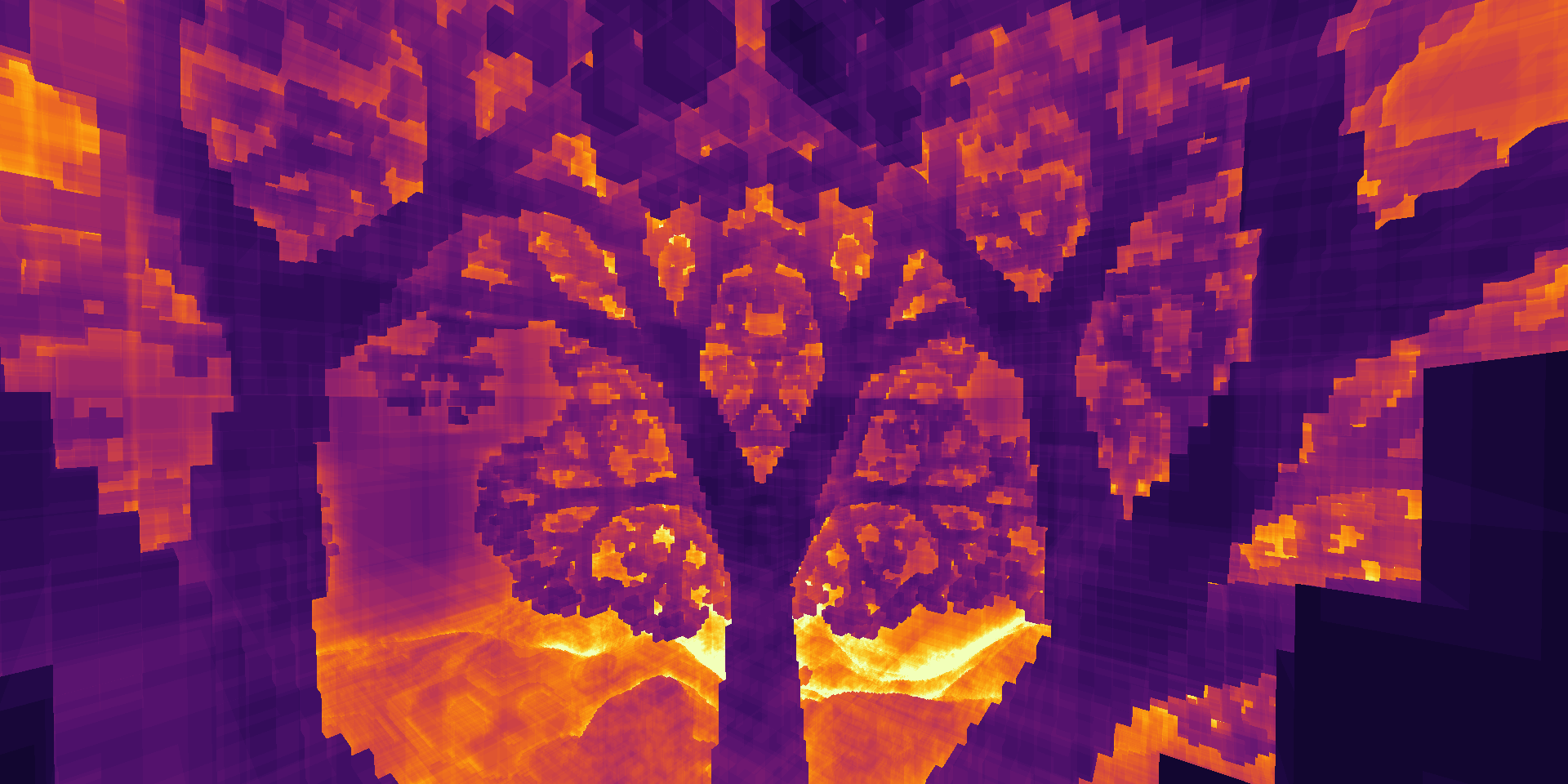
Red Blob Games: Delaunay+Voronoi on a sphere
I usually work with 2D map generation, in part because it’s easier, but also in part because I enjoy games with flat worlds + heightmaps more than I like games with sphere (curved) worlds. I’ve wanted to learn how to work with spheres so that I could make maps of entire planets, like I saw in this spherical voronoi map generation project[1] on and this spherical hexagon+pentagon map generation project[2] (both of those pages have fantastic screenshots). I decided ProcJam 2018[3] would be a good time to learn this.
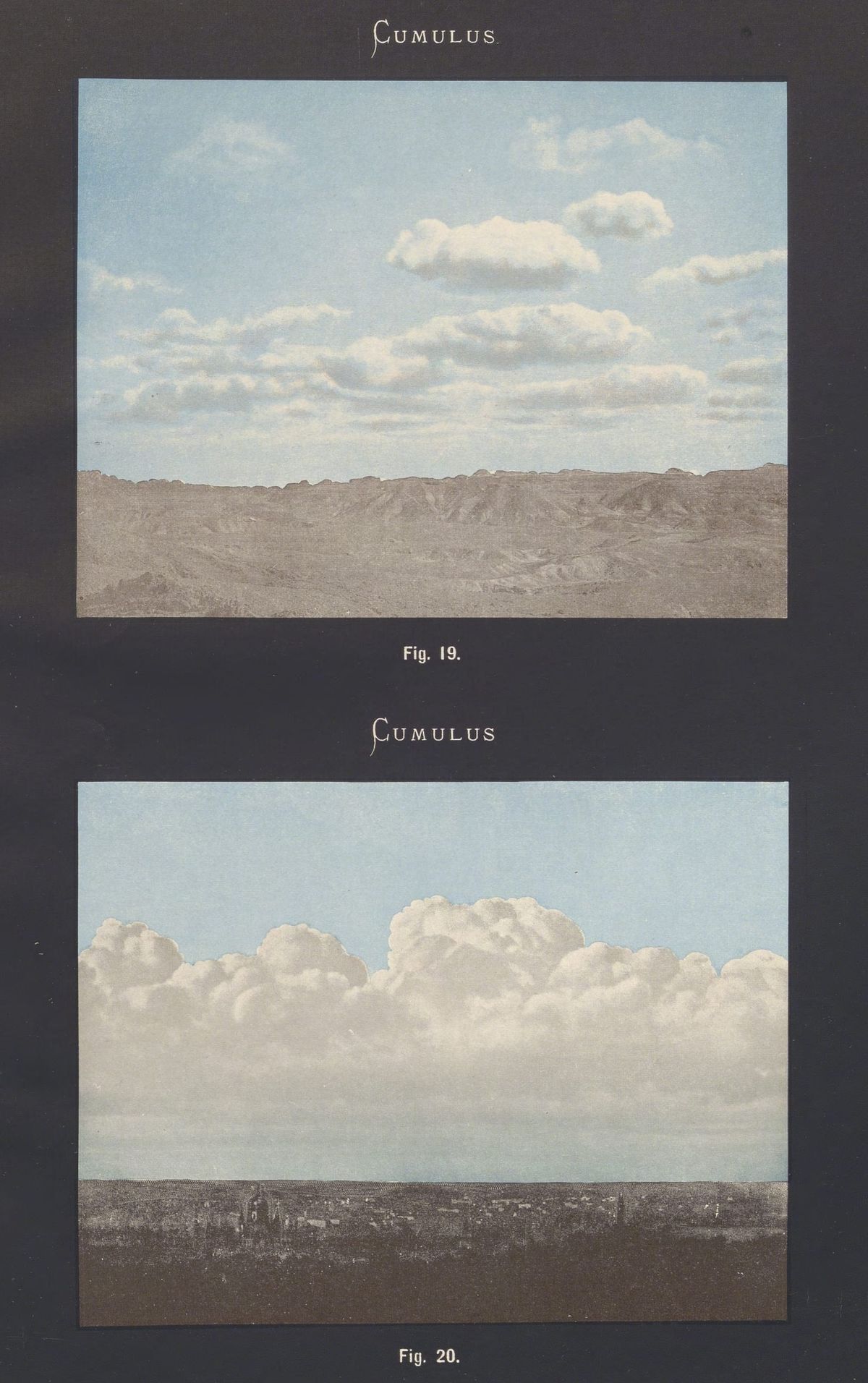
Launching a Cloud Atlas
The right questions to arrive with—and the right structure for what comes out of the interviews—are not completely obvious. So I’ve been spending some time thinking about clouds.
TESSERA: Precomputed FAIR Global Pixel Embeddings for Earth...
Petabytes of satellite Earth Observation (EO) data are freely available and can address critical global challenges. However, EO data quality is poor due to clouds and variable lighting conditions....
The cliff personal clouds need to climb
This speed test was done in London, but it’s typical of everywhere: It shows a Net biased for downstream, and minimized for upstream. If we’re going to do any serious personal work in c…

Blender Asset Library – 150,000+ Free & Paid 3D Assets | Blendkit
Paid and FREE 3D models, materials, brushes and HDRs for Blender. Create beautiful 3D artworks and visualizations with ease. Explore now or download directly in Blender.
Nicole Feng
We describe a method for computing signed distance to point clouds that allows fast pointwise evaluation at arbitrary spatial resolution. As input, our method takes a point cloud with normals; as output, it provides an analytical parameterization that allows queries of signed distance to the approximate underlying surface at arbitrary points — simultaneously providing reconstruction and distance. Our key idea is to reconstruct shapes by locally fitting point clouds with tori, which have closed-form signed distance functions. Tori are fitted in a feed-forward manner, using a pre-trained network to output per-point curvature and shift parameters. Importantly, our method does not require costly global optimization or spatial discretization, and is easily parallelizable. Underlying our method is a new theory that unifies signed distance with the classic reconstruction methods of winding numbers and Poisson surface reconstruction. We use our method to compute signed distance to point clouds arising from photogrammetry, meshes, 3D Gaussians, and neural implicits. Our method allows point clouds to be used directly in applications, without explicit surface reconstruction: as examples, we take offsets of point clouds, apply morphological and Boolean operations, and directly visualize offset surfaces using sphere tracing.
Universal Density Profile for Cosmic Voids
We present a simple empirical function for the average density profile of cosmic voids, identified via the watershed technique in $Λ$CDM N-body simulations. This function is universal across...
Lowering the friction of local copies of the atmosphere I think is one of the best things that can be done to unlock novel ml and sensemaking like Jaz has done! Jetstream v2 and microcosm so important. Here’s my small attempt - im sure there are better ones! github.com/pboueri/atproto-db-snapshot

GitHub - pboueri/atproto-db-snapshot: A snapshotter for ATProto to make analytics easier
github.com
Jaz
Yeah I've got a WIP explainer for the methodology sitting in my drafts right now. This was about a day and a half of effort (a nice sized weekend project) and drew heavily on the fact that i've already got a bsky archive in clickhouse for exporting and i have some background in ml pipelines
