


In the last few years I have given up on the many medical measures—cancer screenings, annual exams, Pap smears, for example—expected of a responsible person with health insurance. This was not base…
Helpless to Prevent Cancer? Actually, Quite a Bit Is in Your Control (Published 2016)
Many cases of cancer are preventable, studies show, but this research has inflamed as much as it has assuaged people’s fears.

Want More Policies Based on Evidence?
Medicine teaches us it will take time, effort, and investment.

Avoidable mortality, risk factors and policies for tackling noncommunicable diseases – leveraging data for impact: monitoring commitments in the WHO European Region ahead of the Fourth United Nations High-Level Meeting
The report notes that, in order to tackle NCDs and address the commercial, social, environmental and digital determinants of health, there is a need for accelerated multisectoral whole-of-government and whole-of-society action, integrated policies, enhanced preventive measures and strengthened health systems.

Health - Platform | The Australian Greens
More Victorians are putting off basic healthcare because they can’t afford it.

Health Care? Daughters Know All About It (Published 2017)
The role that daughters play in health care has received little attention. Now experts are sounding the alarm about the toll it takes on women.

Fix the health crisis – Victorian Socialists
Healthcare should be universal and free, not for profit. We’re fighting for fully funded public health and the expansion of free community health clinics.
Can Consumers Make Affordable Care Affordable? The Value of Choice Architecture
Tens of millions of people are currently choosing health coverage on a state or federal health insurance exchange as part of the Patient Protection and Affordable Care Act. We examine how well people make these choices, how well they think they do, and what can be done to improve these choices. We conducted 6 experiments asking people to choose the most cost-effective policy using websites modeled on current exchanges. Our results suggest there is significant room for improvement. Without interventions, respondents perform at near chance levels and show a significant bias, overweighting out-of-pocket expenses and deductibles. Financial incentives do not improve performance, and decision-makers do not realize that they are performing poorly. However, performance can be improved quite markedly by providing calculation aids, and by choosing a “smart” default. Implementing these psychologically based principles could save purchasers of policies and taxpayers approximately 10 billion dollars every year.
The Oregon Health Insurance Experiment: Evidence from the First Year*
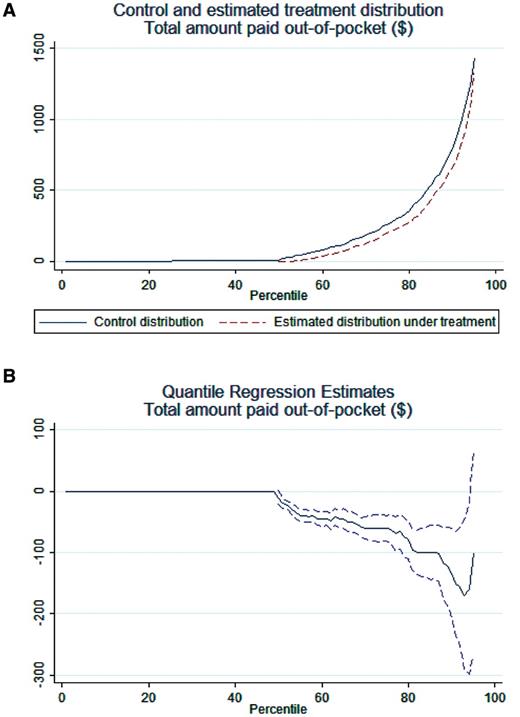
Abstract In 2008, a group of uninsured low-income adults in Oregon was selected by lottery to be given the chance to apply for Medicaid. This lottery provides an opportunity to gauge the effects of expanding access to public health insurance on the health care use, financial strain, and health of low-income adults using a randomized controlled design. In the year after random assignment, the treatment group selected by the lottery was about 25 percentage points more likely to have insurance than the control group that was not selected. We find that in this first year, the treatment group had substantively and statistically significantly higher health care utilization (including primary and preventive care as well as hospitalizations), lower out-of-pocket medical expenditures and medical debt (including fewer bills sent to collection), and better self-reported physical and mental health than the control group.

Long emergencies: Covid, climate, homelessness
At first, U.S. society treated the Covid-19 pandemic as an emergency requiring collective solutions. Now we pretend it’s over and treat staying healthy as an individual matter. I live in San Francisco and hang out in progressive spaces that were some of the last holdouts in urging and giving out masks. Now, even though the new Covid surge is making more of my friends sick than ever, masks are a rare sight. Anywhere outside SF, they’re unheard of. Collective health is out; rugged individualism is in. If you’re immunocompromised: sorry, but everyone’s tired of being inconvenienced just for the small matter of your survival. We’re living in the “You do you” era.
Prompting My Way Through Cancer
ChatGPT didn’t replace my care team, but it did make me a better patient.
US Domestic Policy Dashboard - Impact Counter | Impact Counter
Explore US domestic policies and their impact on public health across all branches of government.

The Medium is the Message: How Non-Clinical Information Shapes Clinical Decisions in LLMs | Proceedings of the 2025 ACM Conference on Fairness, Accountability, and Transparency
There has been a growing interest in the HCI community to study Health, with particular focus in understanding healthcare practices and designing technologies to support and to enhance these practices. A majority of current health studies in HCI have ...

How to Stop Hospitals from Killing Us
Medical errors kill enough people to fill four jumbo jets a week. Surgeon Marty Makary on five simple ways the health-care system can be made safer.

Patrick Collison on Twitter / X
Observing some people close to me with chronic health conditions, it's striking how useful Reddit frequently ends up being. I think a core reason is because trials aren’t run for a lot of things, and Reddit provides a kind of emergent intelligence that sits between that which any… pic.twitter.com/Eto23uQMDb— Patrick Collison (@patrickc) September 14, 2025

Cancer’s toll on 9/11 survivors is accelerating 25 years later
The number of victims receiving aid has tripled in recent years, a Post analysis finds, as the illness’s toll becomes more apparent.
