

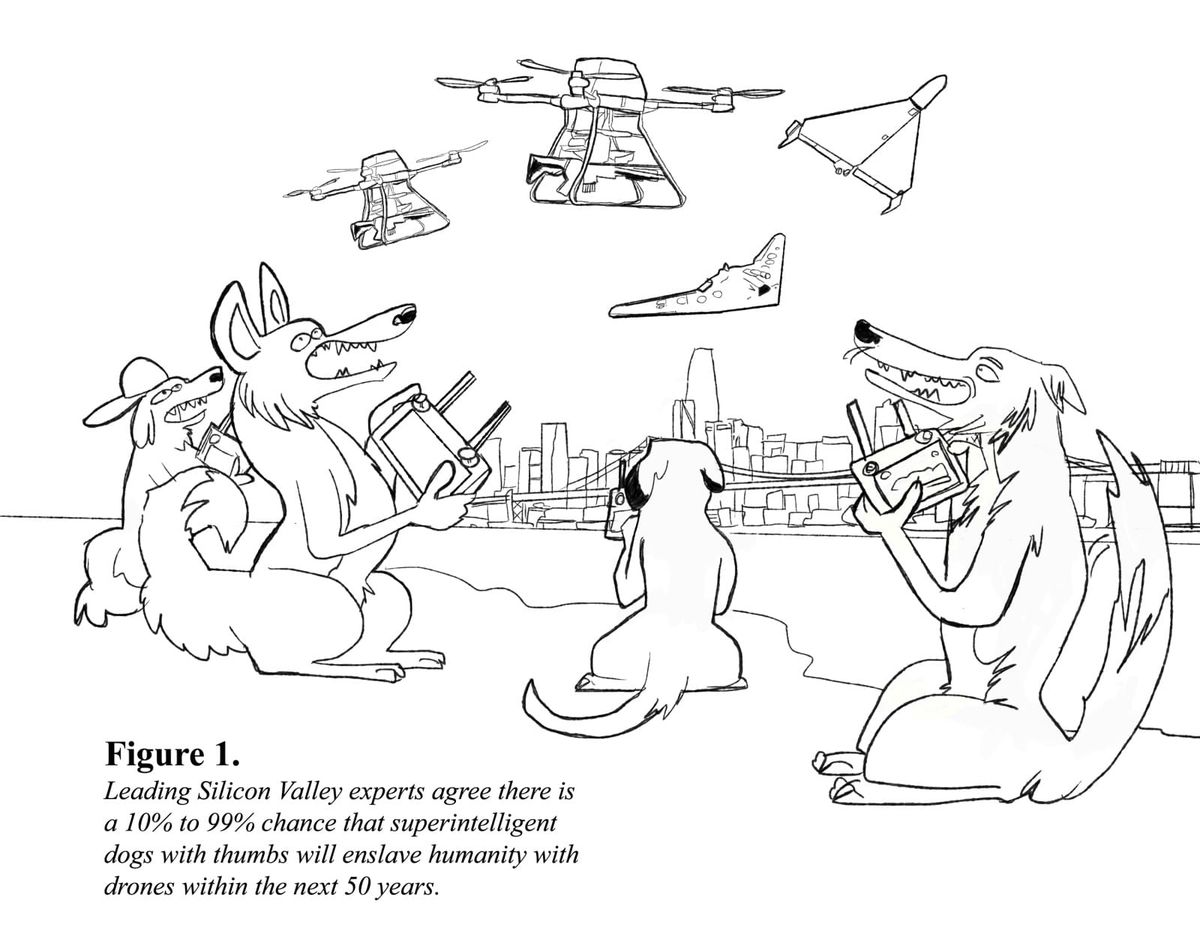
Imagine if instead of regulating drones via the standard lengthy, boring, and bureaucratic process - which we did - we instead decided, in the name of fostering all-important American drone innovation, to avoid regulating drones meaningfully at all. Also, imagine that we did not pay well-known aviation safety experts, aeronautical
Why AI companies can’t be trusted to self-regulate
From aviation to banking, high-risk industries are subject to independent oversight and meaningful penalties. AI companies should be no exception.

Where AI Regulation Stands Today
The White House has released a National Artificial Intelligence Legislative Framework and new executive orders aiming to establish a single, nationwide standard for AI regulation...

Who decides when AI is too dangerous?
Anthropic asked for AI regulation, but not like this.

Licensing is neither feasible nor effective for addressing AI risks
Non-proliferation only benefits incumbents
A brief history of AI executives calling for regulation
The industry is in a panic, but it’s been claiming to want legal guardrails for years — with few meaningful results.

The Pentagon’s bombshell deal with OpenAI, explained
Only Congress can put meaningful limits on government abuse of AI.

Study maps how ‘Big AI’ influences AI laws and oversight — Centre for Technomoral Futures
AI companies influence policy and regulation using similar techniques to Big Tobacco, Big Pharma and Big Oil, according to a new study by colleagues at University of Edinburgh, Trinity College Dublin, TU Delft and Carnegie Mellon University.

What the Anthropic fight says about AI regulation
Fables of the deconstruction of American power

AI Startup Flock Thinks It Can Eliminate All Crime In America
With more than 80,000 AI-powered cameras across the U.S., Flock Safety has become one of cops’ go-to surveillance tools. Now CEO Garrett Langley has both police tech giant Axon and Chinese drone maker DJI in his sights on the way to his goal: Preventing all crime in the U.S.

Governments Can’t Agree on What AI Actually Is
Without clear definitions, governance is impossible.

SIAI Critique (Singularity Institute for Artificial Intelligence)
This is a fundamental error in the SIAI analysis. CFAI 4.2.1 says "If an effort to get Congress to enforce any set of regulations were launched, I would expect the final set of regulations adopted to be completely unworkable." It further says that government regulation of AI is unnecessary because "The existing force tending to ensure Friendliness is that the most advanced projects will have the brightest AI researchers, who are most likely to be able to handle the problems of Friendly AI." History vividly teaches the danger of trusting the good intentions of individuals.
The politics and possibilities of ‘AI could kill us all’
AI will not exterminate the human race. But what big tech really *is* doing is bad enough that the notion may help fuel the movement against it.
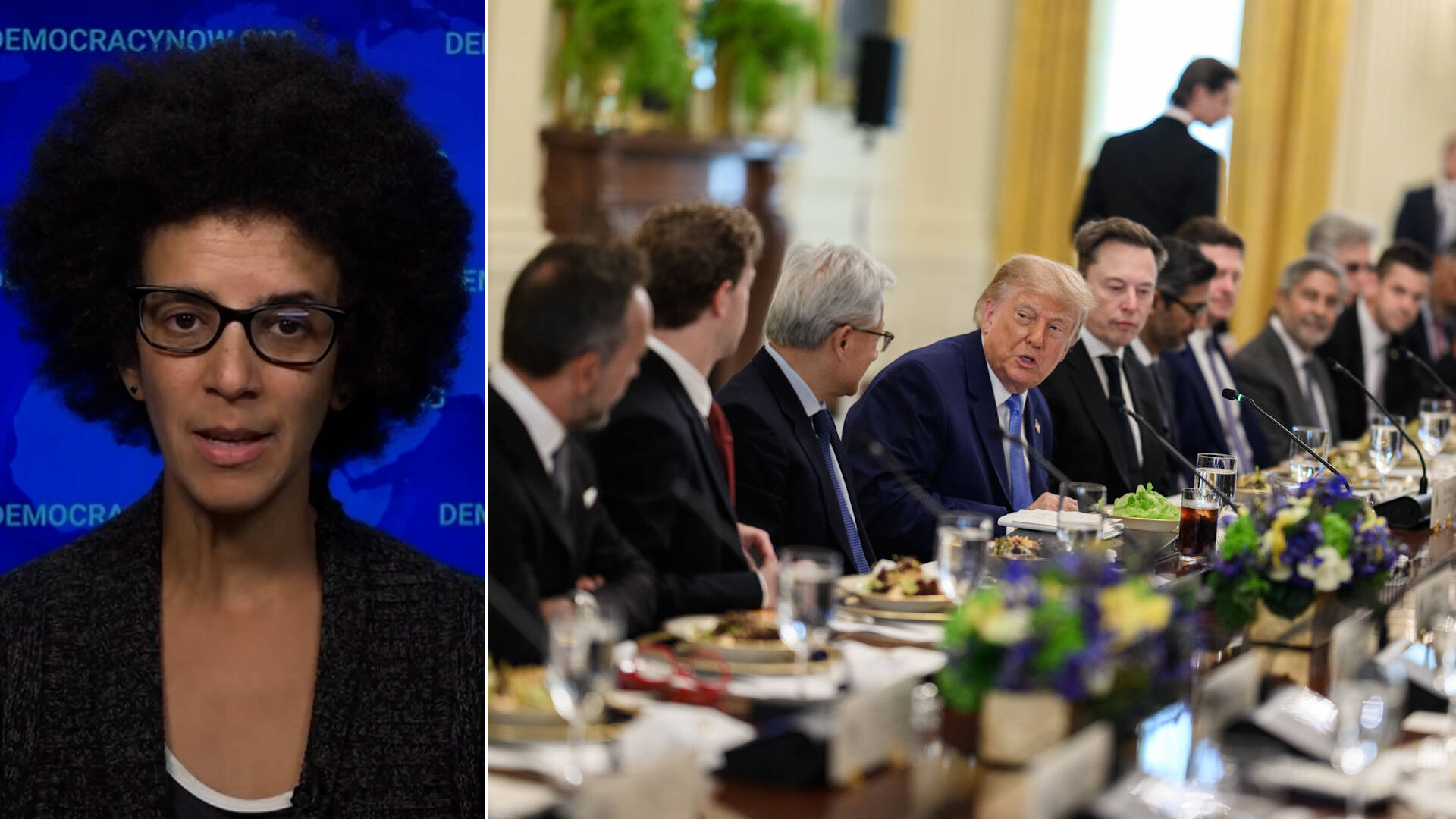
The Real Existential Risk Is AI CEOs Avoiding Oversight: “Alternative Nobel” Winner Timnit Gebru
We speak to the prominent AI researcher and leading critic of the AI industry, Timnit Gebru, who was recently awarded a 2026 Right Livelihood Award for her work investigating the harms and hype behind the global buildup of artificial intelligence. “Instead of discussing faulty, unreliable systems,” Gebru says tech leaders like SpaceXAI’s Elon Musk, OpenAI’s Sam Altman and Anthropic’s Dario Amodei are “marketing their systems as all-knowing, superpowerful, superintelligent,” and lobbying for “self-policing and self-regulation” to avoid being held “liable through existing laws.” Gebru expresses skepticism over increasingly widespread claims that AI algorithms pose an existential risk to humanity, warning that such claims are overblown and that “what is actually happening is regulatory capture.”
The Problem With AI Is Shitty Human Beings
The problem with AI isn't going to be Skynet. It's going to be amoral extraction class assholes applying half-cooked automation at scale onto deeply broken sectors in exploitative ways in a country too corrupt to have functioning regulators.

Collective Governance for AI: Points of Intervention
People often speak about AI as if it is one thing. It can seem like that when we use today’s most popular interfaces: a single product, packaged by an unfathomably big company. But that view is both misleading and disempowering. It implies that only the big companies could possibly create and control this technology, because only they can handle its immensity. But another orientation is possible.
Frontier AI Regulation Blueprint
A high-level blueprint for domestic regulation of civilian advanced AI models