


The lone academic in a basement lab is an endangered species. Years ago I asked Paul Ginsparg, who founded arXiv, what features his machine-learning filter used to flag speculative submissions. The top three: single-authored, submitted on a weekend, and heavy citation of Newton and Einstein. Science is a contact sport now. Marion Poetz and Henry Sauermann's How and When to Involve Crowds in Scientific Research (https://lnkd.in/g5pwVbfD) is the field manual. What crowds can do: Volume. Zooniverse mobilizes 2.7 million people to classify galaxies and court records. Galaxy Zoo's co-founder hand-classified 50,000 galaxies in one week before concluding that isolation would break him. Reach. NASA spent years failing to predict solar flares, then broadcast the problem. The winner was a semi-retired radio engineer in rural New Hampshire who swapped satellite data for radio data. Experience. Patients and caregivers asked to generate research questions produced 826 that scientists had missed, including the link between aging and wound healing. Bench-to-bedside runs backward. One caution the book underplays: an open call is not an inclusive one. Participation costs in time, money, and access screen people out. Self-selection can narrow the very diversity that makes crowds thrive. As AI floods the labor supply of routine, homogeneous cognition, human crowds become more valuable, not less. Machines process. People notice what nobody thought to ask. Check out my review @ https://lnkd.in/gkzvWrRC and the book @ https://lnkd.in/g5pwVbfD!
How and When to Involve Crowds in Scientific Research - The Book
This book explores how millions of people can significantly contribute to scientific research. Discover main elements, authors, and who this book is for and why.
PRISM: Capturing the Invisible Art of Scientific Practice
A New Tool for Recording and Scaling Laboratory Expertise

A call for broadening the altmetrics tent to democratize science outreach
Common altmetrics indices are limited and biased in the social media that they cover. In this Perspective, we highlight how and why altmetrics should broaden its scope to provide more reliable metrics for scientific content and communication.
Zooniverse
The Zooniverse is the world's largest and most popular platform for people-powered research.
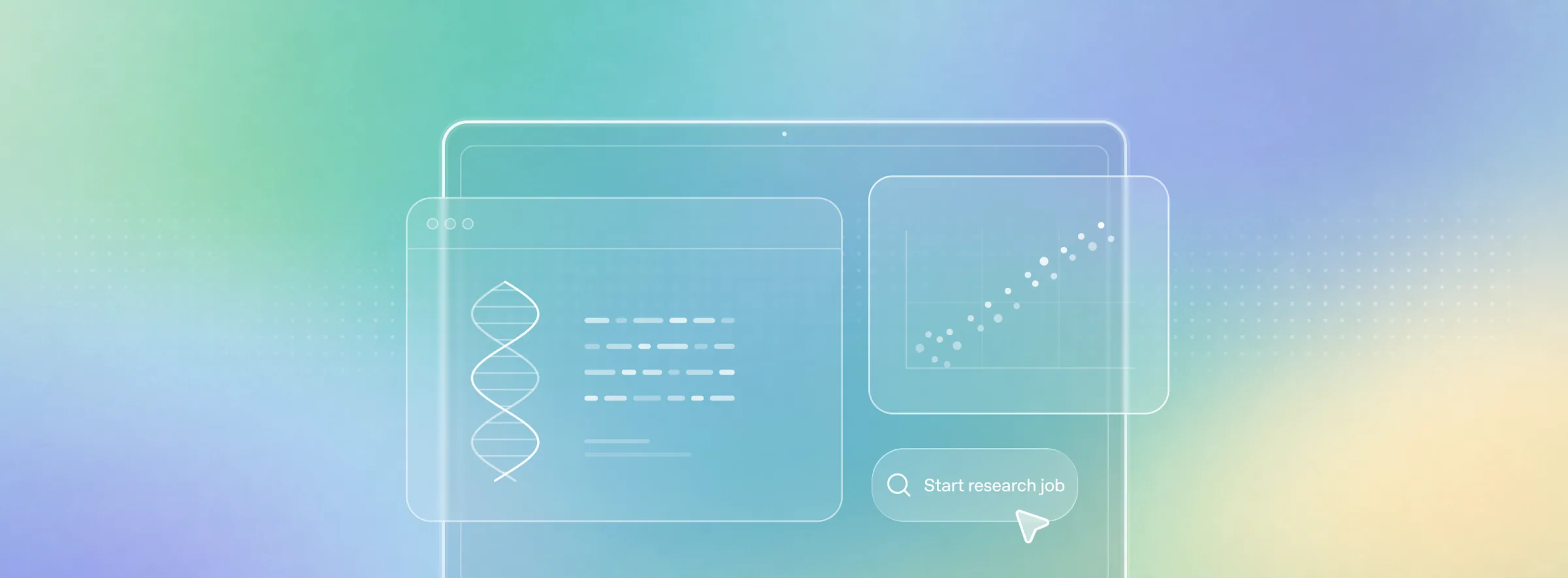
Meet Rosalind Workbench: Empowering every scientist to be their own research team | OpenAI Developers
How guided tasks, scientific viewers, and sequencing analysis help researchers follow a question from data to evidence.
Nature is expanding Registered Reports to all the fields in which we publish
Registered Reports improve the credibility of scientific claims by rewarding big questions, sound methods and solid analyses. They need to become a standard tool in research.

Metagov x Future of Science Seminar - Discourse Graphs with Matt Akamatsu
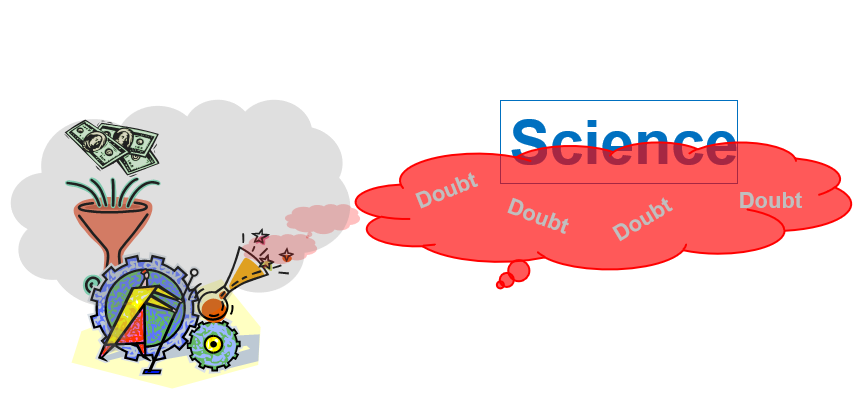
Dark-Moneyed Denialists Are Running 'Fixing Science' Symposium of Doubt
The “Fixing Science” symposium, which is hosted by the National Association of Scholars and kicks off today in Oakland, California, includes credible speakers who want to improve some areas of science hurt by the use of poor statistical methods or making irreproducible claims. Unfortunately, they are outnumbered by people who have often cast doubt on mainstream climate, environmental, and health sciences. For […]
Scientific Agents: Evaluating Profession-Specific System Prompts on Scientific Tasks
Detailed profession-specific system prompts raise token use and estimated cost per response without a consistent accuracy gain. We evaluate Scientific Agents, an open-source corpus of 503 profession-specific AGENTS.md profiles, with Gemini 3.8 Flash via OpenRouter in the Pi agent harness. We compare matched profiles with four controls: a minimal baseline ("You are a helpful assistant"), the profile's opening role sentence, a generic scientific rigor guide, and a profile from an unrelated domain. Across nine text-based science benchmarks (4,531 sampled questions, 100 matched profiles), 4,488 items completed all five conditions after API-error retries, scored with automated, rule-based grading. The average profile-baseline accuracy difference is -0.6 percentage points (95% bootstrap interval [-1.5, +0.2] across fixed tasks), and no benchmark shows a statistically clear improvement. Matched profiles produced 1.5-2.3 times as many output tokens and cost 2.2-4.5 times more per successful call. On 60 tool-using BioMysteryBench bioinformatics problems (three runs each for baseline and profile), mean solve rates were 46.7% with the profile and 56.7% at baseline, a difference of -10.0 percentage points (95% interval [-16.7, -3.3]) driven by more frequent token- and time-limit stops under the profile. Longer prompts had one unexpected operational advantage: on SuperGPQA, frequent provider API drops left the short baseline with a correct first-pass answer on only 54.0% of items, against 71.6% with the profile. Generic and mismatched prompts were about as reliable, so this gain comes from prompt length or formatting rather than domain expertise. For the tested model and tasks, loading full profession profiles by default does not improve accuracy and costs considerably more; whether selective retrieval of profile sections or open-ended scientific tasks would change this remains to be tested.

The Astrosky Ecosystem
We're building social media tools for the astronomy & space science communities. From feeds to hosting, we're billionaire-proofing scientific discussion for good.
The new way we’ll do science
Papers should become human-readable views over a graph of data, tools, results, and certificates.
Jason Shepherd on Twitter / X
I have quite a lot of thoughts on this..that won't fit in a tweet. Bottomline is that there are issues scientists in the US would love to improve - faster review, less grant writing, more stability and freedom to do risky science. The folks celebrating this doc are mostly../1 https://t.co/xlPAH9XYNC— Jason Shepherd (@JasonSynaptic) July 23, 2026
Citizen science in environmental and ecological sciences
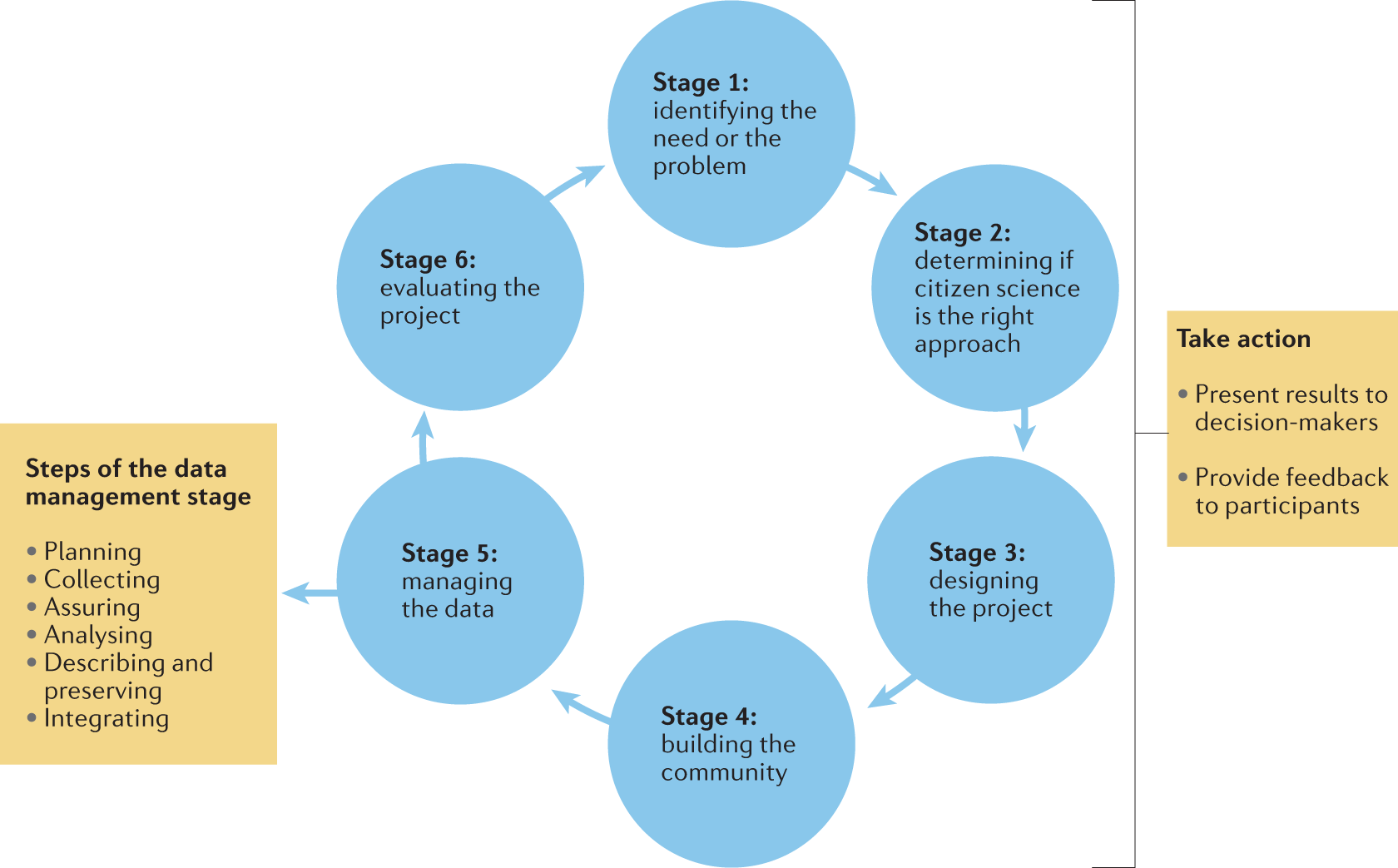
Citizen science is an increasingly acknowledged approach applied in many scientific domains, and particularly within the environmental and ecological sciences, in which non-professional participants contribute to data collection to advance scientific research. We present contributory citizen science as a valuable method to scientists and practitioners within the environmental and ecological sciences, focusing on the full life cycle of citizen science practice, from design to implementation, evaluation and data management. We highlight key issues in citizen science and how to address them, such as participant engagement and retention, data quality assurance and bias correction, as well as ethical considerations regarding data sharing. We also provide a range of examples to illustrate the diversity of applications, from biodiversity research and land cover assessment to forest health monitoring and marine pollution. The aspects of reproducibility and data sharing are considered, placing citizen science within an encompassing open science perspective. Finally, we discuss its limitations and challenges and present an outlook for the application of citizen science in multiple science domains.
Sensemaking Networks: Project Introduction - Cosmik Labs
Incorporating science social media into the scientific process
Science Communication as a Collective Intelligence Endeavor: A Manifesto and Examples for Implementation
Effective science communication is challenging when scientific messages are informed by a continually updating evidence base and must often compete against misinformation. We argue that we need a new program of science communication as collective intelligence—a collaborative approach, supported by technology. This would have four key advantages over the typical model where scientists communicate as individuals: scientific messages would be informed by (a) a wider base of aggregated knowledge, (b) contributions from a diverse scientific community, (c) participatory input from stakeholders, and (d) better responsiveness to ongoing changes in the state of knowledge.
