


An inquiry into the rich history of radical experiments to reorganize information.
Time to change the story
New evidence from the Zimbardo archives challenges everything you have taught (or been taught) about the Stanford Prison Experiment, argue Stephen Reicher, S. Alexander Haslam and Jay Van Bavel.
Living in Data: A Citizen's Guide to a Better Information Future (Paperback)
Jer Thorp’s analysis of the word “data” in 10,325 New York Times stories written between 1984 and 2018 shows a distinct trend: among the words most closely associated with “data,” we find not only its classic companions “information” and “digital,” but also a variety of new neighbors—from “scandal” and “misinformation” to “ethics,” “friends,” and “play.”To live in data in the twenty-first century


Philosophy Experiments — Interactive Thought Experiments
Explore 27 interactive philosophy experiments that challenge your moral intuitions, test your logical reasoning, and probe the boundaries of belief.
The problem of knowledge in the Anthropocene
In the twentieth century, debates about economic planning were largely shaped by arguments concerning knowledge and the acquisition of information. As the century drew to a close, the dispute was a...

E.W. Dijkstra Archive: On the cruelty of really teaching computing science (EWD 1036)
The second part of this talk pursues some of the scientific and educational consequences of the assumption that computers represent a radical novelty. In order to give this assumption clear contents, we have to be much more precise as to what we mean in this context by the adjective "radical". We shall do so in the first part of this talk, in which we shall furthermore supply evidence in support of our assumption.
Feminist Data Manifest-No
1. We refuse to operate under the assumption that risk and harm associated with data practices can be bounded to mean the same thing for everyone, everywhere, at every time. We commit to acknowledging how historical and systemic patterns of violence and exploitation produce differential vulnerabilities for communities.
Emancipatory Information Retrieval
Our world today is facing a confluence of several mutually reinforcing crises each of which intersects with concerns of social justice and emancipation. This paper is a provocation for the role of computer-mediated information access in our emancipatory struggles. We define emancipatory information retrieval as the study and development of information access methods that challenge various forms of human oppression, and situates its activities within broader collective emancipatory praxis. The term "emancipatory" here signifies the moral concerns of universal humanization of all peoples and the elimination of oppression to create the conditions under which we can collectively flourish. To develop an emancipatory research agenda for information retrieval (IR), in this paper we speculate about the practices that the community can adopt, enumerate some of the projects that the field should undertake, and discuss provocations to spark new ideas and directions for research. We challenge the field of IR research to embrace humanistic values and commit to universal emancipation and social justice. We also invite scholars from fields such as human-computer interaction, information sciences, media studies, design, science and technology studies, social and political sciences, philosophy, law, environmental sciences, public health, educational sciences, as well as legal and policy experts, civil rights advocates, social justice activists and movement organizers, and artists to join us in realizing this transformation. In this process, we must both imagine post-oppressive worlds, and reimagine the role of IR in that world and in the journey that leads us there.

Data Feminism
Today, data science is a form of power. It has been used to expose injustice, improve health outcomes, and topple governments. But it has also been used to d...
Tools for Thought as Cultural Practices, not Computational Objects
On seeing tools for thought through a historical and anthropological lens
Orion Reed
My research investigates the intersection of computing, human-system interfaces, and emancipatory politics. I am interested in the potential of computing as a medium for thought, as a tool for collective action, and as a means of emancipation.

Reclaiming Data Autonomy as a Peasant
forthcoming — on the quiet enclosure of the transcript commons.
Neo-Documentation and the End of Information
Ronald Day’s Neo-Documentation and the End of Information critiques the modern conception of information as representational “content.” The...
Thinking together
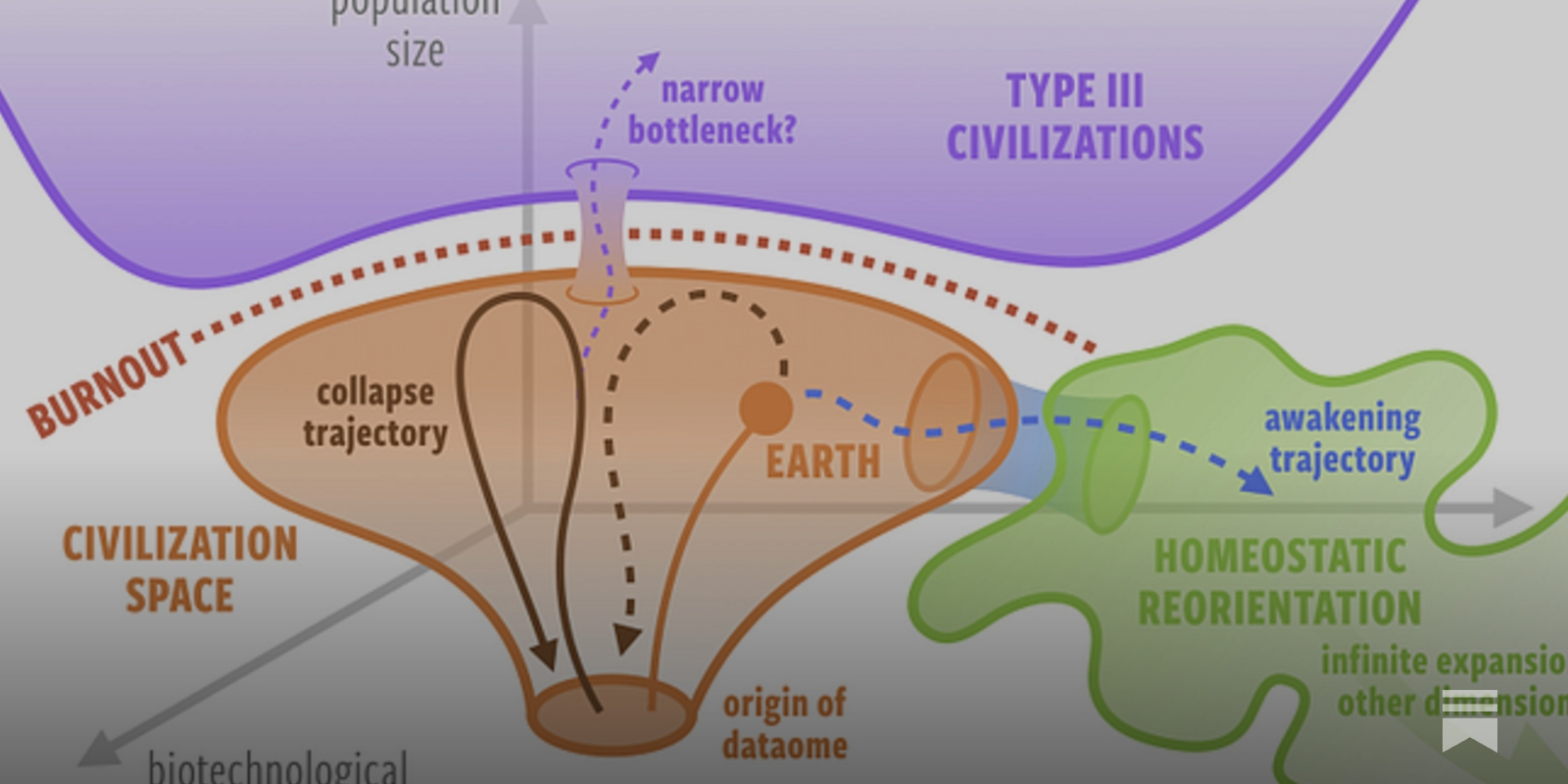
While analyzing a global history databank spanning 10,000 years, Shin, et al found a disconcerting pattern. Civilizations scale until they are overwhelmed by the information environment they create. This is The Information Scaling Threshold.
Emancipatory Information Retrieval (Invited Talk at UCC)
Ever thought we acquire generalizable knowledge by discarding details and compressing our experiences? In a new BBS paper, @sabinasloman.bsky.social and I argue otherwise, proposing a novel way of studying human learning inspired by double descent in ML. Disagree? Propose a commentary by May 15 :)
