


The proto-Taylorist methods of worker control Charles Babbage encoded into his calculating engines have origins in plantation management.
Origin Stories: Plantations, Computers, and Industrial Control
The proto-Taylorist methods of worker control Charles Babbage encoded into his calculating engines have origins in plantation management.
The Machine in the Garden
Leo Marx, The Machine in the Garden, The New England Quarterly, Vol. 29, No. 1, Mar., 1956
Computer: A History of the Information Machine
Computer: A History of the Information Machine is a history of computing written by Martin Campbell-Kelly and William Aspray first published in 1996. It follows the history of "information machines" from Charles Babbage's difference engine through Herman Hollerith's tabulating machines to the invention of the modern electronic digital computer. A revised 2nd edition published in 2004 included new material on the Internet and World Wide Web, while the updated 3rd edition published in 2013 includes contributions from historians Nathan Ensmenger and Jeffrey Yost. The 3rd edition extends the story to include recent phenomena such as social networking and revises the discussion of early history to reflect new insights from the literature.

தோன்றியக் கதைகள்: தோட்டங்கள், கணினிகள் மற்றும் தொழில்துறைக் கட்டுப்பாடு
A Tamil translation by Jayachandran Masilamani of Meredith Whittaker’s “Origin Stories: Plantations, Computers, and Industrial Control”

How ‘Automation’ Made America Work Harder
Computers were supposed to reduce office labor. They accomplished the opposite

Pioneers, Settlers and Town Planners
The rants and raves of Simon Wardley on Evolution, Technology, Economics and Business

IBM's "Man & Computer" (1967)
The continued search for Spime Script
The rants and raves of Simon Wardley on Evolution, Technology, Economics and Business

annotations: William Baumol : un entrepreneuriat réellement productif
Blog de sciences économiques et sociales de Martin Anota. Traductions, revues de presse.
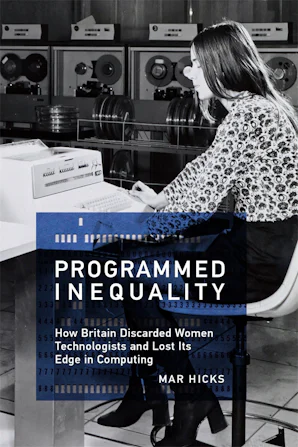
Programmed Inequality
In 1944, Britain led the world in electronic computing. By 1974, the British computer industry was all but extinct. What happened in the intervening thirty y...

"Watch What I Do"
I don't know who first made the parallel between programming a computer and using a tool, but it was certainly implicit in Jack Licklider's thoughts about "man-machine symbiosis" as he set up the ARPA IPTO research projects in the early sixties. In 1962, Ivan Sutherland's Sketchpad became the exemplar to this day for what interactive computing should be like--including having the end-user be able to reshape the tool.
In search of Spime Script ...
The rants and raves of Simon Wardley on Evolution, Technology, Economics and Business
Humanities in the Machine - Blain Smith
There is something quietly remarkable about the people who built the foundations of modern computing. Not their technical achievements, though those are extraordinary. What is remarkable is where they came from before they ever touched a machine.
Spime Script?
The rants and raves of Simon Wardley on Evolution, Technology, Economics and Business
La rage contre les machines. Quand le changement technologique alimente les troubles civils
Blog de sciences économiques et sociales de Martin Anota. Traductions, revues de presse.
