


Khan and Pozen are right to note the fundamental conflict between “information fiduciary” duties and shareholder interests. I only wish to add two further points in service of a radical skepticism towards the information fiduciary concept.
Symposium: A Skeptical View of Information Fiduciaries
In recent years, the concept of “information fiduciaries” has surged to the forefront of debates on platform regulation. In a forthcoming essay, we question the wisdom of applying a fiduciary framework to dominant digital platforms.
Redressing the Balance: A Yin-Yang Perspective on Information Technology
Information is an essential aspect of how we interact with the world around us. We acquire information and then integrate it to build knowledge, understanding, and trust, which in turn serve in preparing actions. Information technology (IT) is supposed to support all these phases of information processing. But does it? An assessment of IT through the yin-yang lens from Chinese philosophy shows that over the last decades, support for the yin processes of building knowledge, understanding, and trust has been neglected, the focus of most research and development having been on the yang processes of acting. IT shares this imbalance with other aspects of Western and globalized culture. I discuss possible directions for re-establishing a yin-yang balance in IT, as a small contribution to redressing the balance in the world at large.

Scaling Trust and Other Fictions
The multiple, capitalist information fiduciaries of the Balkin proposal and the regulatory regime that Khan and Pozen appear to imagine seem to have little in common. But they are responses to the same problem: that of governing data-driven algorithmic processes that operate in real time, immanently, automatically, and at scale.
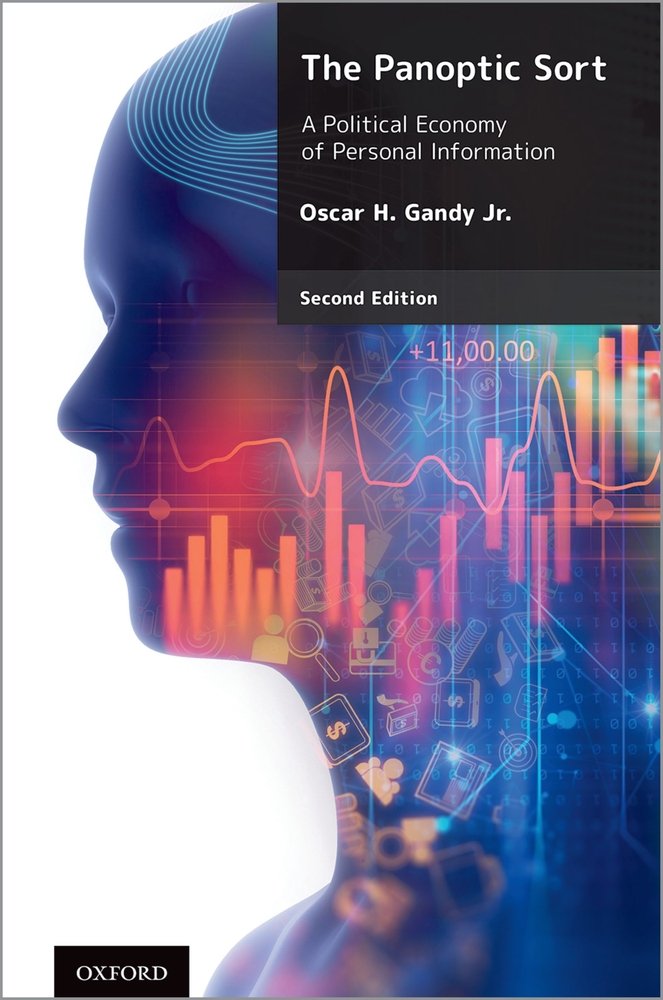
The Panoptic Sort: A Political Economy of Personal Information
A Political Economy of Personal Information
The History of Information - Chris Haughton
disinformation, chris haughton, information, noam chomsky

The Information Philosopher - dedicated to the new information philosophy
Information Philosopher is dedicated to the new Information Philosophy, with explanations for Freedom, Values, and Knowledge.
Neo-Documentation and the End of Information
Ronald Day’s Neo-Documentation and the End of Information critiques the modern conception of information as representational “content.” The...

interfluidity » Consensus not censorship
We’ve become obsessed over the past few years with the problem of misinformation. And for good reason. “Flood the zone with shit” is now standard operating procedure for a variety of interests and factions. Groups who pretend to be above that kind of thing let confirmation bias do the same work, elevating conjectures they find convenient to believe far beyond the evidentiary basis for believing them, and transmuting concurrence among prestigious groups whose biases are aligned into “authority” to which they demand deferrence. Casual information consumers become divided into two camps, the “do your own research” types who imagine, mistakenly, that they are capable of seeing through all this (and so succumb to their own confirmation bias), and those who more accurately understand that they cannot reliably distinguish truth from bullshit (and so opt out of democratic deliberation with a shrug, other than perhaps to vote for the candidates whose political party they distrust less).
What the Hell is Going On? - David Perell
David shares how the new age of information abundance is transforming commerce, education, and politics. Read here.

The information flaneur: a fresh look at information seeking
Toward a theory of network gatekeeping: A framework for exploring information control
Abstract Gatekeeping theories have been a popular heuristic for describing information control for years, but none have attained a full theoretical status in the context of networks. This article aims to propose a theory of network gatekeeping comprised of two components: identification and salience . Network gatekeeping identification lays out vocabulary and naming foundations through the identification of gatekeepers, gatekeeping, and gatekeeping mechanisms. Network gatekeeping salience , which is built on the bases of the network identification theory, utilizes this infrastructure to understand relationships among gatekeepers and between gatekeepers and gated, the entity subjected to a gatekeeping process. Network gatekeeping salience 1 Salience refers to the degree to which gatekeepers give priority to competing gated claims. proposes identifying gated and their salience to gatekeepers by four attributes: (a) their political power in relation to the gatekeeper, (b) their information production ability , (c) their relationship with the gatekeeper, and (d) their alternatives in the context of gatekeeping.

InfoWorld
Business technology, IT news, product reviews and enterprise IT strategies.
Why Big Tech's Privacy Promises Are Lies
Opinion | The New Power Structure (Published 2018)
New organizations are forming and succeeding in an age of distrust.

The Oligarchs' Coup Against the Free Press Is Happening Now
The American information space is not merely changing; it is undergoing a hostile takeover. It is a deliberate, coordinated campaign by a new class of oligarchs out of Silicon Valley that includes Jeff Bezos, Elon Musk, Larry Ellison, and Mark Zuckerberg acting in concert with a Trump-led authoritarian political project.

“‘Information’ is a relational concept that assumes meaning only when related to the cognitive structure of the observer.” -- Heinz von Foerster
Control Information Theory: The “Missing Link” In the Science Of Cybernetics | Institute for the Study of Complex Systems
complexsystems.org