Hot takes and cold truths on software, startups, and the lies we tell ourselves.
How finishing what you start makes teams more productive and predictable
Hot takes and cold truths on software, startups, and the lies we tell ourselves.
Less stress, more productivity: why working fewer hours is better for you and your employer
There’s always too much work to be done on software projects, too many features to implement, too many bugs to fix. Some days you’re just not going through the backlog fast enough, you’re not producing enough code, and it’s taking too long to fix a seemingly-impossible bug. And to make things worse you’re wasting time in pointless meetings instead of getting work done. Once it gets bad enough you can find yourself always scrambling, working overtime just to keep up. Pretty soon it’s just expected, and you need to be available to answer emails at all hours even when there are no emergencies. You’re tired and burnt out and there’s still just as much work as before. The real solution is not working even harder or even longer, but rather the complete opposite: working fewer hours.

Why embracing complexity is the real challenge in software today
In the midst of industry discussions about productivity and automation, it’s all too easy to overlook the importance of properly reckoning with complexity.

This Dumb Industry: In Defense of Crunch - Twenty Sided
Last week I derided permacrunch – the policy of working an entire creative team 70 hours a week all the time – as “the policy of simpletons and sociopaths”. This led to some people asking, “Why is crunch even a thing?” Can’t management just plan the schedule so that the project is done on time using only 40 hour work weeks?
It’s Time to Embrace Slow Productivity
We need fewer things to work on. Starting now.

The $70B Open Source Software Paradox
It’s no news that over the last 10-15 years, particularly noticeable in the last 5 years, the enterprise software industry has gradually transformed from complex, expensive, closed-source (proprietary) software stacks to extensible/configurable,...

Hitting the High Notes
In March, 2000, I launched this site with the shaky claim that most people are wrong in thinking you need an idea to make a successful software company: The common belief is that when you’re …

Excuse me, is there a problem?
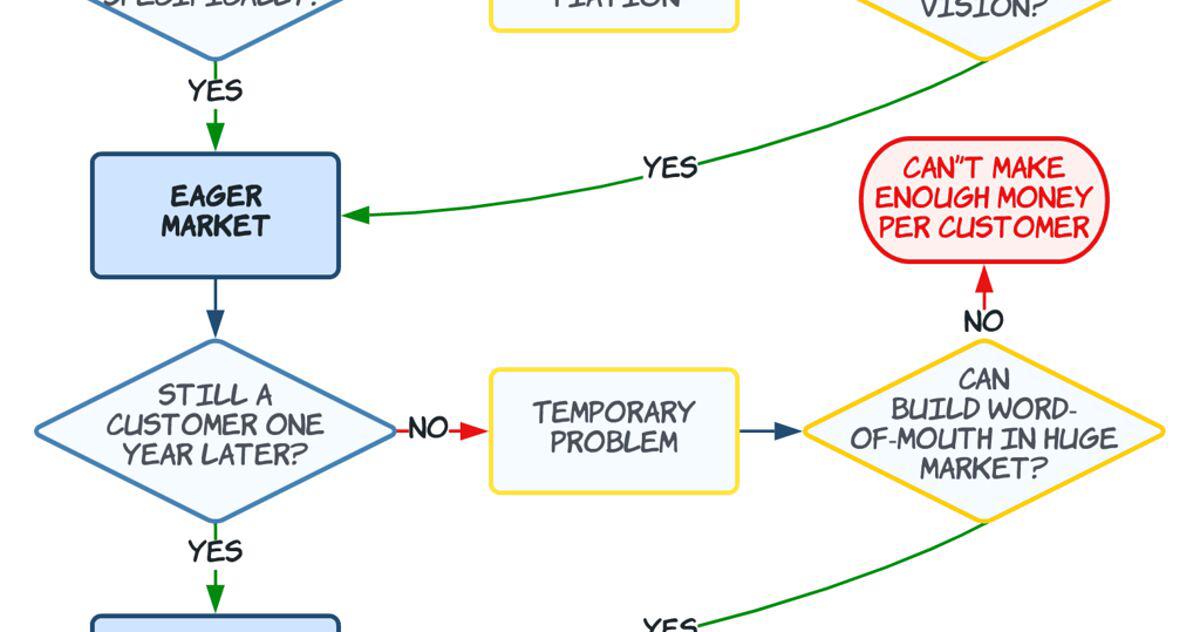
Many startups fail despite identifying a real problem and building a product that solves that problem. This explains why, so you can avoid their fate.
Excuse me, is there a problem?
Many startups fail despite identifying a real problem and building a product that solves that problem. This explains why, so you can avoid their fate.
Ignore the Grifters - AI Isn't Going to Kill the Software Industry | Dustin Ewers
I feel like half of my social media feed is composed of AI grifters saying software developers are not going to make it. Combine that sentiment with some economic headwinds and it's easy to feel like we're all screwed. I think that's bullshit. The best days of our industry lie ahead.

Balancing “If it ain’t broke, don’t fix it” vs. “Release early and often”
Every organization faces a war between two schools of thought, with “If it ain’t broke, don’t fix it” on one side and “release early and often” on the other. This blog post looks for a way for enterprise consumers to embrace fast-paced changes in the software industry.

Why time management is ruining our lives | Oliver Burkeman
The Long Read: All of our efforts to be more productive backfire – and only make us feel even busier and more stressed

Code Is Cheap Now. Software Isn’t.
The barrier to entry for building software has collapsed. The barrier to building something that matters hasn’t moved an inch.
Why Apple and Google are struggling to design simple software
Is Apple losing its crown as the champion of simplicity? Maybe. But for a very good reason.
The 10 Best Practices for Remote Software Engineering
At face value, when we think of developer productivity we might think of effectiveness in time management, communication, and task completion.14 Although we are drawn to personal workflow or time management tools, and learning secrets to improving our productivity, ironically this quest for the holy grail can sometimes take us off course and be a detriment to our productivity. The problem is that accomplishing tasks or having a filled up schedule does not necessarily equate to productivity. Creating a formulaic working strategy, as was common in the last century, does not either.a,8,13 Productivity is less a quality that can be easily measured,b controlled, or improved directly with tools, but instead is a human element that manifests from developer happiness.