

A gentle introduction to the Pi coding agent and why I think it’s a glimpse into the future of software.
Thoughts on slowing the fuck down
Mario Zechner created the Pi agent framework used by OpenClaw, giving considerable credibility to his opinions on current trends in agentic engineering. He's not impressed: We have basically given up …
Building pi in a World of Slop — Mario Zechner
Open Coding Agents: Fast, accessible coding agents that adapt to any repo | Ai2
SERA is the first in our family of Open Coding Agents, achieving state-of-the-art performance at low cost.
OpenClaw — Personal AI Assistant
OpenClaw — The AI that actually does things. Your personal assistant on any platform.
OpenCode Zen | A curated set of reliable optimized models for coding agents
OpenCode - The open source coding agent.
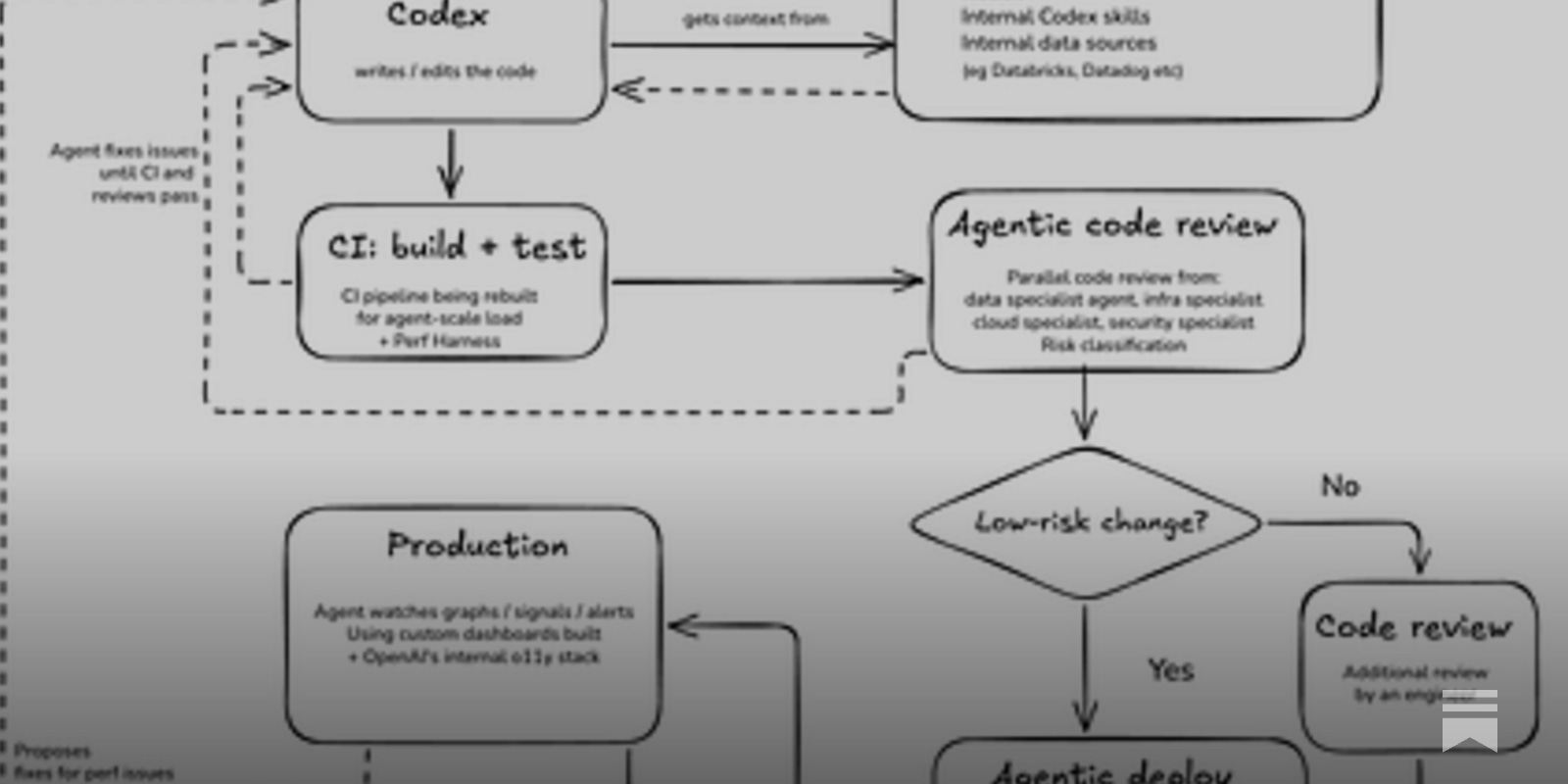
Inside OpenAI’s agentic software factory
A deepdive into how Codex has “taken over” OpenAI, how the frontier lab builds its agentic software factory, and the engineering challenges of one billion users. Details from inside OpenAI
Coding Agents Are Easy, Actually - Kara's Nonsense
Software engineering is here to stay
Pi, Minimal and Performant | EARENDIL
How Pi's minimal harness improves coding-agent cost and performance, with examples from Databricks and Shopify's pi-autoresearch extension.
Dive into Claude Code: The Design Space of Today's and Future AI Agent Systems
Claude Code is an agentic coding tool that can run shell commands, edit files, and call external services on behalf of the user. This study describes its comprehensive architecture by analyzing the publicly available TypeScript source code and further comparing it with OpenClaw, an independent open-source AI agent system that answers many of the same design questions from a different deployment context. Our analysis identifies five human values, philosophies, and needs that motivate the architecture (human decision authority, safety and security, reliable execution, capability amplification, and contextual adaptability) and traces them through thirteen design principles to specific implementation choices. The core of the system is a simple while-loop that calls the model, runs tools, and repeats. Most of the code, however, lives in the systems around this loop: a permission system with seven modes and an ML-based classifier, a five-layer compaction pipeline for context management, four extensibility mechanisms (MCP, plugins, skills, and hooks), a subagent delegation mechanism with worktree isolation, and append-oriented session storage. A comparison with OpenClaw, a multi-channel personal assistant gateway, shows that the same recurring design questions produce different architectural answers when the deployment context changes: from per-action safety classification to perimeter-level access control, from a single CLI loop to an embedded runtime within a gateway control plane, and from context-window extensions to gateway-wide capability registration. We finally identify six open design directions for future agent systems, grounded in recent empirical, architectural, and policy literature.

OpenClaw is a local-first, open-source AI agent that runs 24/7 on your own machine, connecting AI models to your files, messaging apps… »...
20 OpenClaw Use Cases for a Personal AI Assistant in 2026
clawbeat.co