Equity combines legal fairness, ownership, and upside in one everyday concept.
EU–INC — One Europe. One Standard. — Pan-European legal entity.
EU–INC is a proposal for a pan-European standardized legal entity to unlock pan-European startup scaling.
Built, Owned & Stewarded in Europe
Steward & Employee Ownership keep mission, capital and talent rooted in Europe. We're asking the EU to make it an option.

Work, Justice, and Collective Capital Institutions: Revisiting Rudolf Meidner and the Case for <span style="font-variant:small-caps;">Wage‐Earner</span> Funds
ABSTRACT This article makes the case for a specific variety of what we call Collective Capital Institutions (CCIs), by returning to the idea of Wage‐Earner Funds (WEFs) – a 1970s Swedish policy proposal designed gradually to shift ownership and control over parts of the economy to democratically controlled institutions. We identify two attractive rationales in favour of such a scheme and argue that both can fruitfully be transposed to the current worldwide economic situation. The egalitarian rationale is that WEFs could help in the pursuit of equality by giving a wider set of people a stake in collectively owned companies and a right to their profits. The democratic rationale is that WEFs redistribute not only these profits, but also the power over economic decisions made within companies. We then contrast such schemes for collective capital ownership with the similar but much more privatised proposals set out in, for instance, John Rawls's idea of a ‘property‐owning democracy’. We argue that CCIs ultimately are more likely to contribute to the development of the ‘sense of justice’ within society that is needed for a stable just society. We conclude that CCIs deserve a great deal more exploration in academic and political discussions of egalitarian economic systems.

Simple Agreement for Future Equity (SAFE): Definition, Benefits, and Risks
A simple agreement for future equity (SAFE) is a seed-funding instrument that issues equity rights to be converted at a later date if triggered.
:max_bytes(150000):strip_icc()/simple-agreement-for-future-equity-8414773-final-54bfa9008b9640389c5863b3cb5a755d.png)
Democratic Ownership Funds: Creating Shared Wealth and Power
Recent decades have seen a rapid and little-discussed transformation in corporate ownership structure, with vital consequences for company behaviour and inequality.

World’s ONLY Fair Startup Equity Calculator for Startups // Slicing Pie
Get an accurate startup equity calculator that adjusts with real contributions. Implement a proven formula for fair and conflict-free equity sharing. Start now!


Steward-ownership
Steward-ownership structures a company's ownership in a way that separates economic rights (related to money) from voting rights (related to decision-making power).[1] Steward-ownership is considered an alternative to shareholder primacy models.[2] Steward-ownership can be implemented using different legal forms depending on the type of company and jurisdiction.[3]
Exclusive | Blackstone to Grant Equity to Most Employees in Future U.S. Buyouts
The private-equity firm’s plan is part of a broader movement in the buyout industry to expand ownership beyond management ranks.
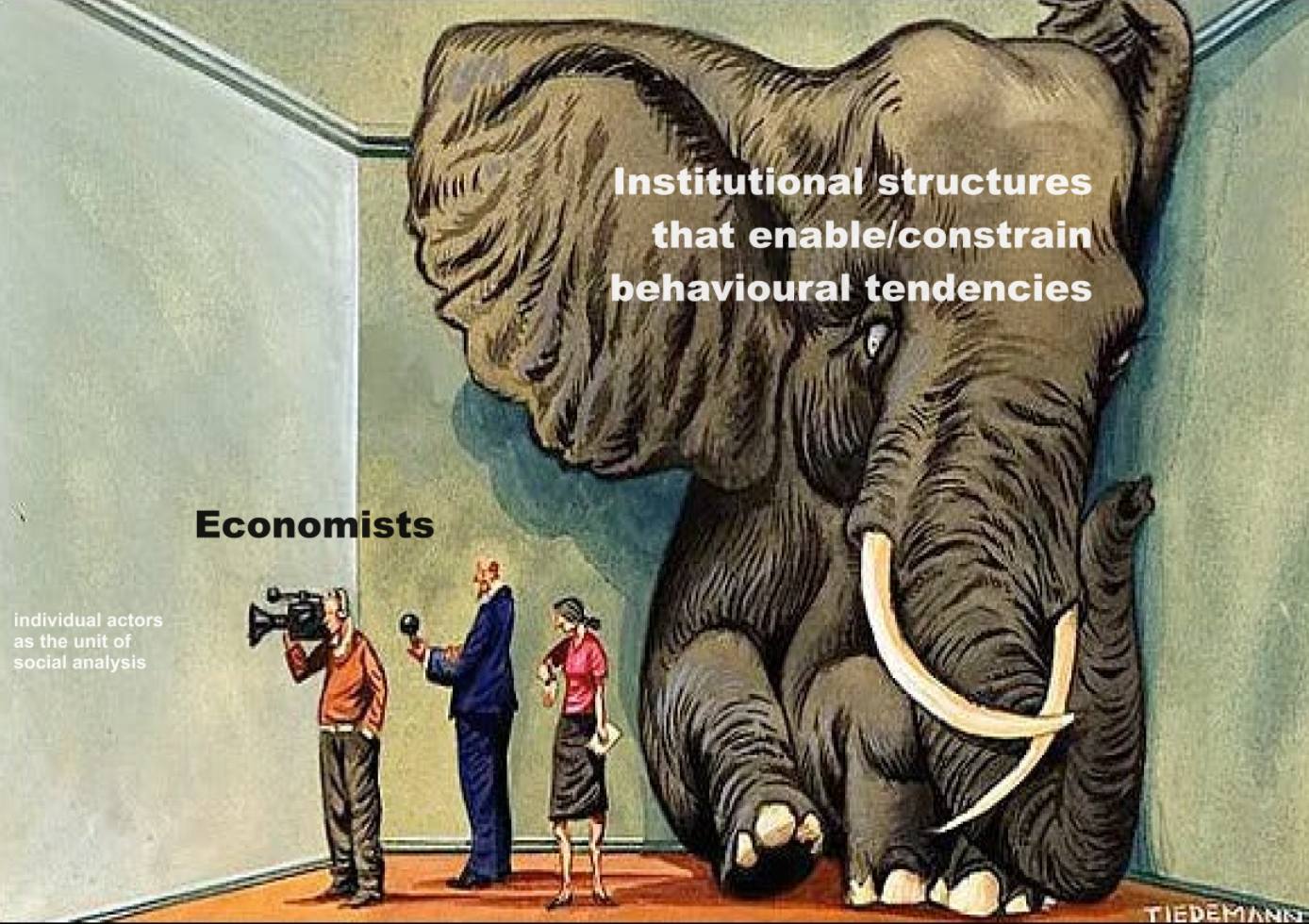
“Objective Economics” Isn’t.
Some time ago, in a Facebook argument, I encountered someone who repeated the old “exchange of unequals” argument (i.e., that people never exchange equivalents because each party values what they got more than what they traded for it). I responded that this argument confuses exchange value with use value and that, regardless of subjective valuation,...
The Divide — Jason Hickel
The Divide: A Brief Guide to Global Inequality and its Solutions Penguin Random House UK, 2017

Equity in K-12 STEM Education
Science, technology, engineering, and mathematics (STEM) live in the American imagination as promising tools for solving pressing global challenges and enhancing quality of life. Despite the importance of the STEM disciplines in the landscape of U.S. political, economic, and social priorities, STEM learning opportunities are unevenly distributed, and the experiences an individual has in STEM education are likely to vary tremendously based on their race, ethnicity, socio-economic class, gender, and a myriad of other factors. Equity in K-12 STEM Education: Framing Decisions for the Future approaches equity in STEM education not as a singular goal but as an ongoing process that requires intentional decision-making and action toward addressing and disrupting existing inequities and envisioning a more just future. Stakeholders at all levels of the education system - including state, district, and school leaders and classroom teachers - have roles as decision-makers who can advance equity. This consensus study report provides five equity frames as a guide to help decision-makers articulate short- and long-term goals for equity and make decisions about policy and practice.

Private Equity Is Starting to Share With Workers, Without Taking a Financial Hit (Published 2024)
The buyout giant KKR pioneered a model of granting ownership stakes to employees at portfolio companies. Now it wants the approach to spread.

Diversity, equity and inclusion
I'm in favour of diversity, equity and inclusion in open source communities, and here's why I think it matters.

Global Inequality — Harvard University Press
Winner of the Bruno Kreisky Prize, Karl Renner InstitutA Financial Times Best Economics Book of the Year An Economist Best Book of the Year A Livemint Best Book of the YearOne of the world’s leading economists of inequality, Branko Milanovic presents a bold new account of the dynamics that drive inequality on a global scale. Drawing on vast data sets and cutting-edge research, he explains the benign and malign forces that make inequality rise and fall within and among nations. He also reveals who has been helped the most by globalization, who has been held back, and what policies might tilt the balance toward economic justice.“The data [Milanovic] provides offer a clearer picture of great economic puzzles, and his bold theorizing chips away at tired economic orthodoxies.”—The Economist“Milanovic has written an outstanding book…Informative, wide-ranging, scholarly, imaginative and commendably brief. As you would expect from one of the world’s leading experts on this topic, Milanovic has added significantly to important recent works by Thomas Piketty, Anthony Atkinson and François Bourguignon…Ever-rising inequality looks a highly unlikely combination with any genuine democracy. It is to the credit of Milanovic’s book that it brings out these dangers so clearly, along with the important global successes of the past few decades.—Martin Wolf, Financial Times