Codeberg drew a democratic, but suboptimal line.
What is Codeberg? | Codeberg Documentation
Codeberg is a democratic community-driven, non-profit software development platform operated by Codeberg e.V. and centered around Codeberg.org, a Forgejo-based software forge.
Codeberg.org
Codeberg is a non-profit community-led organization that aims to help free and open source projects prosper by giving them a safe and friendly home.

When Do Parties Lie? Misinformation and Radical-Right Populism Across 26 Countries - Petter Törnberg, Juliana Chueri, 2026
The spread of misinformation has emerged as a global concern. Academic attention has recently shifted to emphasize the role of political elites as drivers of mi...

Contributing
Want to help make Codeberg better? Here, you can find out more about our projects and who runs them. Or start your own.
Correlates of the Mamdani Vote
No class gradient is a big win for democratic socialism

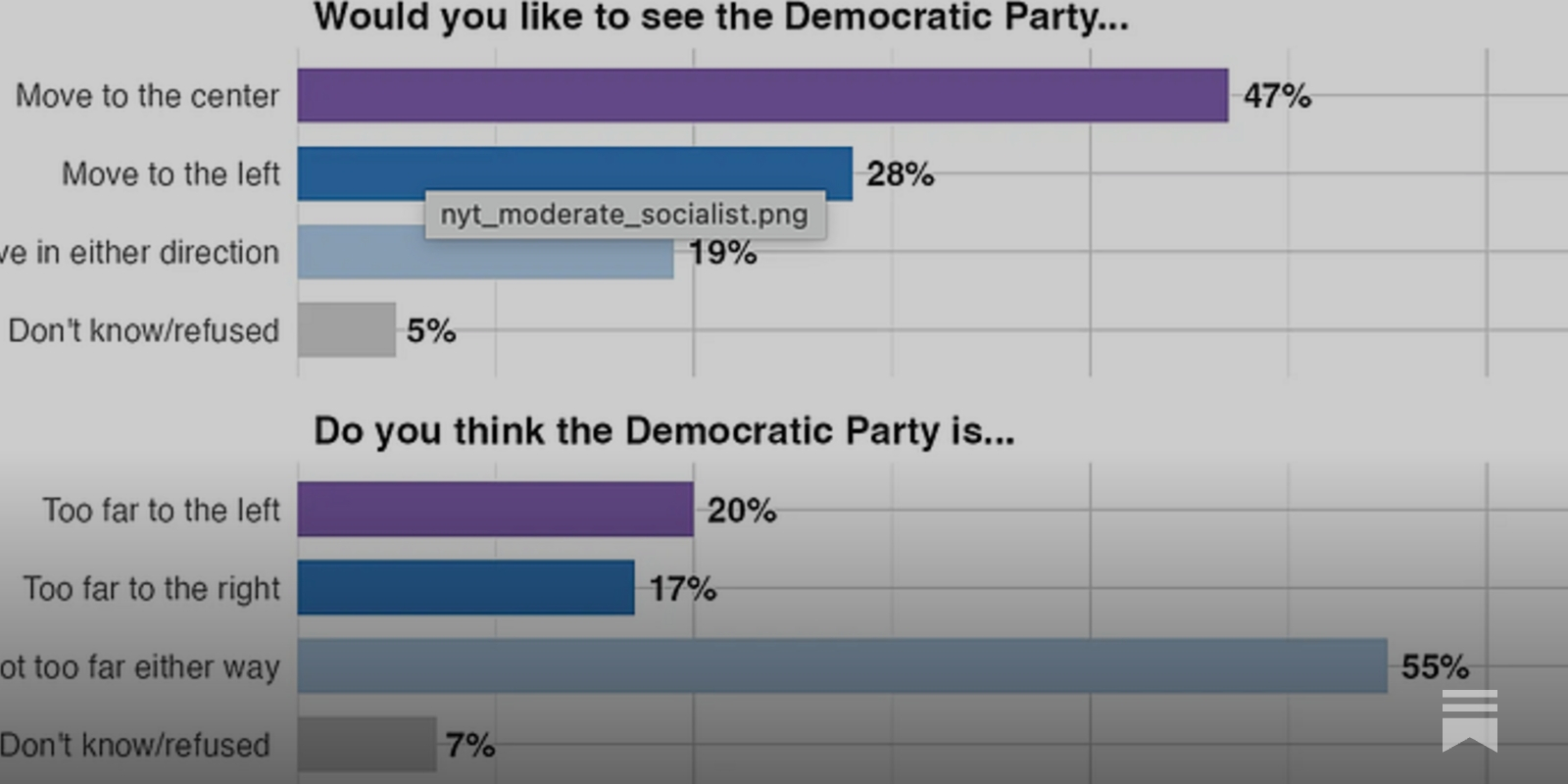
Democratic voters want the party to be more moderate — and more socialist?
The trouble with polling about ideological labels
Five Dimensions of Scaling Democratic Deliberation: With and Beyond AI
DemocracyNext's new paper on Five dimensions of scaling democratic deliberation: With and beyond AI
Elon Musk: The Normalizer of Fascism
The world's richest man needs you to believe fascist parties are part of the democratic spectrum

The Median Voter Theorem is a Clarity Trap
What the Democratic party needs - what it demands - is bold, persistent experimentation

Facebook Built Its Vision of Democracy on Bad Math
Mark Zuckerberg argues that more information reaching more people enhances democracy. But, as the adage goes, quantity does not equal quality.


org/TermsOfUse.md at 71149c7fc95ccfeae36109b5cddca339e4aa1473
org - Official Codeberg Documents and their unofficial translations.
A Million Doors to a Million Votes: NYC-DSA’s Plan for a Mamdani Mandate - Democratic Left
Victory in the Democratic primary has transformed what’s possible for socialists in New York City. A 10,500 member-strong NYC-DSA's road to November is paved with opportunities to expand our base and muster the forces needed to implement his agenda.

Gerrymandering | The Paper Pilot
The Paper Pilot's digital garden of thoughts on philosophy, politics, and sociology
W Social is a textbook case for everything wrong with digital sovereignty
Insanity is doing the same thing over and over again, but expecting different results. This saying is attributed to the famous socialist (and theoretical physicist) Albert Einstein but actually traces back to novelist Rita Mae Brown. I have been thinking about this saying a lot lately. The reason is