

Are we all discovering the same things at once?
Approaching an unknown communication system by latent space exploration and causal inference | Royal Society Open Science | The Royal Society
Abstract. We propose a methodology for discovering meaningful properties in data without ground truth by combining manipulation of the latent variables of
The Physics and Metaphysics of Social Powers: Bridging Cognitive Processing and Social Dynamics, a New Perspective on Power through Active Inference
Latent space
A latent space, also known as a latent feature space or embedding space, is an embedding of a set of items within a manifold in which items resembling each other are positioned closer to one another. Position within the latent space can be viewed as being defined by a set of latent variables that emerge from the resemblances between the objects.
A World Unobserved
Humans have always generated knowledge and judged it. That's changing fast.

Unifying Principles of Generalization: Past, Present, and Future
Generalization, defined as applying limited experiences to novel situations, represents a cornerstone of human intelligence. Our review traces the evolution and continuity of psychological theories of generalization, from its origins in concept learning (categorizing stimuli) and function learning (learning continuous input-output relationships) to domains such as reinforcement learning and latent structure learning. Historically, there have been fierce debates between approaches based on rule-based mechanisms, which rely on explicit hypotheses about environmental structure, and approaches based on similarity-based mechanisms, which leverage comparisons to prior instances. Each approach has unique advantages: Rules support rapid knowledge transfer, while similarity is computationally simple and flexible. Today, these debates have culminated in the development of hybrid models grounded in Bayesian principles, effectively marrying the precision of rules with the flexibility of similarity. The ongoing success of hybrid models not only bridges past dichotomies but also underscores the importance of integrating both rules and similarity for a comprehensive understanding of human generalization.

Children use algorithm induction to discover patterns in data
Humans are unique in our ability to acquire diverse skills and inhabit myriad environments, but the cognitive mechanisms underlying such fast, flexible learning remain unresolved. Inspired by theories of artificial intelligence, here we show evidence for one such learning mechanism - program induction - in US American and indigenous Tsimane’ children in the Bolivian Amazon. Participants viewed novel patterns and were asked to generalize them to new stimuli, alphabets, and lengths, without feedback. Given very limited data, participants across ages, cultures, and conditions constructed response patterns that shared abstract structure with the sample patterns. Computational modeling shows that responses likely reflect discovery of latent rules, rather than simple heuristics or associations, even among children without formal schooling. The results suggest program induction serves as a domain-general learning mechanism from early in life, allowing children across cultures to rapidly infer the algorithmic structure of their natural and cultural environment, whatever it might be.

Role differentiation as ignition of a collective information...
Informational active matter shows how measurement-informed decisions produce collective order, so far in systems that reach consensus. We design collective information engines structured by...

The Alien Space of Science: Sampling Coherent but Cognitively...
Scientific discovery is constrained not only by what is true, but by what is cognitively available to the researchers currently exploring a field. Many directions are coherent in light of the...
A Different Kind of Theory of Everything
Physicists used to search for the smallest components of the universe. What if that’s not the point?

Infinite Researchers | AI-Powered Scientific Discovery
What happens to the speed of discovery if we have infinite researchers? Explore AI experiments accelerating breakthroughs.

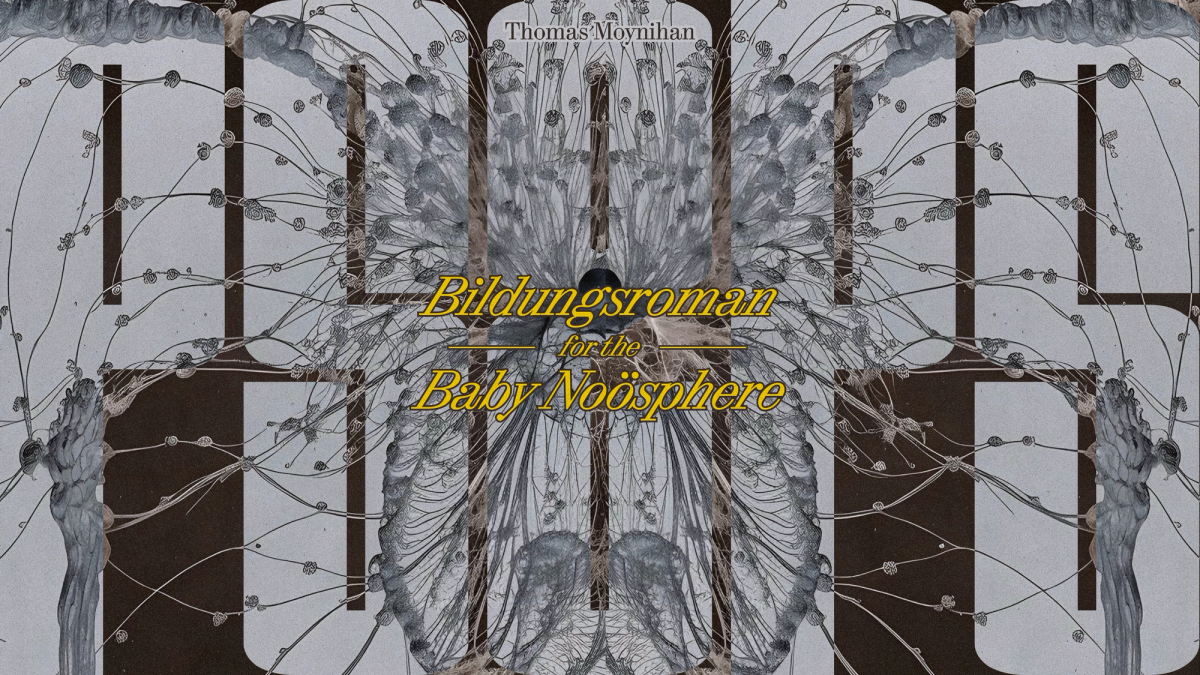
Planetary Sapience & Planetary Stupidity: a Bildungsroman for the Baby Noosphere | Antikythera
That is, the faculty of recollection and foresight? Until recently, I would argue, our planet was amnesiac. That is, no part of it was reflectively aware of the place of the present relative to the established past nor the expected future. But then peculiar animals emerged, capable—no matter how imperfectly—of cooperation, abstraction and invention. In the last blink of geologic time, through the collaboration of these animals with their increasingly cunning artifacts, this state of planetary amnesia has faltering begun being cured. That is, through our artifacts, our planet is becoming aware of its own unfolding biography. In our fallible attempts to model our world—alongside our growing legion of sensors—The Earth system has developed a way of recollecting its deepest past and tracking the changing complexities of its present so as to forecast its furthest future.
Factored Latent Action World Models
Learning latent actions from action-free video has emerged as a powerful paradigm for scaling up controllable world model learning. Latent actions provide a natural interface for users to...
Retraction Note: High replicability of newly discovered social-behavioural findings is achievable
Nature Human Behaviour - Retraction Note: High replicability of newly discovered social-behavioural findings is achievable
Quantifying causal emergence shows that macro can beat micro | PNAS
Causal interactions within complex systems can be analyzed at multiple spatial and temporal scales. For example, the brain can be analyzed at the l...

Ever thought we acquire generalizable knowledge by discarding details and compressing our experiences? In a new BBS paper, @sabinasloman.bsky.social and I argue otherwise, proposing a novel way of studying human learning inspired by double descent in ML. Disagree? Propose a commentary by May 15 :)
New paper finally out in @NatureComms with E. Leib, D. O’Shaughnessy, C. Gallardo, @sferrigno.bsky.social, and @spiantado.bsky.social. 📝Children across cultures discover the latent algorithms that structure what they see, even without instruction, feedback, or formal schooling.🧵 tinyurl.com/4a238m2d

