

Since the earliest days of Unix, two of the core process-oriented system calls have been fork() [...]
Forking is Cool, or: A Unix Shell in Zig, or: Dave Learns How to Fork - ratfactor
In this article, I make a real, working interactive shell written in Zig. Though essentially a toy, it demonstrates the incredible elegance of the fork() system call and is an example of what can be done with absolutely no runtime memory allocations.
Thorsten Ball - Why threads can't fork
There is an interesting thread on the Go issue tracker about daemonizing processes. Most of the thread is not about daemonizing processes though, but more about why Go has no Fork() function which you can call directly in your code. The first time I read through it I was wondering and saying to myself: “Yeah, why is there no Fork()? It surely can’t be that hard to implement.” After all you can already call system calls with the syscall package. As I read more and more I realized that the problem is not implementing Fork() per se, but rather implementing Fork() to work safely in a multi-threaded environment, which most Go programs are. So I tried to find out why.
How programs get run: ELF binaries
The previous article in this series described the general mechanisms that th [...]
No Fork Required - Scott's Thoughts
What if another operating system isn't the solution to anything at all? What if device-level identity could tie into existing systems to help pull users out of walled gardens, rather than creating new gardens?
Hard Forks - AVC
The crypto-currency Ethereum completed a hard fork on Wednesday. The Ethereum core developers, after getting a vote of support from the Ethereum community, hard forked Ethereum to “get back” the roughly $40mm of Ethereum that was taken in the hack of The DAO. Hard forks are a bit of a lightning rod issue in the […]
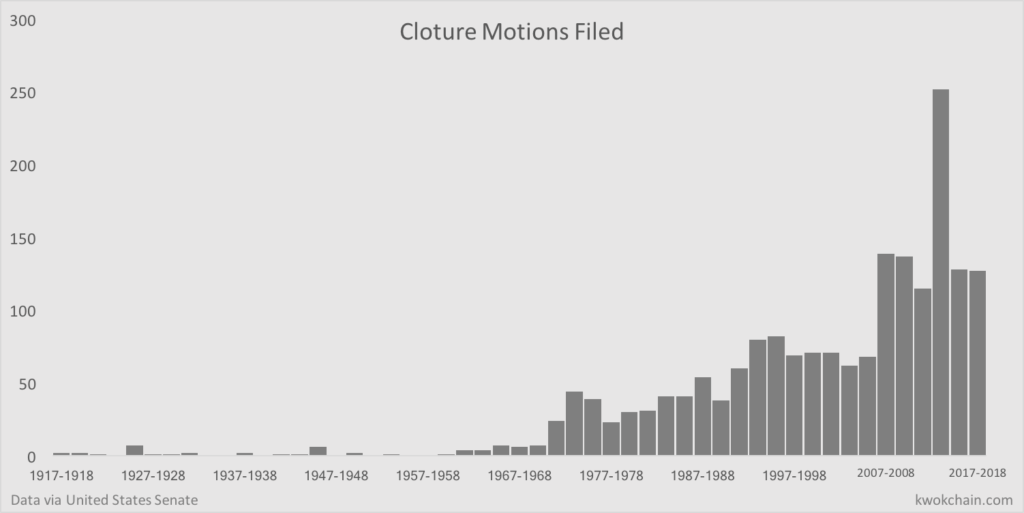
The Future Is Forked - kwokchain
Author’s note: I originally wrote this essay a number of months ago. Since then there’s been a bunch of discussion around governance thanks to essays from Fred Erhsam, Vlad Zamfir, Will Warren, and others. As well as debates within the Ethereum community. While I haven’t addressed any of these recent events in this piece—or how … Continue reading The Future Is Forked →
Don't fork the ecosystem
Software can be rebuilt, because software is a machine. But a software ecosystem is not a machine. It is a living system.
Ephemeral-AI-Lab/layerfs
LayerFS gives every agent an isolated, disposable filesystem fork without copying the shared base. Useful states become durable, deduplicated checkpoints with workspace-scoped tool history—ready to branch, rewind, or reuse across parallel development, environment experiments, and MCTS-style rollouts.
“Implementation Selection” in Rust — Andrew Lilley Brinker
Exploring options for selecting branching paths in Rust code at compile time and runtime.
Deterministic Core, Non-Deterministic Shell - Outdata
Determinism, architecture, and the de-sloppification of legacy code.

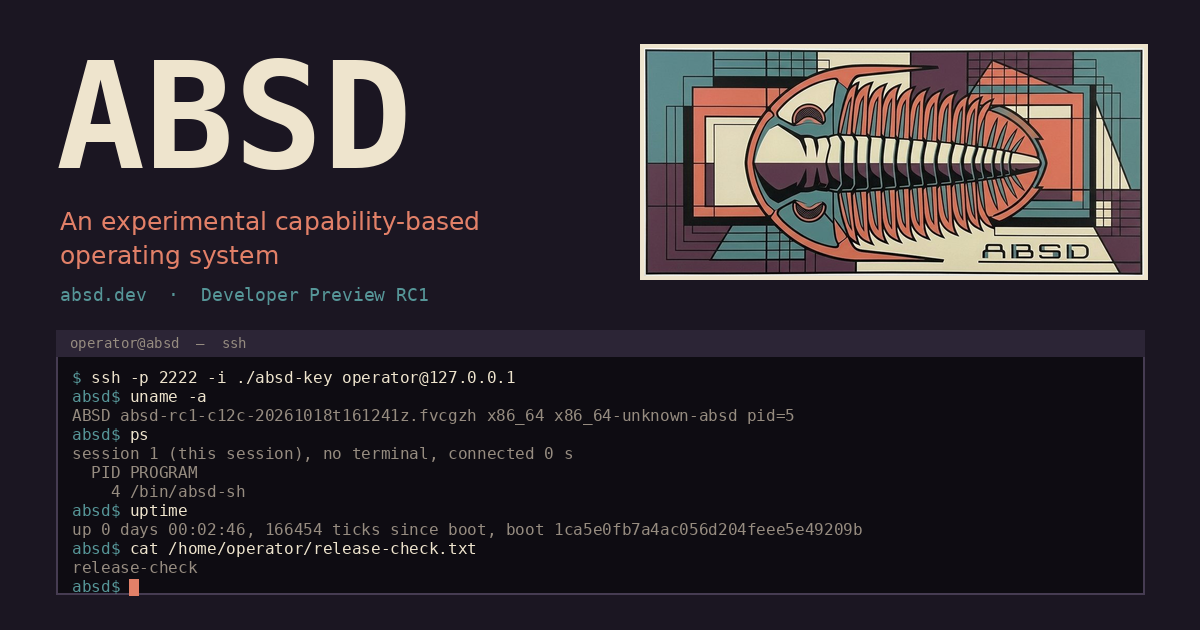
ABSD
An experimental operating system in Rust: isolated processes, explicit authority, and claims stated at the strength of their evidence. Source is public.
libkrun/libkrun
A dynamic library providing Virtualization-based process isolation capabilities
Release v0.5.0 · saxenauts/syke
Syke 0.5.0 is the release where the memory agent becomes a real local system. Pi is now the runtime. Observe is now a deterministic sensor boundary. The memory contract is explicit end to end: even...
We figured out how to exit Tiles CLI properly and wrote a deep technical dive into standard streams, pipes, Unix processes, how system signals behave with parent processes, blocking UI I/O, and how async Rust helped fix it: tiles.run/blog/controlling-ctrl-c

Controlling the Ctrl-C
www.tiles.run