


And a few things that happened while I was there
Left & Right: The Psychological Significance of a Political Distinction
This book brings together for the first time an updated, revised collection of influential essays and articles that capture some of the most exciting scientific and scholarly contributions to the topic ...

The Great Realignment: Why the New Right Is Here to Stay
The re-election of Donald Trump has illustrated in spectacular fashion the extent to which politics all over the world is in a state of continual flux. Old political configurations and parties are under unprecedented strain, with new forces, particularly on the hard right, challenging the status quo everywhere. Rejecting stale analyses based on moralistic panics about 'populism' or social media, political commentator Steve Davies shows how we are going through a deep-seated process of realignment rooted in underlying structural trends. We are transitioning, he argues, from an era where the key political division was over the economic structure of society to one where the primary division is between a vision rooted in national identity and sovereignty, and an essentially post-national cosmopolitanism. This change upends the ideological and electoral alliances that have structured our political systems for decades. No-one who wishes to truly understand the crises currently roiling the political status quo can afford to miss this stunning panoramic analysis of how this process works and how it is playing out across the world, from the USA and Germany to Argentina and India, and beyond.
When protests normalize intolerance: The hidden costs of far-right demonstrations
Large crowds expressing xenophobic views publicly can signal that such beliefs are socially acceptable or mainstream, influencing others to think this behavior is normal

Spider-Verse, Identity Politics, Leftist Infighting, and the Oppression Olympics
The new right: Anatomy of a global political revolution – European Council on Foreign Relations
The thinkers and ideas of the rising nationalist right merit the political mainstream's attention. Only by understanding them can it build a resilient counter-p

Hyperpolitics: Extreme Politicization without Political Consequences
POLITICS AFTER THE END OF THE END OF HISTORYWhat happens when politics is everywhere, yet nothing seems to change? From the abandoned dance floors of Thatcher’s London to the mass mobilizations of Black Lives Matter, Anton Jäger traces how public life has become infused with protest, spectacle, and moral urgency — while the old infrastructure of parties, unions, and civic solidarity has been hollowed out.Hyperpolitics revisits the illusions of the “end of history” and dissects the strange energies that replaced them: viral outrage, endless culture wars, and the digital rush of causes that flare and vanish overnight. Jäger shows how the promises of post–Cold War liberalism gave way to a restless, unsteady public sphere where private passions overflow into politics but rarely build enduring power.Ranging from Guy Debord and Wolfgang Tillmans to Houellebecq’s disenchanted fictions, Hyperpolitics makes sense of a world in which collective action remains fragmented and the social fabric thinner than ever. For anyone trying to grasp why our age feels so charged yet so inconsequential, this book offers a vital map through the new contradictions of our hyperpolitical moment.
Freedom Now | Polity: Vol 52, No 3
Left-wing politics is resurgent. Self-proclaimed socialists are unexpectedly popular. Proposals like universal health care are a commonplace of Democratic campaigns. But there is not yet a clear, unifying idea behind this political shift. We propose that that idea is freedom. While the left once understood freedom as emancipation from the economy, the right spent the twentieth century neutralizing and appropriating the idea of freedom by reinventing the economy as the true site of freedom. To reclaim freedom as a value of the left, we have to begin with the daily experience of most people: the unfreedom of the workplace. The authoritarian organization of work is not just an offense against freedom; it also helps us understand how freedom requires emancipation both from the economy and within the economy, and why that emancipation requires mass struggle.

Book and Journals Publisher – 2025 - Lawrence Wishart
Lawrence Wishart have been publishing critical left ideas on politics and culture since 1936. Through books, journals and events, we foster a space where people can think together, challenge political ‘common sense’ and explore new possibilities.

Bridging Social Movements and the New Social Web (working draft) - Variable Context with @CaptainCalliope.blue
On connecting movements, media, and new protocol ecosystems to rebuild the civic, cultural, and technical foundations of a freer, more self-determining society.
Activist Handbook | Campaigning guides for activists ✊
We write guides for activists. Learn how to become a social activist, plan a political campaign strategy, and start a grassroots movement.
The Times are Urgent: Let’s Slow Down • Writings – Bayo Akomolafe
An Open Letter to CONCORD-DEEEP, CIVICUS, GCAP, Civic Society Organizations and Activists Working for a ‘Better’ World. This article is co-authored by Bayo Akomolafe and Marta Benavides. With deep gratitude for the stories of transformation now emerging across the planet, and for the renewed hope we share for a different kind of world, we greet you from our hearts.

Immigrants against the State: Yiddish and Italian Anarchism in America
From the 1880s through the 1940s, tens of thousands of first- and second-generation immigrants embraced the anarchist cause after arriving on American shores. Kenyon Zimmer explores why these migrants turned to anarchism, and how their adoption of its ideology shaped their identities, experiences, and actions. Zimmer focuses on Italians and Eastern European Jews in San Francisco, New York City, and Paterson, New Jersey. Tracing the movement's changing fortunes from the pre–World War I era through the Spanish Civil War, Zimmer argues that anarchists, opposed to both American and Old World nationalism, severed all attachments to their nations of origin but also resisted assimilation into their host society. Their radical cosmopolitan outlook and identity instead embraced diversity and extended solidarity across national, ethnic, and racial divides. Though ultimately unable to withstand the onslaught of Americanism and other nationalisms, the anarchist movement nonetheless provided a shining example of a transnational collective identity delinked from the nation-state and racial hierarchies.
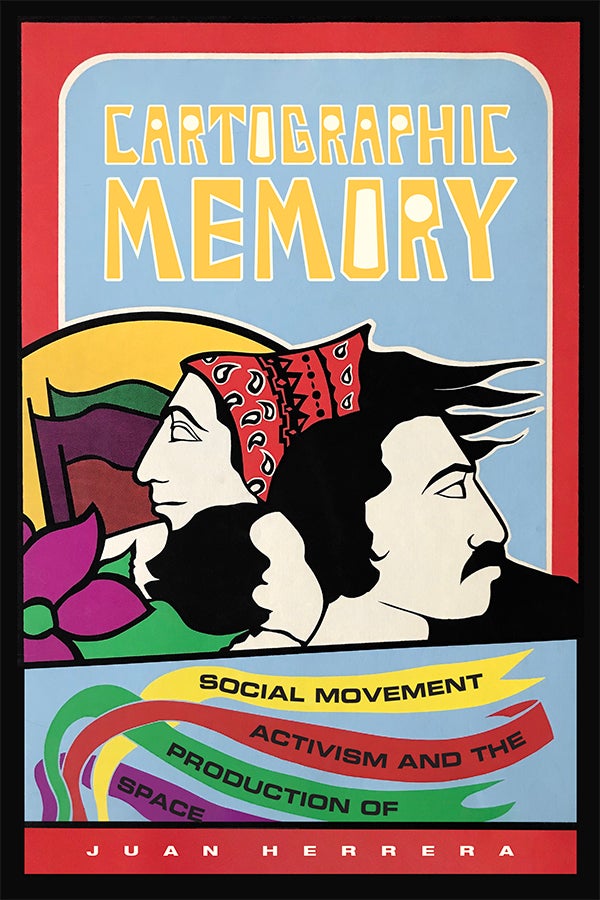
Cartographic Memory: Social Movement Activism and the Production of Space
“Cartographic Memory is a creative, important, and well-written book that offers a vital analysis of Latinx activism in Oakland. Juan Herrera’s concept of social movement continuities helps us analyze the range of ways that actors make social change, rather than only focusing on the most radical politics or certain epic moments. Herrera’s book is an outstanding contribution toward building a nuanced and complex understanding of Latinx social movements.” - Victoria Lawson, author of Making Development Geography
I got into tech six years ago because I figured I could have an outsized impact on making a less harmful, more empowering world for workers and marginalised people. Only this year, I started connecting IRL with people who think this way. Here I tried to write about the ways that's transformed me.

DWeb, Culture and Resistance
meri.gardenThis obsession is with “young men turning to the right” is everything that is wrong with the discussion about the far right. It is not just an inadequate read of what is happening, and a bias towards the male norm, but it also normalizes the far right and obscures support for inclusive politics. 🧵

