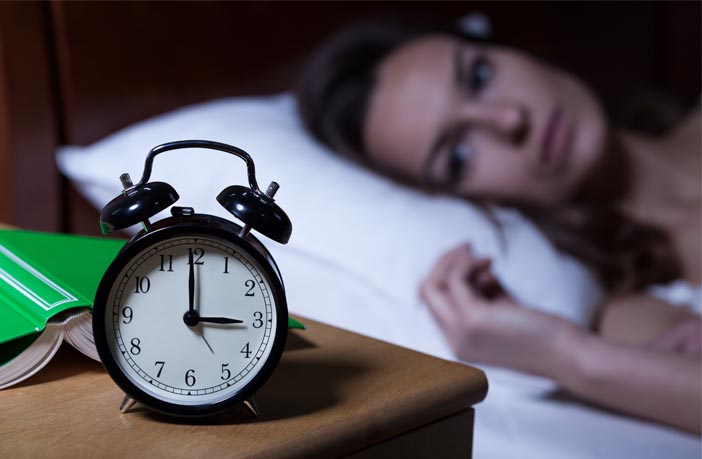
Forgoing sleep is like borrowing from a loan shark. Sure you get those extra hours right now to cover for your overly-optimistic estimation, but at what price? The shark will be back, and if you ca…
How you end up sleep-deprived matters
There's more than one type of sleep deprivation, and the impacts vary.

Sleep as a Competitive Advantage
Too many of us live by the myth that one less hour of sleep gives us one more hour of productivity, Tony Schwartz writes in the Life@Work column. In reality, lost sleep not only leaves us more fatigued, but also takes a toll on our cognitive capacity.

Sleep as a Competitive Advantage
Too many of us live by the myth that one less hour of sleep gives us one more hour of productivity, Tony Schwartz writes in the Life@Work column. In reality, lost sleep not only leaves us more fatigued, but also takes a toll on our cognitive capacity.
Sleep: Educational Impact and Habit Formation
In a field experiment among US university students, incentives for sleep increase both sleep and academic performance. Our primary intervention pairs bedtime reminders with morning feedback and immediate rewards for sleeping at least 7 hours on weeknights. The intervention raises the share of weeknights with 7+ hours of sleep by 26% and average sleep by 19 minutes during a 4-week treatment period, with posttreatment effects of 8 minutes. Immediate incentives outperform both delayed incentives and reminders/feedback alone during treatment but have no distinguishable impacts posttreatment. The primary intervention improves average semester course performance by 0.075–0.089 grade points, a 0.10–0.11 standard deviation increase. Our results demonstrate that incentives targeting sleep can be a cost-effective approach to improve educational outcomes.
'Sleep should be prescribed': what those late nights out could be costing you
Leading neuroscientist Matthew Walker on why sleep deprivation is increasing our risk of cancer, heart attack and Alzheimer’s – and what you can do about it
Opinion | Rethinking Sleep (Published 2012)
It’s not the quantity of sleep that restores and refreshes, but the quality.

Sleep Science: In the Era of Screens, Rest is Crucial
Our floodlit society has made sleep deprivation a lifestyle. But we know more than ever about how we rest—and how it keeps us healthy.


The 17th Century Guide to Sleep
Despite the modern obsession with a good night’s rest, more of us are sleeping less. Perhaps we should pay attention to the advice of early modern doctors.

Sleep Is the New Status Symbol (Published 2017)
Once we would brag of not needing very much of it. Now deep slumber is a coveted state achieved with gadgets, apps, gizmos and classes.

Why Six Hours Of Sleep Is As Bad As None At All - Fast Company
Getting six hours of sleep a night simply isn't enough for you to be your most productive. In fact, it's just as bad as not sleeping at all.
Why We Sleep, and Why We Often Can’t
Does our contemporary obsession with sleep obscure what makes it special in the first place?

The Woman Who Helps NBA Stars To Sleep: Stop Having Showers Just Before Bed! Dr Cheri Mah
Sleep Deficit: The Performance Killer
Reprint: R0610B Companies today glorify the executive who logs 100-hour workweeks, the road warrior who lives out of a suitcase in multiple time zones, and the negotiator who takes a red-eye to make an 8 AM meeting. But to Dr. Charles A. Czeisler, the Baldino Professor of Sleep Medicine at Harvard Medical School, this kind of corporate behavior is the antithesis of high performance. In fact, he says, it endangers employees and puts their companies at risk. In this interview, Czeisler describes four neurobiological functions that affect sleep duration and quality as well as individual performance. When these functions fall out of alignment because of sleep deprivation, people operate at a far lower level of performance than they would if they were well rested. Czeisler goes on to observe that corporations have all kinds of policies designed to protect employees—rules against smoking, sexual harassment, and so on—but they push people to the brink of self-destruction by expecting them to work too hard, too long, and with too little sleep. The negative effects on cognitive performance, Czeisler says, can be similar to those that occur after drinking too much alcohol: “We now know that 24 hours without sleep or a week of sleeping four or five hours a night induces an impairment equivalent to a blood alcohol level of .1%. We would never say, ‘This person is a great worker! He’s drunk all the time!’ yet we continue to celebrate people who sacrifice sleep for work.” Czeisler recommends that companies institute corporate sleep policies that discourage scheduled work beyond 16 consecutive hours as well as working or driving immediately after late-night or overnight flights. A sidebar to this article summarizes the latest developments in sleep research.
How much can an extra hour's sleep change you?
The average Briton gets six-and-a-half hours sleep a night. Michael Mosley took part in an unusual experiment to see if this is enough.
New study sheds light on how boredom affects bedtime procrastination and sleep quality
New research suggests that the inability to be mindfully attentive to the present plays a role in compromised sleep quality. The study, published in