

I’ve been thinking a lot about mimetic formation, how a thought becomes an idea, and how that idea gestates and evolves as it’s progressively shared in wider and wider circles. During a recent prod…
Cultivating a state of mind where new ideas are born
Solitary work, creativity and larval ideas

Watch and Link Disparate Ideas — Think Jar Collective
An important skill to develop to enhance thinking creatively is to be able to link disparate ideas. This article lays out some provocations to spark creative collisions for innovation

How Should We Think About Our Different Styles of Thinking?
Some people say their thought takes place in images, some in words. But our mental processes are more mysterious than we realize.
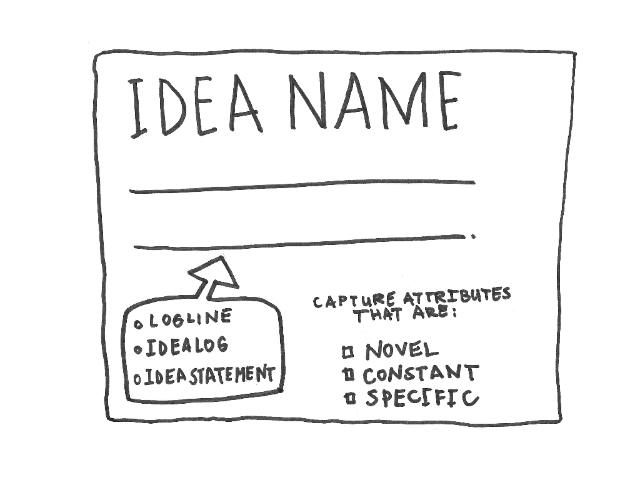
How to explain an idea: a mega post
What's an idea? What sorts of ideas are there? And how to explain them once you have them?
Brainchildren
Minds are complex artifacts, partly biological and partly social; only a unified, multidisciplinary approach will yield a realistic theory of how they came i...
How to know what you really want and be free from mimetic desire | Psyche Guides
From career choices to new purchases, use René Girard’s mimetic theory to resist the herd and forge your own path in life

How to know what you really want and be free from mimetic desire | Psyche Guides
From career choices to new purchases, use René Girard’s mimetic theory to resist the herd and forge your own path in life

Six Ways to Think Long-term: A Cognitive Toolkit for Good Ancestors
None of these six ways is enough alone to create a long-term revolution of the human mind — a fundamental shift in our perception of time. But together — and when practised by a critical mass of people and organisations — a new age of long-term thinking could emerge out of their synergy.

Reversing Assumptions Technique — Think Jar Collective
Think Jar Collective contributor and creativity expert Michael Michalko shares a technique to challenge our own assumptions and in the process spark new thinking.

Cognition in a Social Context: A Social-Interactionist Approach to Emergent Phenomena
The formation of collective memories, emotions, and beliefs is a fundamental characteristic of human communities. These emergent outcomes are thought to be the result of a dynamical system of communicative interactions among individuals. But despite recent psychological research on collective phenomena, no programmatic framework to explore the processes involved in their formation exists. Here, we propose a social-interactionist approach that bridges cognitive and social psychology to illuminate how microlevel cognitive phenomena give rise to large-scale social outcomes. It involves first establishing the boundary conditions of cognitive phenomena, then investigating how cognition is influenced by the social context in which it is manifested, and finally studying how dyadic-level influences propagate in social networks. This approach has the potential to (a) illuminate the large-scale consequences of well-established cognitive phenomena, (b) lead to interdisciplinary dialogues between psychology and the other social sciences, and (c) be more relevant for public policy than existing approaches.

The Myth and Magic of Generating New Ideas
A mathematician on how to get the mind into motion.

The Master and His Emissary: The Divided Brain and the Making of the Western World
In a book of unprecedented scope--now available in a larger format-Iain McGilchrist presents a fascinating exploration of the differences between the brain's left and right hemispheres, and how those differences have affected society, history, and culture. McGilchrist draws on a vast body of recent research in neuroscience and psychology to reveal that the difference is profound: the left hemisphere is detail oriented, while the right has greater breadth, flexibility, and generosity. McGilchrist then takes the reader on a journey through the history of Western culture, illustrating the tension between these two worlds as revealed in the thought and belief of thinkers and artists from Aeschylus to Magritte. "A landmark new book. . . . It tells a story you need to hear, of where we live now."-Bryan Appleyard, Sunday Times "A very remarkable book. . . . McGilchrist, who is both an experienced psychiatrist and a shrewd philosopher, looks at the relation between our two brain-hemispheres in a new light, not just as an interesting neurological problem but as a crucial shaping factor in our culture . . . splendidly thought-provoking. . . . I couldn't put it down."-Mary Midgley, The Guardian Named one of the best books of 2010 by The Guardian
100 Little Ideas
A list of ideas, in no particular order and from different fields, that help explain how the world works…

Idea and action driven systems
This article is part of a series: ‘Stigmergy: Systems of Mass Collaboration’. “Turing believes machines think. Turing lies with men. Therefore machines cannot think.” –…

Thoughts on thinking | Hacker News
The process of forming expressions just is the process of conceptual and rational articulation (as per Brandom). Those who misunderstand this -- believing that concepts are ready made, then encoded and decoded from permutations of tokens, or, worse, who have no room to think of reasoning or conceptualization at all -- they will be automated away.